Choosing a project · 3 min read
Pot Lid Rack vs. Cutting Board File for a Low Shelf
Should I use a peg rack or a wooden file for wide kitchen pieces?
Offcut Journal editorialUpdated
Short answer
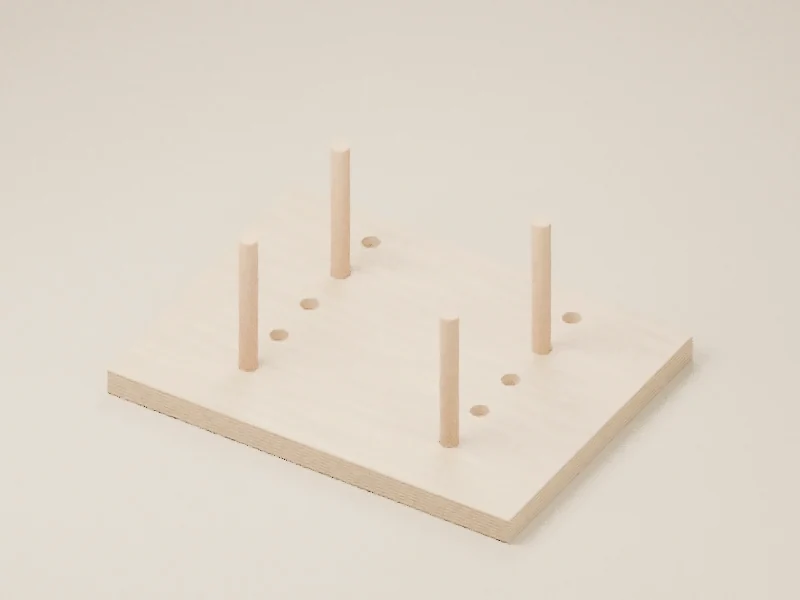
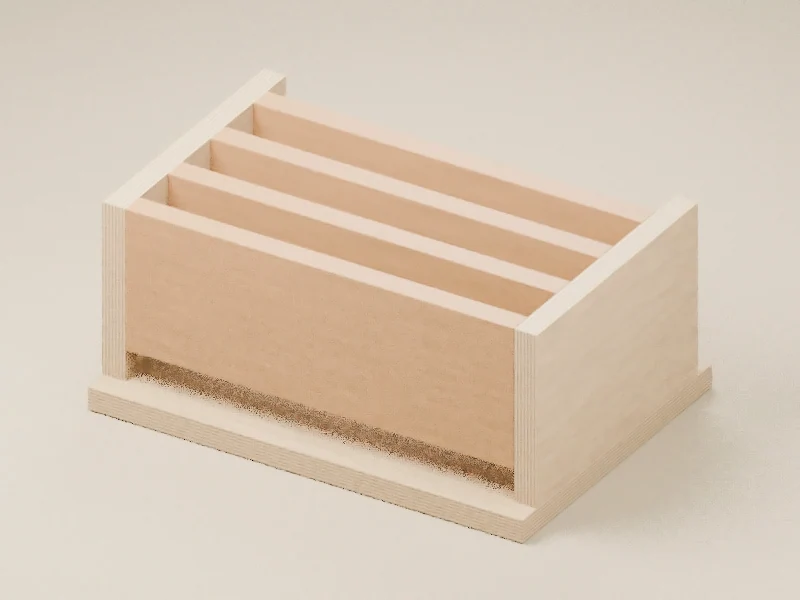
The lid rack’s movable pegs allow different knob positions. The cutting-board file’s rails offer three defined lanes for boards and their protruding feet.
Compare the builds
These dimensions belong to the linked plans.
Finished dimensions in width × depth × height order.
What to compare
Find the bump that sets the size
Use a straight rule to span rubber feet, a beveled handle, or a domed lid’s deepest curve. Read from that line to the opposite side of the piece. A pan lid may need a wider lane only near its knob, while some cutting boards have four feet at opposite corners. Record where each obstruction sits as well as how far it sticks out. The map gives you something useful to compare with the peg rows and the continuous surfaces of the file.
Plot the open cabinet door and shelf above
Mark the 12 × 9-inch lid rack and 14 × 10-inch board file on shelf paper. Hold each item in the orientation you plan to store it and try the lift from behind that outline. A curled board handle can strike the fixed shelf before the bottom clears the wooden rail. With a lid, you might need to tip it to clear the neighboring knob before pulling. That swinging arc is often larger than the part’s resting silhouette.
Let the neighbors settle before you choose
Stand the two thickest articles on either side of the thinnest. See whether the thin article needs extra guidance to avoid leaning into the neighboring lane. The board file has high rails and stops defining its lanes. The pot-lid rack gives you peg choices for different shapes, and an unfilled socket can provide space for a particular knob. Rehearse both the first removal and reinserting the middle piece after the others have shifted a little.
Treat a liner as an accessible part
The cutting-board file has space to remove a catch liner after emptying the file. Compare that direction with the front lip, door hardware, and appliances beside it. Set a liner sample on the board-file model and account for its thickness at the bottom of the lane. The lid rack is meant for its measured cabinet setup, and a quick visual check at the back helps reveal residue or moisture. Put clean, dry pieces back in whichever project fits.
Try the heaviest piece at the end of the row
A full rack invites you to use the middle slot, but compare that position with an outside slot for an awkward board or lid. Keep the file's 1½-inch clear width constant while you move the widest board from the middle to the end of a full-size lane drawing. Give its handle a clear approach from the side you actually use. On the lid rack, set the knob of a broad lid toward an open end and see whether that frees space for the next lid. Include the side wall of the cabinet in the trial. An end slot only gains clearance where that wall leaves room.