Fixes at the bench · 3 min read
Why one pot lid hooks another as you lift it
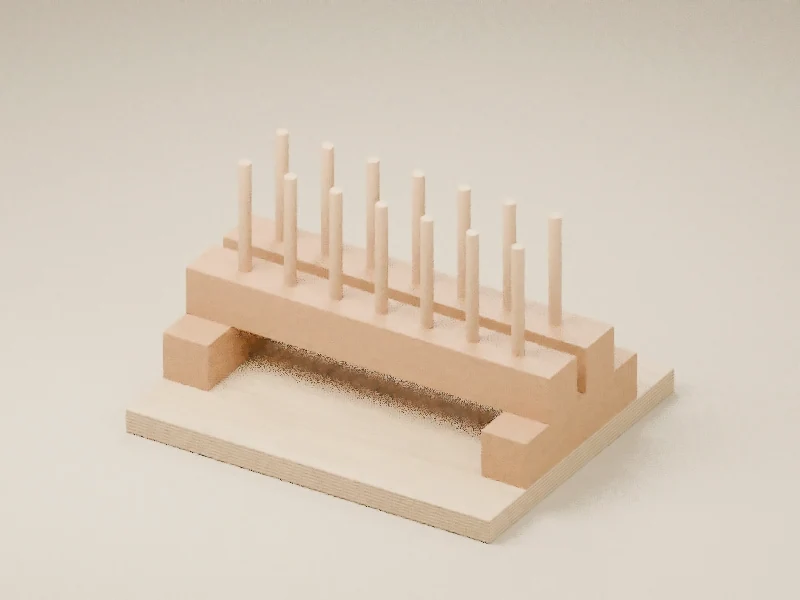
Why do my lids fit in the rack but knock together when I try to remove the middle one?
Offcut Journal editorialUpdated
Short answer
The stiffest point of a lid is often its rim. The furthest projection can be its knob, handle or steam vent. To retrieve a lid from a low cabinet, you usually tip the top toward you before raising the base clear of the pegs. That takes the knob through space beside it. Use a small, cool metal lid for the first test and keep a hand on each lid during any move. Leave heavy or glass lids on a stable surface while you trace the route.
Find the cause
Locate the place where profiles cross
Start with an empty rack on a low, clear counter. Slip the metal test lid into the middle and take it out once straight up and once at your usual angle. Put in one neighboring lid or a cardboard outline of it. See whether the interference starts above the peg tops or down at the rim.
Test a different orientation
Reverse one lid so its knob points into an empty part of the bay. Lift slowly again and observe both lower rim positions. A reversed lid needs enough support to stay seated on its own, with handles and vent fittings clear of the pegs. A handle visible from the cabinet opening may also be easier to grab without moving the next lid.
Recreate the top of the cabinet
Measure clearance to the shelf above the planned rack. Mark that height on a scrap held beside the rack to compare it with the highest point of the lid during lifting. If the lid clears the pegs on the counter but needs more upward travel than the cabinet offers, put it in a taller shelf or dedicate an end bay so it can lift a little and move sideways.
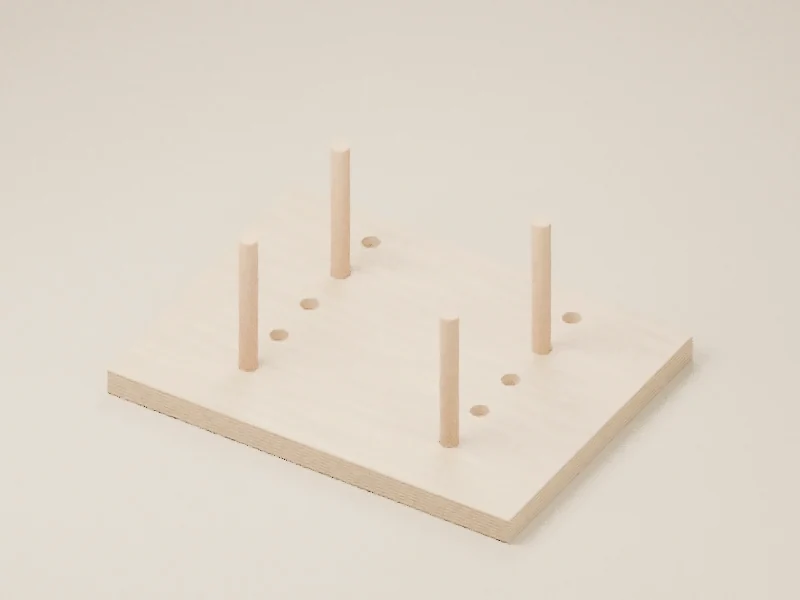
Move adjustable pegs with the rack empty
Change the spacing for the largest intended lid first, then check the remainder as a group. Leave one side open if the handles need room to turn. Confirm that the peg arrangement still holds each lid upright without relying on contact with a neighbor. Keep fragile glass lids away from the test station until the metal sample clears.
Check the order you put two lids back
The knob that catches during removal may have entered below its neighbor because the second lid went in afterward. With metal test lids held securely, put the deeper-knob lid away first and note where its rim lands. Repeat in reverse order and watch for the second rim settling behind the first lid’s handle. If the rack only works when the same lid is always loaded last, give that lid an end position or another shelf. Try putting each lid away and taking it out while leaving the other one seated. Use the arrangement that clears in both directions before restoring heavier lids.
Practice on a plan
Finished dimensions in width × depth × height order.