Choosing a project · 3 min read
Yarn Bowl Cradle or Lazy Kate? Follow the Yarn’s Exit Path
Should I use a yarn bowl cradle or a Lazy Kate to stop yarn getting tangled?
Offcut Journal editorialUpdated
Short answer
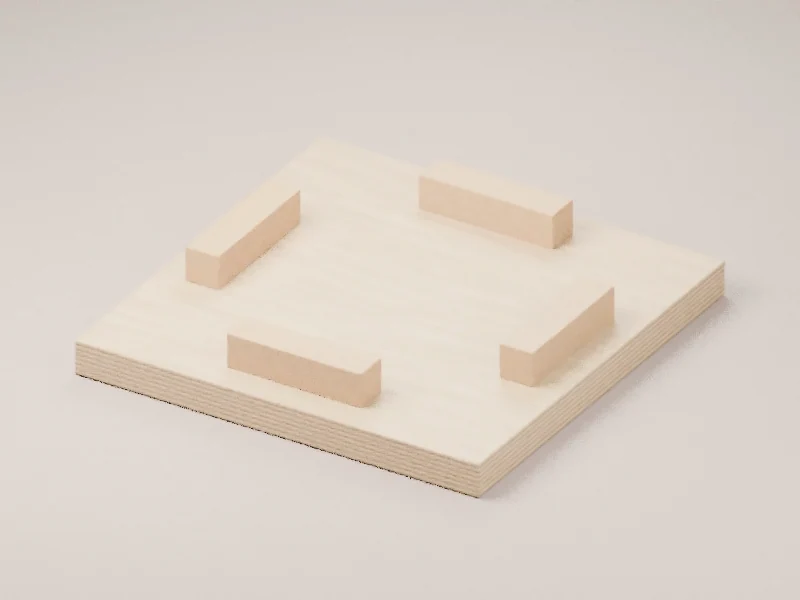
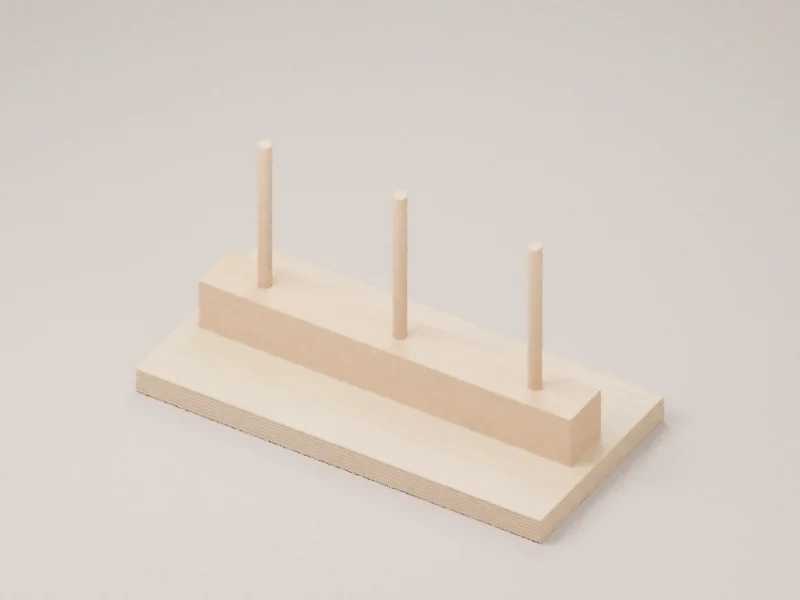
The cradle supports a bowl you already use while a ball or cake feeds from it. The Lazy Kate holds independently rotating spinning bobbins on removable upright spindles.
Compare the builds
These dimensions belong to the linked plans.
Finished dimensions in width × depth × height order.
What to compare
Start at the feed point, not the stored bundle
Follow yarn from the ball or bobbin toward your hand or wheel. On a yarn bowl, the point where the strand exits may be a notch near the rim. The cradle’s guide blocks sit below that on many bowl shapes, but you need to check the actual piece. A Lazy Kate’s path usually leaves rotating flanges or wound yarn directly. Tape the line of travel to the bench and see whether it crosses a post, neighboring profile, or the place your elbow moves.
Check the contact band of the bowl
Measure a bowl around its widest point only after tracing the section at the cradle’s ¾-inch-high blocks. A bowl with a narrow foot can still have a lower body that reaches one block first. Put four clamped or taped blocks where the plan places them and test the lift using both hands and the intended bowl. Its open corners are available for fingers. Preserve that access when changing a guide position around an unusual bowl foot or handle.
Compare the bobbin ends with the posts
The Kate uses nominal ⅜-inch removable spindles. Test the bore of your actual bobbin on sample spindle stock before buying or cutting every piece. A part can fit over an end but bind at a central collar, so check the full travel. The plan sets the spindles at regular centers, allowing you to compare the widest loaded flange independently from each wound package. Check the bobbin without adding tension hardware or drag mechanisms to a simple tension-free design.
Put the right reset motion within reach
The cradle lets you lift the bowl to change its contents and leave the wooden guide on a table. The Lazy Kate usually needs room above the spindle to lift a bobbin away, or room to handle the whole removable spindle according to its plan. Simulate both changes with the yarn and nearby tools where they normally live. Build for the supply you use steadily and account for mixed supplies separately if their pull directions disagree.
Give inactive strand ends a place during a break
Follow a short, loose end from each bobbin as you pause the job. On the Lazy Kate, keep the unused end with its own bobbin in whatever way suits the yarn and equipment instead of routing it across the next spindle. Two bobbins that clear at 4-inch centers can still stop feeding cleanly if a strand passes through the neighboring profile. On a bowl trial, put the working strand where it belongs at the bowl mouth and look for a route that stays above the ¾-inch cradle blocks. The way you restart should leave the bowl free to lift and the spindles free to turn.