Fixes at the bench · 2 min read
Why neighboring bobbins rub on a Lazy Kate
Why do two bobbins spin freely alone and rub when installed side by side?
Offcut Journal editorialUpdated
Short answer
Two flanges can clear with their pins vertical and touch when a loose pin leans into the next station. A loose winding can also travel sideways beyond a flange and catch the neighboring yarn. Begin with empty compatible bobbins. Turn each one by hand at a slow speed and watch the gap from above and from the side. Leave your current spinning project off the rack during diagnosis.
Find the cause
Test turning at one station
Put one empty bobbin on the first pin and rotate it using a fingertip on the outside edge. Keep the other stations empty. Watch for an edge that moves sideways once per turn. Swap in a second empty bobbin on the same pin. A wobble that follows the first piece can indicate an uneven bore or flange. Inspect for dust or loose fiber before making any changes to the wood.
Swap pins between empty sockets
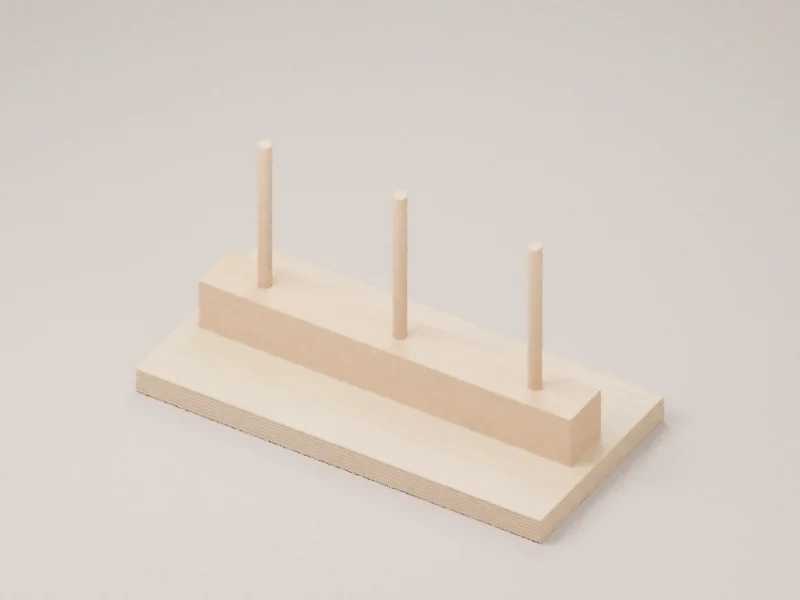
Remove both bobbins and compare how two pins settle into their empty sockets. If one deviates visibly from square, switch it with another. If the lean follows the pin, check it against a straight scrap. If it stays at one socket, inspect the socket walls and bottom for debris, a ragged edge or a pin that never sits down fully.
Find the first contact with two bobbins
Refit two empty examples and turn only one. Watch the narrowest gap at the same time. If the flanges clear throughout but yarn rubs during actual use, look at the direction you draw both strands. A pull across the neighbor's flange can catch fibers without any contact between bobbins.
Give larger bobbins their own space
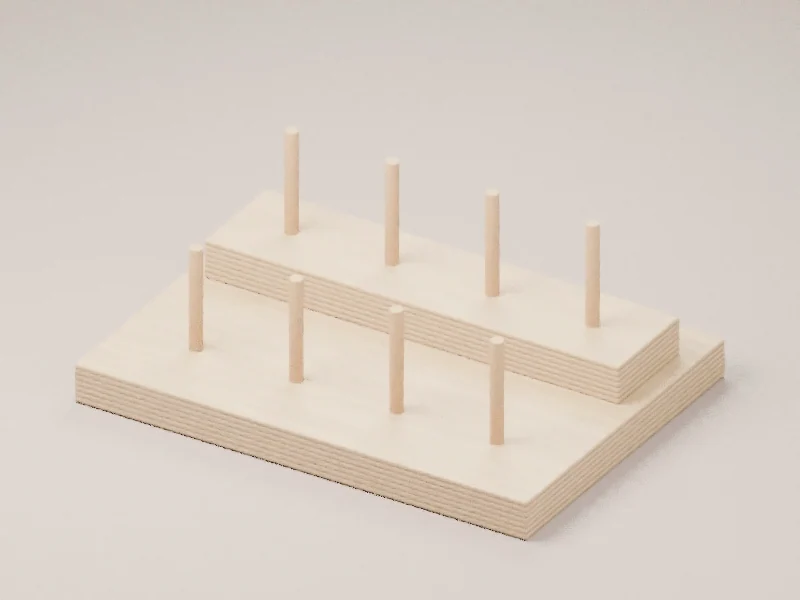
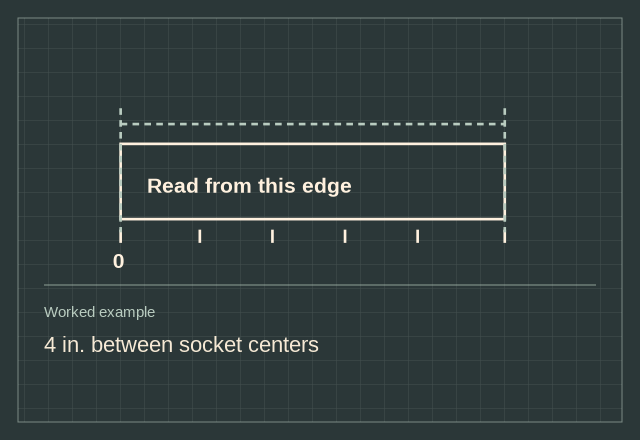
Use nonadjacent stations for wide bobbins if the feed path stays clear. For a planned rebuild, size the spacing from the broadest bobbins, including their winding, plus a margin for movement. Keep pins removable where intended and preserve enough material around any new socket.
Check the load after you add evenly wound yarn
An empty pair of bobbins can clear the whole turn and still rub when one receives a lopsided winding. Put the bobbin on its pin by itself and sight along the nearest flange while turning slowly by hand. Check whether the yarn crosses that face anywhere around the turn. If it does, a spacing check measured from the flanges alone misses the largest radius. Balance or correct the winding as the equipment maker recommends before testing it near any other bobbin. If a properly wound bobbin still fills the available half-inch example gap, choose a nonadjacent socket rather than forcing adjacent bobbins through one another.
Practice on a plan
Finished dimensions in width × depth × height order.