Choosing a project · 3 min read
Sketchboard or Letter Tray for Work That Stays Out on the Desk?
Should I build a flat drawing board or a letter tray for papers I am still using?
Offcut Journal editorialUpdated
Short answer
Build the sketchboard if the paper needs a steady working face. Build the letter tray when the sheet must leave your immediate work area between uses.
Compare the builds
These dimensions belong to the linked plans.
Finished dimensions in width × depth × height order.
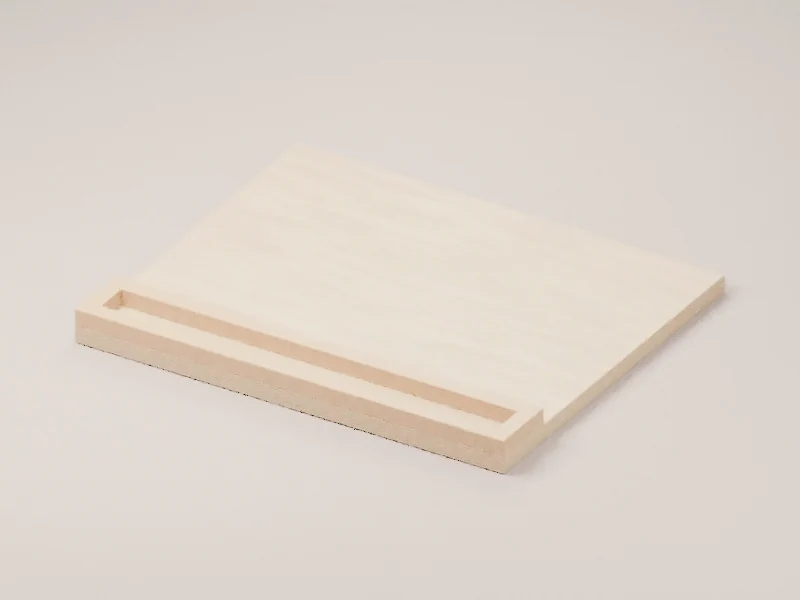
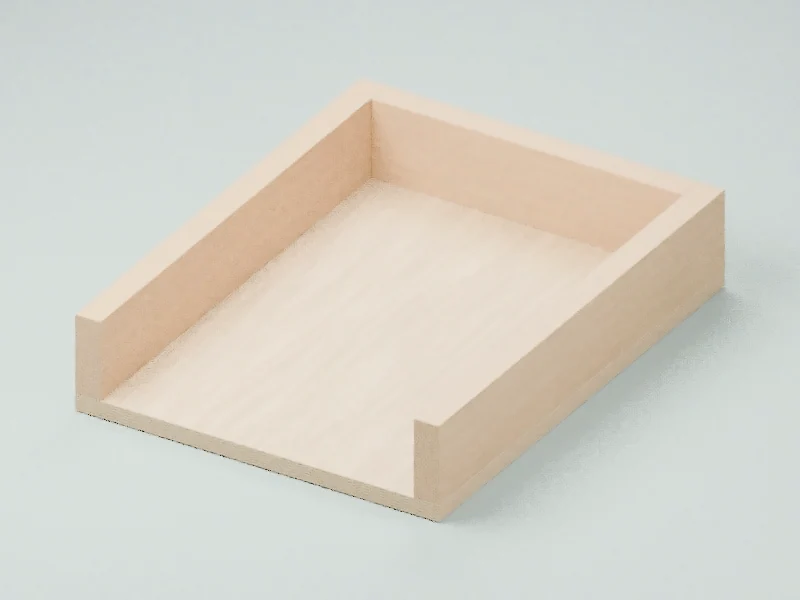
What to compare
Trace one real movement between tasks
Set a sheet on the desk and work where your elbows and chair naturally settle. Then give the desk to some other task for a moment. If you would lift the paper with its clips and pencils and take it to another stable table, the board brings the working setup with you. If paper simply goes farther back while the keyboard comes forward, a flat tray can give the stack a defined home. Mark the near edge of each with masking tape.
Include the writing hand as part of the board’s footprint
The board secures the sheet with two removable clips. Place clips near corners on a cardboard outline and run your drawing or writing hand through the same region. Mark where a clip interferes with the wrist or a straightedge. The pencil channel adds an edge that may suit one side of your setup better than the other. A mock-up can reveal that turning the board makes the paper easier to use while moving its pencil rail away from your natural reach.
Test the last sheet in the tray
Place a piece of paper on a smooth scrap behind two temporary rails. Put it as far back as it would go in the 12¾-inch-deep clear pocket. Try pulling it out while holding other papers or sitting on your usual side of the desk. A nearly flush sheet needs access along its front edge. Add an actual stack on top and watch whether you can hold the bottom item still while pulling only the piece you want.
Record one reason for each square inch
The sketchboard is 1 inch tall at the rail, which affects how it parks under a shelf with clips fitted. The tray is 2¾ inches tall overall and keeps documents corralled along both sides and back. Large piles can reduce working space even if they fit the base. Put the reserved writing tools and the active stack on their outlines and compare what remains for other tasks. This keeps a paper parking decision tied to everyday desk work.
Separate work that can be stacked from work that needs open air
An active drawing might fit the letter tray and still need an uninterrupted drying surface before another sheet lands over it. Lay a fresh blank over the 13 × 11-inch sketchboard mock-up and put the board on the stable spare table you would use between sessions. Check whether the work can stay there with its clips and any free corner supported. The letter tray is better suited to dry, flat paper that can share the pocket. If you need to set down a wet piece and store the dry originals at the same time, reserve a second drying surface before deciding how much desk space the paper organizer should occupy.