Sanding and finish · 2 min read
Choosing a Wood Finish Sheen for a Desk With Side Light
How do I choose a wood finish sheen for a desk project that sits near a lamp?
Offcut Journal editorialUpdated
Short answer
Judge sheen from your working position with the usual lamp on. Gloss affects reflections before you notice finish color, and reflections on a desktop accessory can change how easily you see the thing it holds.
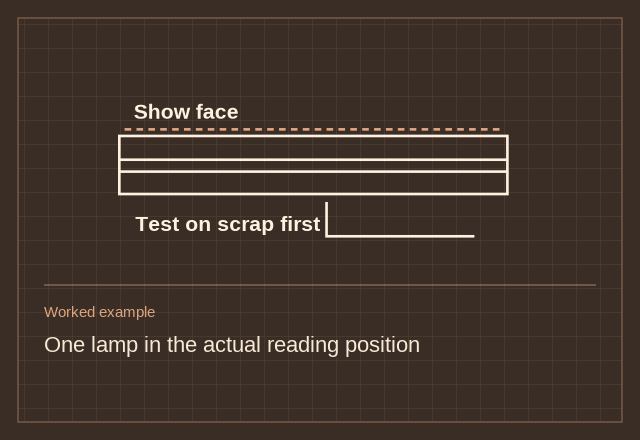
At the bench
Keep color and sheen comparisons aligned
Use products from a compatible line and a consistent color build where the labels permit. Record the sheens and coat schedule on the backs. Make the final coat the real test surface. A matte sample carrying a darker stain is not a clean comparison with a light gloss sample. Adjust the experiment so you can tell why one looks different.
Make the reflection travel across the piece
Set the sample where the project will stand and angle it slightly. Follow the reflection from where your hand or eyes will actually be. Pay particular attention to rails or shallow lips that catch side light. A band that distracts on the horizontal face can feel appropriate high on a narrow upright, where the object’s role is to frame something.
Check contact areas at the same time
Think about how often a part will be wiped or rubbed. Let each sample reach the maker’s stated condition for use and then compare the appearance after a typical clean with the approved method. Finger movements and a light reflection can make handling marks visible in different ways. Choose based on how the piece will be cared for rather than on the name of the sheen alone.
Set one rule for faces that touch visually
Keep neighboring faces at the same sheen when you want the piece to read as one compact shape. Use a different sheen on a discrete part only if you can treat the seam cleanly. Label that part before finishing. Hold the samples next to a likely seam from the normal viewing position, where different reflections can read as different color.
Check reflections with the desk occupied
Put a sheet of the paper you actually work on and the intended pencil into the dry tray before you choose from the finish samples. Move the samples to the rim location one at a time and sit where you normally read. The bright strip on the tray may land harmlessly below the sheet, or it may line up with the mark you need to see. Repeat with the lamp in its typical second position if you move it for drawing. Keep the finish comparison at the same angle each time. Choose around the reading or drawing position that matters most to you.
Practice on a plan
Finished dimensions in width × depth × height order.
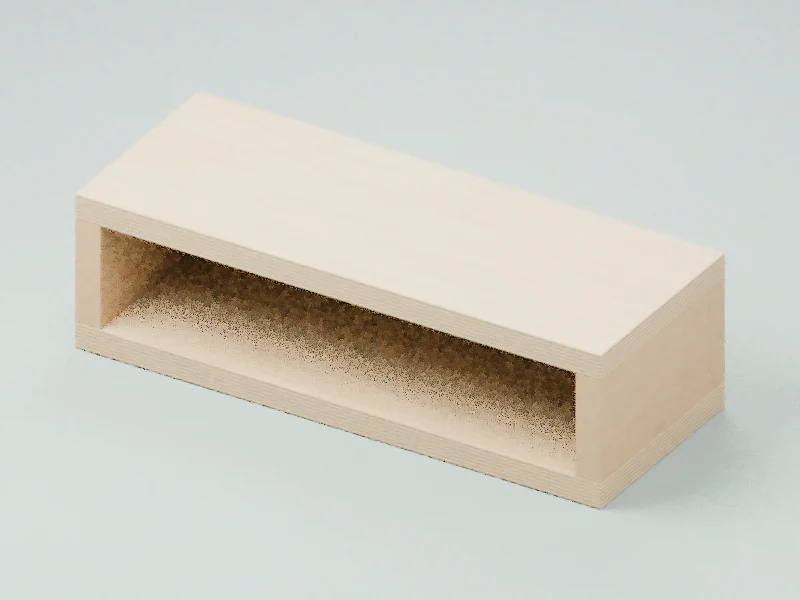 Low Desktop Shelf for Pocket NotebooksFinished size · 15½ × 6 × 4½ in.
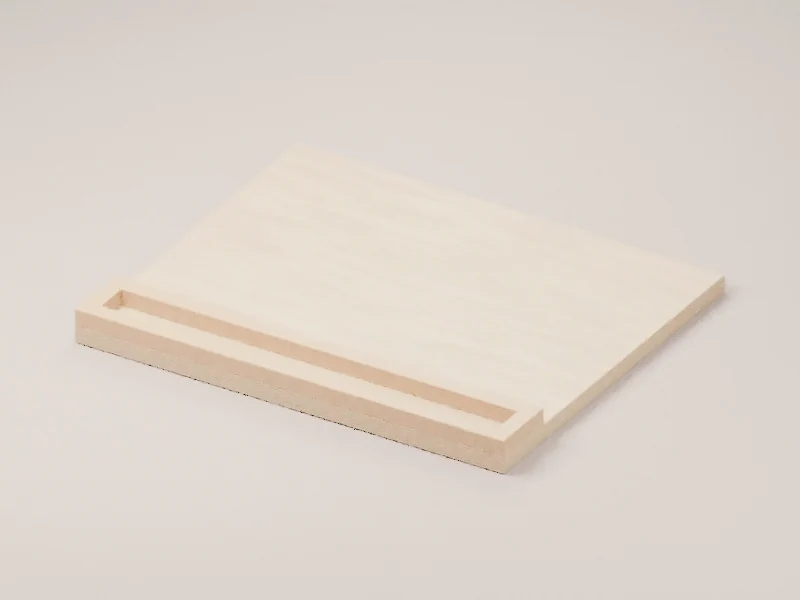 Letter and A4 Sketchboard with a Wooden Pencil TrayFinished size · 13 × 11 × 1 in.