Sanding and finish · 2 min read
Choosing a Finish for a Wood Grip or Finger Rest
How should I finish a wooden pull, grip, or finger rest that gets handled every day?
Offcut Journal editorialUpdated
Short answer
Choose after comparing identically shaped samples in your hand. The grip's contours and clearance do much of the work. A finish changes the surface feel and care routine, so test it on the shape and orientation you will really hold.
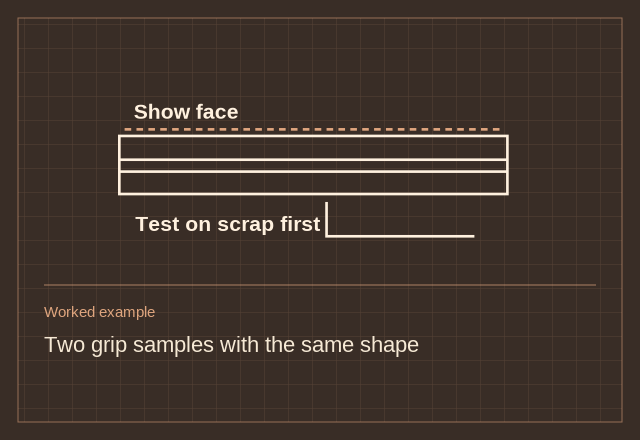
At the bench
Start with the geometry of the grip
A sharp edge or too little finger room feels wrong before you make any finish choice. Test the grip with the load absent. Check whether your thumb and fingers can reach the surfaces the plan intends. Use an accurately shaped scrap so you learn about the underside and the grip opening as well as about the show face.
Evaluate feel after the coating is ready
Follow the product instructions for condition and cure before a handling test. A partly dry sample can give an impression that does not represent its later use. Test each sample in the same clean hands and orientation. Notice drag, slickness and places that collect dust. If the intended grip will be used in gloves, include the normal glove in the sample check.
Choose for the likely care routine
Check the maker's approved care method and compare that with how you will actually use the piece. A high-contact edge may benefit from a surface that can be cleaned easily. A bare reference may feel appealing but calls for its own care. Think about what you will do after a few weeks of handling rather than making an assumption from the name on the can.
Keep a finish boundary away from a rubbing seam
If a design uses a separate unfinished or differently treated handhold, try the transition on a mock-up. Put it at a logical edge or part break so the line looks intentional. Check that you can repeat the treatment on an eventual replacement without changing the geometry. Make a note in the project record about which surfaces got what.
Inspect the inside corner where the thumb turns
A grip sample that feels good in a straight lift may feel different as your wrist rotates to set the carrier down. Use an empty mock grip at the same height as the finished handle and rehearse the whole sequence over the bench. Mark where the thumb leaves the wood. If it slides across a planned finish boundary, move the line to a less active face if the design allows. Repeat with the completed swatch after the manufacturer allows handling. Choose a treatment you can repeat at the transition and maintain there, especially where a damp hand or frequent dusting meets the grip.
Practice on a plan
Finished dimensions in width × depth × height order.
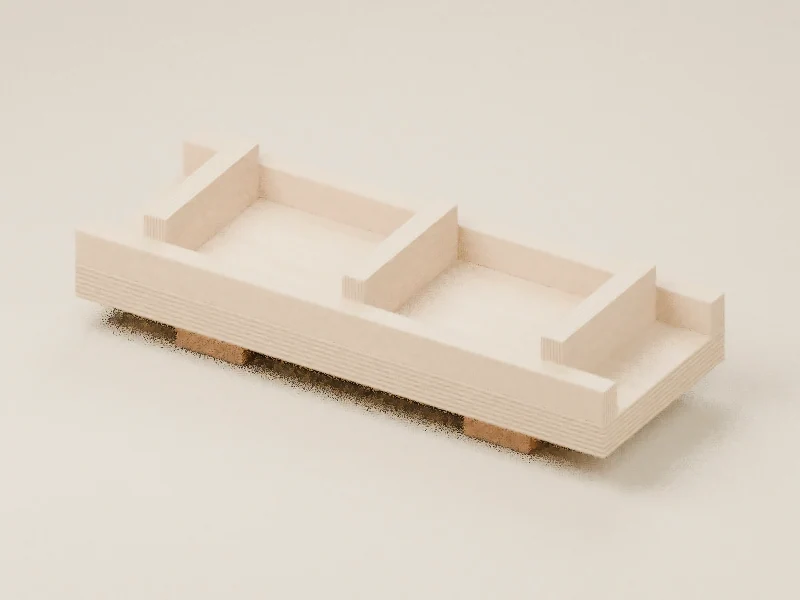 Wooden Salt and Pepper Mill CarrierFinished size · 12 × 4½ × 2¾ in.
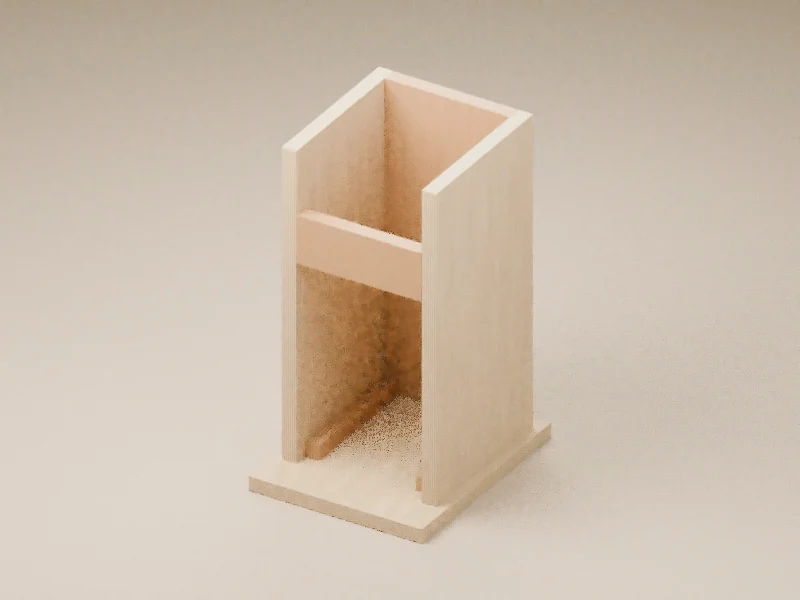 Slim Wooden Umbrella Stand with a Slide-Out Drip CupFinished size · 9 × 11 × 16¾ in.