Choosing a project · 3 min read
Upright Mail Sorter or Flat Letter Tray for Unopened Mail?
Should unopened mail stand upright or lie flat in a wooden organizer?
Offcut Journal editorialUpdated
Short answer
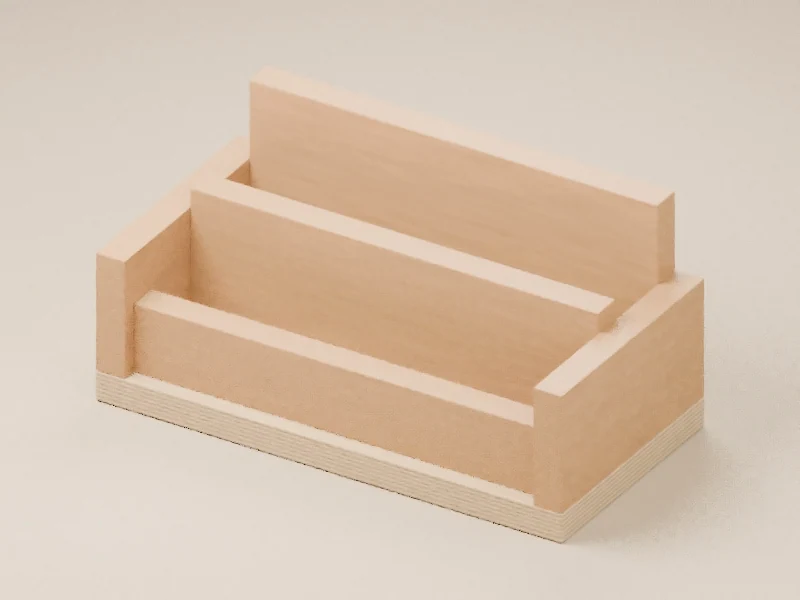
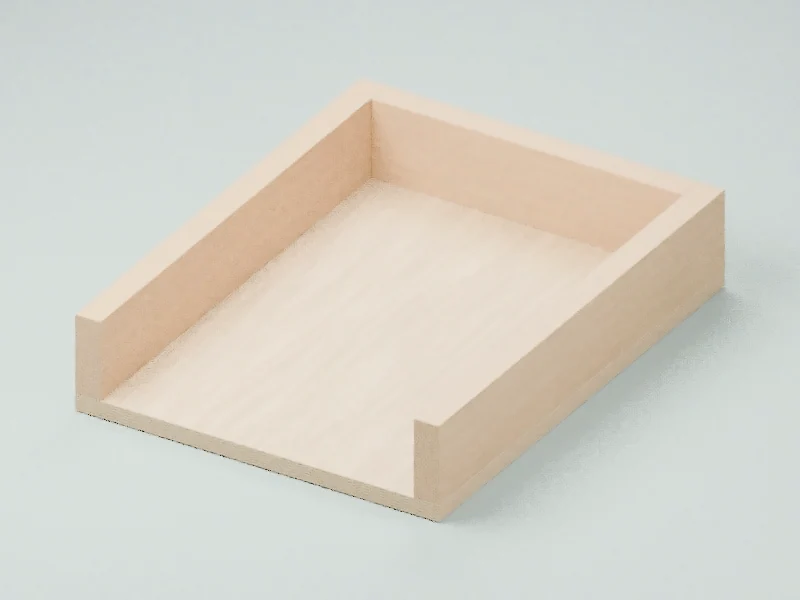
Use upright pockets when sorting envelopes into two groups. Give full sheets, stapled sets, and papers that need to stay flat a horizontal landing spot.
Compare the builds
These dimensions belong to the linked plans.
Finished dimensions in width × depth × height order.
What to compare
Bring yesterday’s mail to the counter
Look for the distribution of shapes before deciding where to store it. Ordinary envelopes have stiffness from their seams. A single folded statement can open or slump when standing. A short note or appointment card may sink behind something larger. Set all three on the surface without sorting by size first. Then look at each with the same brief glance you usually give the day’s pile. The organizer helps if your next action becomes visible.
Test the narrow direction in each design
The upright sorter’s sample front pocket has 1⅝ inches of usable depth between front stop and divider. A thick padded envelope lying on its lower edge uses more of that dimension than its mailing size suggests. For the flat tray, the depth between front and rear rail is 12¾ inches. If a sheet settles against the back, measure how far you would have to reach to touch the near edge. A short pile can disappear toward the rear just like a short item in a vertical file.
Reserve the same place for outgoing mail
Treat incoming and outgoing as different actions if they share a counter. The upright sorter already provides a shorter front pocket and a taller rear wall, allowing you to give envelopes headed out a visible edge. A single horizontal tray can hold a stack of outgoing papers near the front, provided the bottom remains easy to get under. Mark the proposed spot for keys or another item that normally shares the counter, so it does not land over envelopes when you need to leave.
Let the shelf set the retrieval route
Tape the base size on the counter. Hold one envelope over the sorter mark while your other hand presses aside a book, a bag, or a second stack of mail. For the horizontal tray, slide a flat paper forward and watch where it would meet the front of the counter or a cabinet knob. Plan depth includes the piece. Useful depth includes the work you do as a letter comes out. Keep both figures next to each other when choosing.
Check the envelope you have to keep private
A clear view of every sender is useful at a desk and less helpful on a counter beside the front door. Stand a plain test envelope in the shorter pocket and look at it from the doorway. If a window or account label would remain visible, turn the envelope so the plain back faces out and see whether your intended sorting cue still works. A flat 8½-inch statement fits the 9-inch tray with room at both sides, and laying another envelope over it can hide personal information. Store paperwork that needs more privacy somewhere closed after sorting. Either organizer works best as a short stop before your next action.