Choosing a project · 3 min read
Bud Vase Sleeve or Two-Level Bulb Rack? Compare the Glass Before the Wood
Should I build a snug wooden sleeve around one vase or a stepped rack for two?
Offcut Journal editorialUpdated
Short answer
The sleeve guides one small, straight-sided vase while leaving the front open. The stepped rack gives separate sightlines and open side access for two forcing vessels.
Compare the builds
These dimensions belong to the linked plans.
Finished dimensions in width × depth × height order.
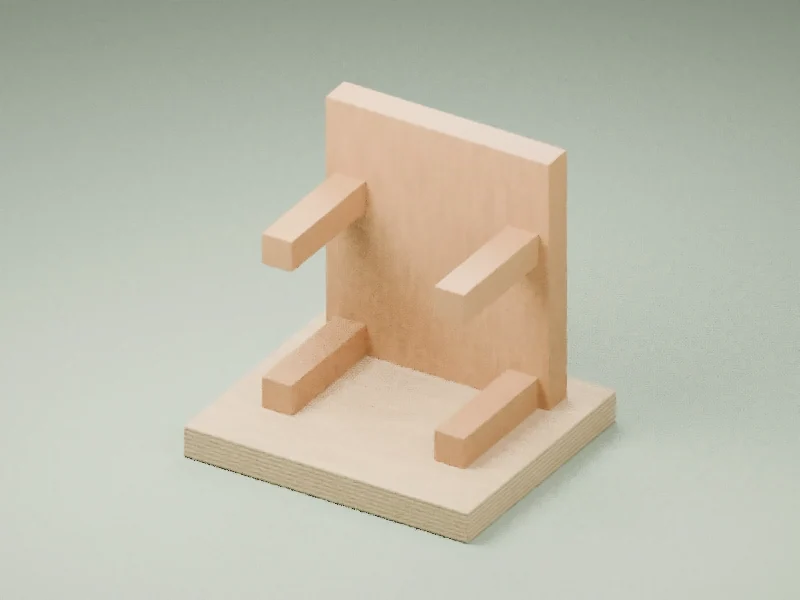
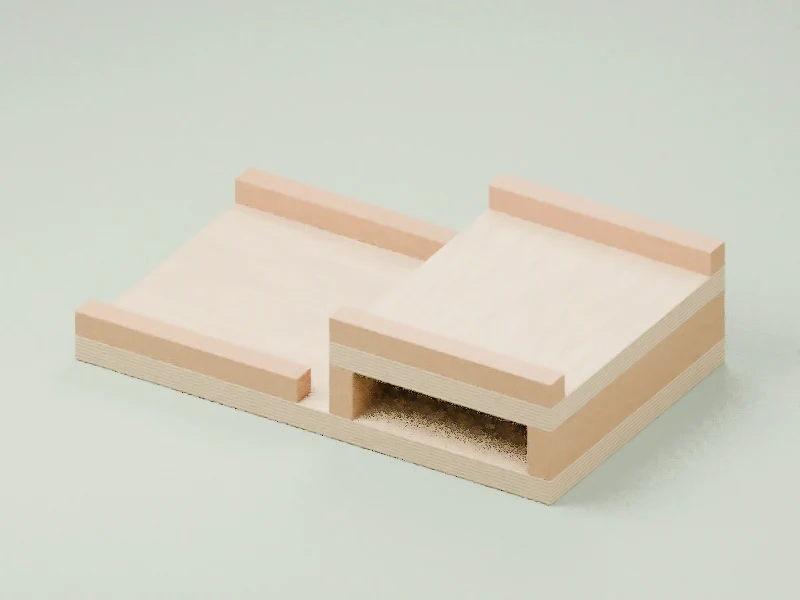
What to compare
Sketch two horizontal slices through the vase
Trace the base on a piece of paper and outline the widest body section with a second gauge. Mark the height at which the widest point occurs. The sleeve’s lower guides and higher arms occupy different parts of the vase shape. A flat tracing of the bottom can miss a rounded shoulder that clears once placed but catches during insertion. For the stepped rack, sketch both vessels together and remember that a foliage or stem silhouette can overlap the other vase even on a separate level.
Mark the water line in your sightline
Put a dot on the outside of a dry vessel using removable tape to represent the line you want to see. Check straight from the usual viewing height, then from one side. The sleeve's three-sided wooden frame leaves the front open. A deep deck or forward rail can still obscure a low line at a shallow viewing angle. The stepped rack raises one landing surface 2¼ inches above the other. Test which vessel’s visible area improves with the extra height.
Practice a protected lift with the empty vase
Clear a padded surface for trial measurements. Hold the vase with the two hands and grip points you plan to use in service. The sleeve wants clearance around its upper arms, while the rack leaves the outer sides of the two decks open for the lift. A flared shape may need more hand room on the stepped rack than the foot needs to sit. Draw in the limits of a wall, a neighboring vase, or the objects usually beside the arrangement.
Decide where water stays during care
Move the vase to a stable, protected area to clean or refill it. Include the pickup and return path in your choice of furniture location, and keep drips off the wooden deck with the containment recommended in the individual plan. The wood shape carries and locates the glass, so actual contact surfaces matter more than matching a nominal vase diameter. Fresh wood absorption and seasonally exposed edges are reasons to leave a reachable surface to inspect and dry.
Allow for the vessel you will carry back after watering
Try returning an empty vessel to the display from the same side you would approach carrying it with water. On the stepped rack, set a cardboard outline at each 7-inch platform and work out whether the upper vessel blocks a safe downward placement onto the lower deck. If both are close, place the vessel you refill more often on the easier level and make sure it remains upright during both motions. At the sleeve, check that the flared lip clears the 3½-inch guide opening in the direction you actually use. If you would have to angle a filled vase, choose a different vessel or change the display location.