Choosing a project · 3 min read
Two Wooden Ruler Racks for Very Different Tools
Can a rack for quilting rulers also hold a combination square?
Offcut Journal editorialUpdated
Short answer
The acrylic rack separates broad flat rulers and useful handle space. The shop rack leaves a deep place for a square head and a higher shelf for narrow rules.
Compare the builds
These dimensions belong to the linked plans.
Finished dimensions in width × depth × height order.
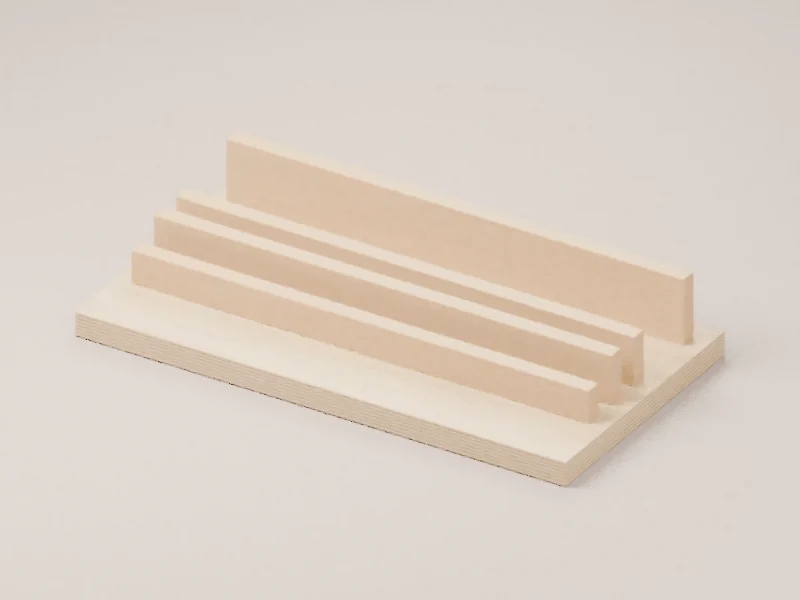
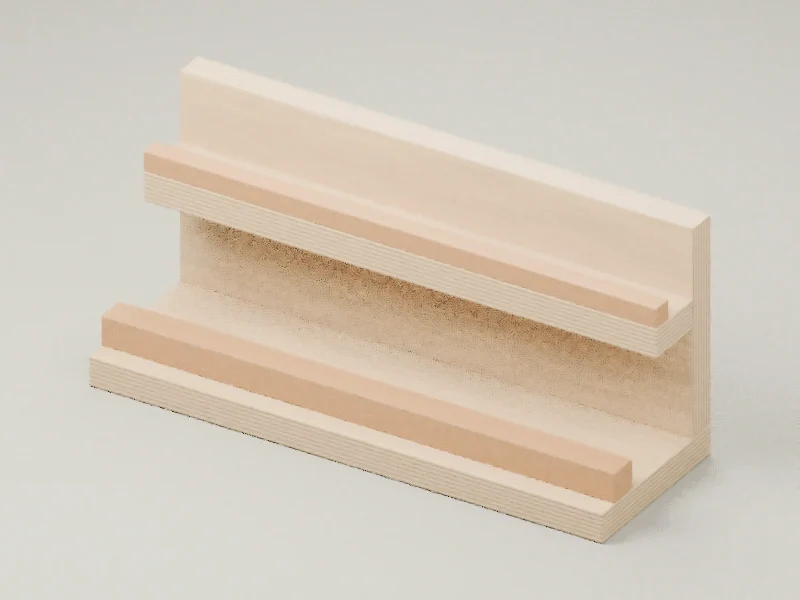
What to compare
Make a profile where the tool is supported
Put each tool on paper and trace the thickest part that will actually pass between wooden faces. A combination square can have a locking screw and small level body that extend past the thickness of its blade. A quilting ruler’s attached handle can extend high enough to remain above a separator in some orientations. Mark that height on the profile as well. You need a record of where the thickness occurs, so you can see when it matters in the slot or on the ledge.
Give the widest ruler a second check
The quilting rack’s 15 × 8-inch base keeps the narrow slots and wider handle bay on one platform. The rails span 14 inches, but long acrylic may overhang the rails when stood on one edge. Check the real ruler for an easy, supported placement following the plan. Sketch it with the widest dimension upright and sideways. People sometimes pick rulers by width markings and sometimes by sheer size. One position may show more useful information without forcing you to rest acrylic on a sharp corner.
Account for two different reaches
The square rack is 13 × 4½ inches at the base and 6 inches tall. Its tall back holds the upper ledge at a fixed height, while a lower front rail catches broad tools. Try extracting the square while a long rule occupies the ledge and observe which part of the hand approaches that upper edge. For quilting rulers, simulate taking the center piece out while neighboring rulers remain in place. Clear finger room can count more than the total number of storage lanes.
Keep clean tools near their own work
If you work fabric and wood at the same bench, check whether sawdust packs between transparent acrylic and any wood rail. Also look at the shelf where the rack might go and whether a tilted tool would cross the traffic line of your hands. Clamp spare rails on a plywood mock-up to find a position you can use without sliding ruler edges against hardware. Compare finished stock thickness to the cut list before fixing rails permanently.
Choose which marks remain readable at a glance
Stand two acrylic rulers in an empty mock-up and look for the measurement marks you rely on when you pick one. Two clear rulers can visually overlap even when they sit in separate ⅝-inch slots. Reverse the order or add a short removable label along the front of the base if that saves picking up both. On the combination-square rack, check how far a rule projects on either side of the 1-inch-deep ledge. The common rule size should be visible without moving the square head or lifting a narrow rule by its tip. Let the most frequent selection determine which tool gets the clearest spot.