Choosing a project · 3 min read
Bench Hook or Shooting Board? Give Each Tool a Different Job
Should I build a bench hook or a shooting board first for small woodworking parts?
Offcut Journal editorialUpdated
Short answer
A bench hook supports a small piece while you saw it. A shooting board directs a suitable plane along a runway to refine end-grain fit after cutting.
Compare the builds
These dimensions belong to the linked plans.
Finished dimensions in width × depth × height order.
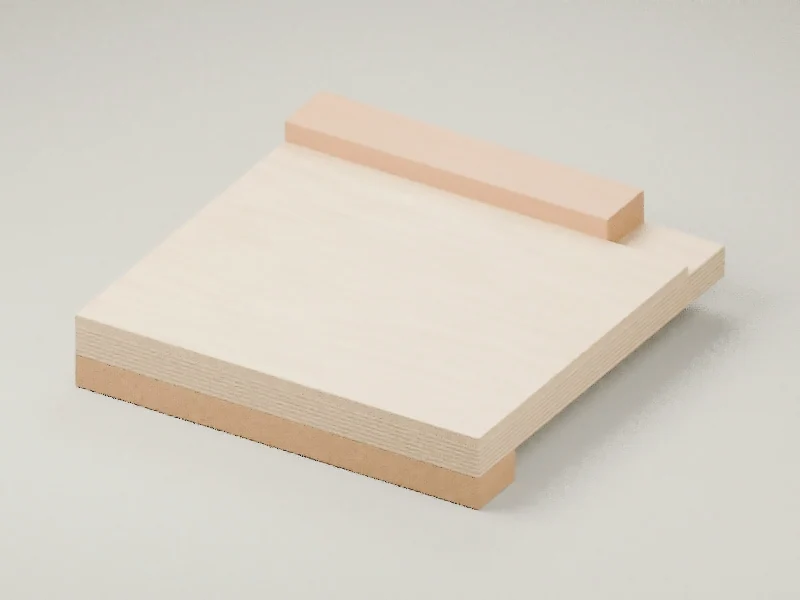
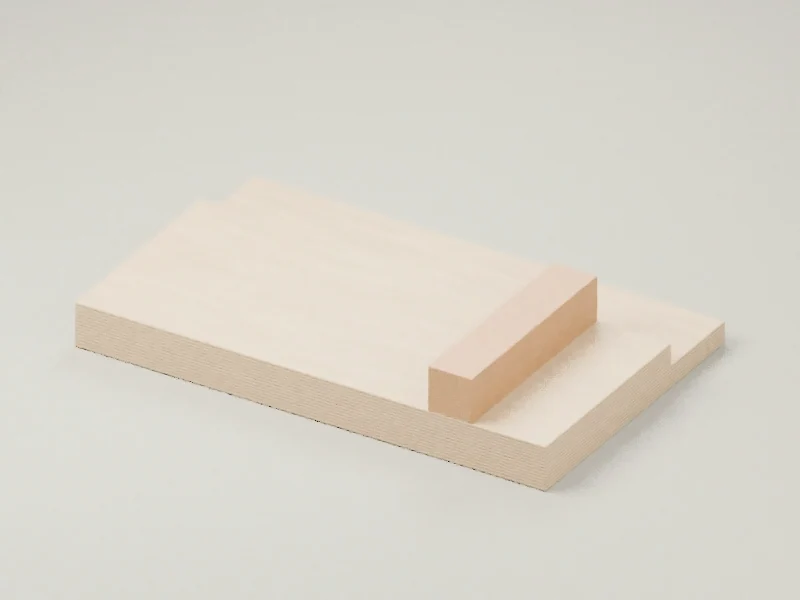
What to compare
Separate the cut from the adjustment
Begin with a piece that is longer than intended. A saw takes off a marked section and needs support around the stock and room to travel. A bench hook’s lower cleat bears against the bench and its upper fence locates the work. A shooting board uses the plane’s side against a runway to take fine shavings from an already cut end. Decide whether your current problem is the board shifting during sawing or the final end being too rough or out of square for its mate.
Make sure the plane can reach the end
Check the plane body and cutting edge relative to its side using the tool maker’s setup and a secure work surface. The shooting board’s raised work surface is ¾ inch above the runway. Project the active blade area on a side-view sketch and compare it with your stock thickness. A blade that runs partially below the raised stock will have a smaller usable cutting reach. Some planes also have a raised side contour that makes a narrower or unstable bearing patch. Check that contact before finalizing the deck.
Find the wear areas with a dry layout
On the bench hook, set the saw to the intended side of the fence and see where its teeth first meet the pad. Rehearse the angle and body position with the tools at rest. The plan offers mirrored layouts, so choose the fence position around your natural hand use and supported bench space. On the shooting board, the replaceable stop meets the work and runway edge. Draw a line across those surfaces and decide which wear parts you will eventually want to renew.
Give a small project both operations if needed
A small tray rail can start on the bench hook and then visit the shooting board to match its mate. Verify the fit using the project itself, with the two cut ends meeting their corresponding reference faces. If the saw and hook already produce the result you need, the shooting board can wait until there is something to refine. If your sawing setup is stable and the remaining problem is a tiny end gap, build around the plane you can actually use on its side.
Decide where matching length comes from
Set the two rails of a small tray next to each other and label the end each will use as its length reference. A 10-inch bench-hook bed helps you hold them for sawing, but the upper fence itself does not establish their matching length. A shooting board can refine the end square and still take a different amount off the two rails. Compare each piece against the same story stick or a verified mate after every short trimming pass. Use the 3-inch runway to guide the plane and keep a separate, clear length mark on the work. That division helps you avoid correcting a square end until its rail becomes too short.