Choosing a project · 3 min read
Bare Craft Vinyl Needs Different Supports From Boxed Kitchen Wrap
Can I store bare craft vinyl and boxed foil in the same wooden rack?
Offcut Journal editorialUpdated
Short answer
A boxed roll sits on flat shelf boards and comes out as a carton. A bare craft roll needs guides that limit rolling and room for its ends to stay visible.
Compare the builds
These dimensions belong to the linked plans.
Finished dimensions in width × depth × height order.
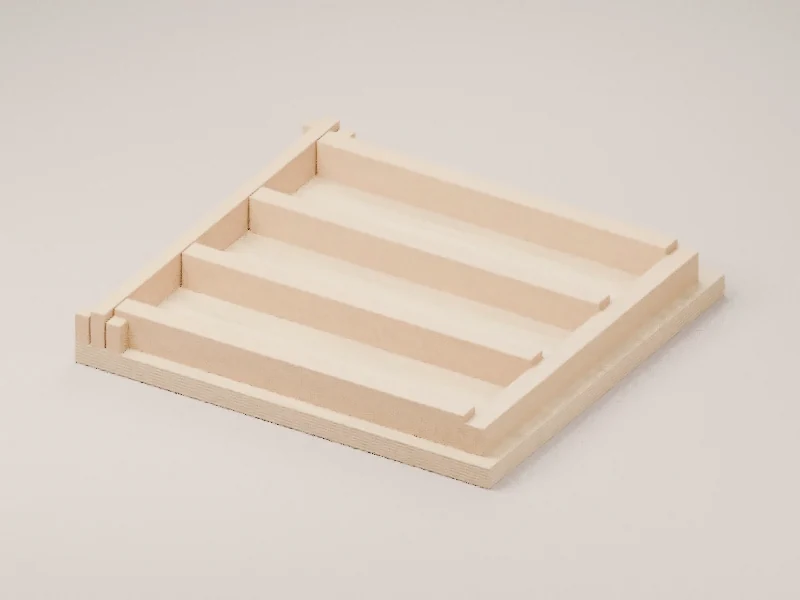
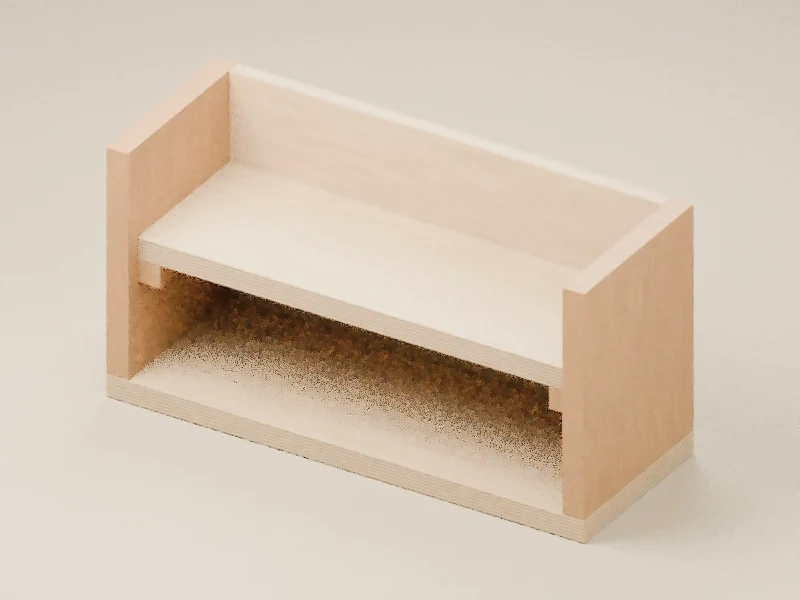
What to compare
Put a loose wrap edge where it can do no harm
Lay an unboxed roll on a flat scrap and see where its loose outer end settles. If it uncoils or catches beneath the next roll, keep it restrained in the way the manufacturer recommends for that material. Try a paper roll with the same diameter between sample guides. Put the end label where it will remain visible. A slot that accepts the bare core may be smaller than the roll once you buy another pack or retape the loose edge.
Measure the distance the roll moves to come out
The craft cradle is 15 × 14 inches overall. Its lift-out stop spans one end, so the surrounding surface needs enough room to lift the stop and slide a roll sideways when you use that option. If a wall blocks a full sideways slide, test pulling over the near rail while protecting the roll’s outer edge. The wrap organizer fronts a 16 × 6-inch base. Box extraction runs toward the user, and hand access may matter more than space to the side.
Include identification when more than one roll looks alike
Craft suppliers can use similar paper cores for materials with very different handling instructions. Store each roll with its own label and check that you can read it without peeling back the finish sheet. For boxed wrap, read the text on the side you actually see when the box is on the shelf. An inverted package can make confusing labels while still sitting squarely. Placing one package sideways for visibility can change its depth and the next package’s clearance.
Test with the unusual package first
Compare the stiffest craft roll and a long boxed item such as parchment. Measure the box across high spots in its folded cardboard. Tape the proposed parts in paper at full size, and use scraps thick enough to represent the shelf or keepers for shaping the opening. If adapting a sample opening, record actual wall thickness and compare it with nominal stock. The keeper spacing and clear shelf width are both differences between physical members, so their measurements include actual stock thickness every time.
Check whether a short remaining roll is harder to retrieve
A bare roll may start nearly the length of its lane and end up as a short remnant cut from the same material. Lay a cardboard tube of that shorter length between inner guide faces set 3¼ inches apart. Slide it to the far end and see whether you can reach it without pulling another roll or removing the entire cradle. Label it and put it in a separate shallow spot if it slips out of sight. On the boxed-wrap shelf, a nearly used roll can keep its original 14-inch carton, so that earlier width measurement still holds. Store partial supplies by their present shape and keep the full-size lanes for items you can reliably retrieve.