Fixes at the bench · 3 min read
Why a craft vinyl roll catches the next roll
Why does one vinyl roll uncoil across the cradle and catch when I lift it?
Offcut Journal editorialUpdated
Short answer
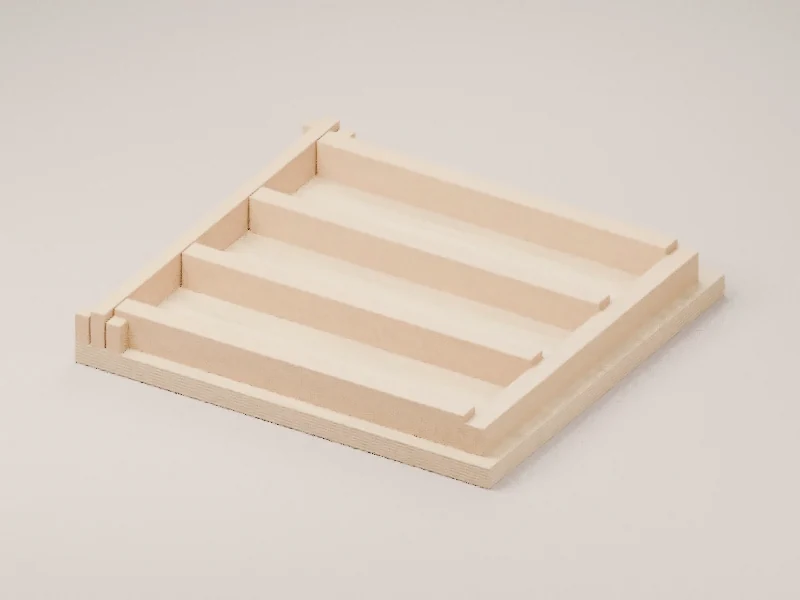
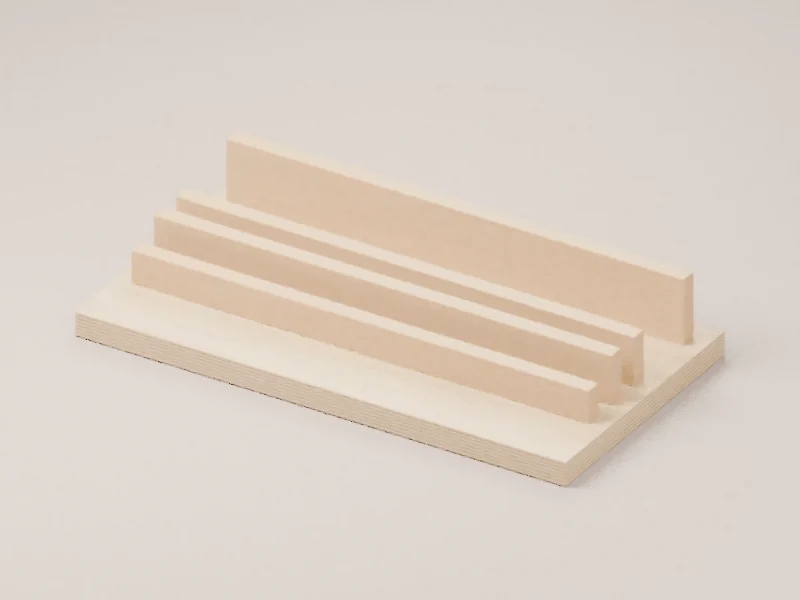
The tight part of a vinyl roll may be much smaller than the loose outer turn. The tail can grow sideways until it meets an adjacent roll, or slide down and hook under a rail when you lift. Move finished pieces and tools out of the way. Start with an offcut roll you can handle without caring about a crease. Watch what its outer loop does under its own tension with the cradle empty.
Find the cause
Locate the loose tail at rest
Place the sample roll in its usual orientation with the next lane empty. Leave any retaining band you already use in place for the first lift. Remove it only if the material instructions allow and watch the tail. If the tail sags toward the floor, it can travel below the wood edge before you have enough grip to lift the whole roll.
Compare a held roll with an unheld one
Temporarily hold a disposable sample together with a loose reusable closure the material maker permits. Lift the sample with two hands. If the snag disappears, record the largest width of the closed envelope and repeat in another lane. Avoid placing a hard clip over a surface you need to keep smooth or exposing adhesive to the cut edge.
Make room for your fingertips
Put one test roll in the adjacent lane. Notice where your fingers enter and whether they open a seam as you get a grip. You may have more room coming from the end than going straight down between two rolls. An end clearance can help even when the problem appears midway down a divider.
Choose space for the widest stage of the roll
Group loosely wound or bulky rolls in the broadest positions. Use vertical or flat storage if the material maker specifies it. Label the end you can actually read from the shelf, with a tag clear of the moving tail. Keep unused vinyl away from heat so its storage behavior remains easier to compare.
Check whether the roll spreads after its end stop catches the edge
A roll can stay compact when you first set it down and open during the shove toward the end stop. Lay a discard sample in the empty lane and watch the outer wrap as the end settles. If the core moves while the tail drags on the stop, compare again with the sample centered rather than pressed against that face. Mark where the full wrap ends when it is relaxed. A safe storage closure may help keep the end even when the maker allows one. Leave room for the closure itself and check that it clears the rails before returning useful material to the cradle.
Practice on a plan
Finished dimensions in width × depth × height order.