Measuring and layout · 2 min read
How to Template a Couch Arm That Tapers Front to Back
How do I fit a wooden couch arm tray when the front and back of the arm are different widths?
Offcut Journal editorialUpdated
Short answer
Mark where the tray will sit and measure the arm across both ends of that spot. Trace each section at the depth the cheeks will reach, with the fabric and any seam in their natural position. A straight-sided tray needs to clear the larger shape and can use removable padding in the looser section.
At the bench
Mark a definite front and rear location
Lay a card on the arm and mark the ends of the footprint you expect to use. Align its front edge to a feature you can find again, such as a stable upholstery seam. Work where the tray will actually rest. Rounded ends and decorative seams can make two measurements a few inches apart differ by a surprising amount.
Take cross-sections at the reach of the cheeks
Set upright scraps or card at the front position and gently bring them toward the upholstery. Stop when they touch it without distorting the cushion. Square their positions onto a flat card across the top and draw the lower profile at the intended depth. Do the same at the back, keeping the two cards labeled in the same orientation.
Check the top before spacing the wood
Place a flat sheet where the tray would sit and put a couple of ordinary lightweight objects on it to see whether it rocks. Rounded and arched arms may support a flat top at one central patch, even when the sides are clear. Try different positions first. If the top will not sit steadily, choose a design with a more appropriate support arrangement.
Test removable pads at the loose end
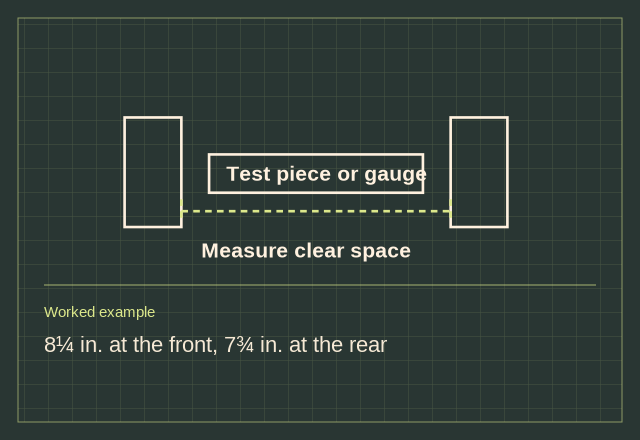
Hold two scraps at the trial spacing and put card samples where the pads would sit. Try lifting the frame and replacing it without touching fabric seams. Work with the real pad thickness before sizing an opening. If adding enough pad makes the wide end bind, use separate short pads at the narrow end and preserve the loose fit where it is needed most.
Check for an off-center arm profile
At an 8½-inch cheek opening the front section has ¼ in. of total play, but that does not guarantee ⅛ in. on each side. The upholstered arm can slope farther out toward the seat. Mark the midpoint on both templates, then lay them in their mapped positions and sight along the front-to-back line. If the midpoints are offset, hold the model where the tray top must sit and use slips of card to compare actual left and right gaps. Adjust the short pads independently if the fit requires it. Check that the relocated pads keep the wide end free and that you can still lift the unloaded tray straight back off.
Practice on a plan
Finished dimensions in width × depth × height order.