Fixes at the bench · 3 min read
Why a couch-arm tray shifts on upholstery
Why does my couch-arm tray shift when its base sits flat on the bench?
Offcut Journal editorialUpdated
Short answer
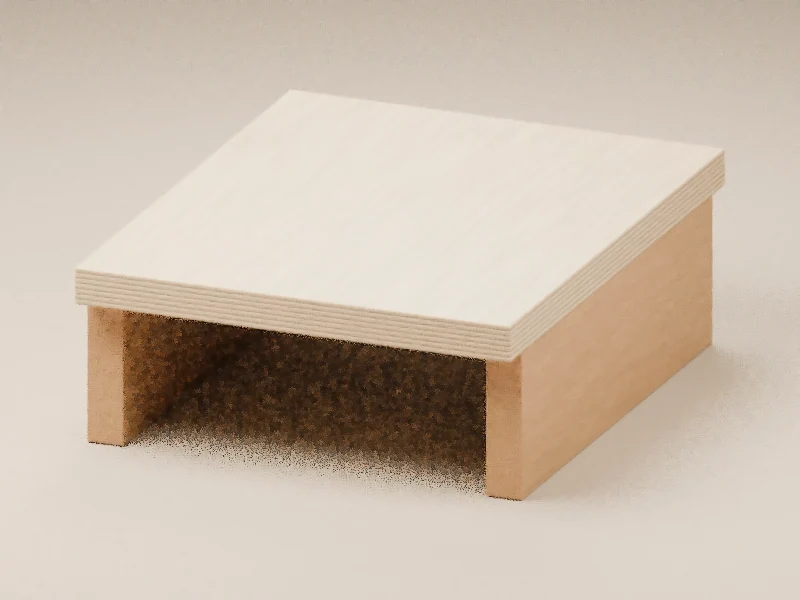
Start with the tray empty. The two cheeks may be square to the deck while the upholstered arm narrows toward the seat or compresses more on one side. That gives the tray room to move just when you reach across it. Work out where the fabric first contacts the cheeks, then repeat that check lower down with the tray fully seated. A loose fit at the bottom can feel like a fit problem at the top because the whole tray pivots around one upholstered seam.
Find the cause
Find the contact zone with paper
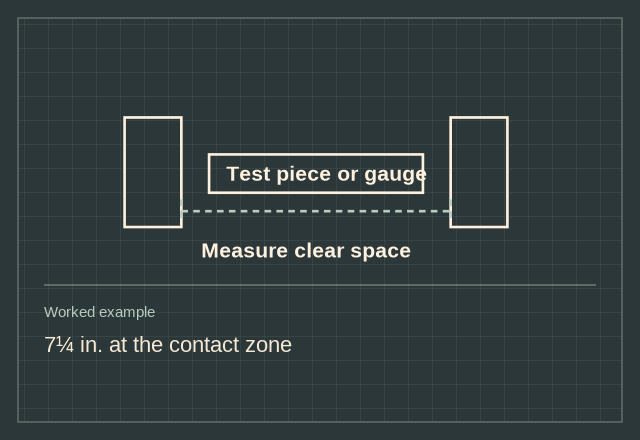
Tuck a strip of ordinary paper between each cheek and the fabric while the tray settles under its own weight. Mark where the paper begins to drag. Repeat toward the front and toward the back. Different drag points can expose a curved arm or a raised seam that a width taken with a ruler would miss. Keep folds and zipper pulls clear so they cannot make a false contact.
See which way the tray moves
Rest a finger lightly near the center, then move it toward each corner while you watch the gap at the opposite cheek. A gap that opens on one side tells you the tray is pivoting. Front-to-back travel with both side gaps unchanged points to the arm taper or the liner surface. Repeat on a flat bench if you suspect a loose joint in the tray.
Try a removable liner in one place
Keep the existing pads clean and dry. Hold a thin removable sheet against a cheek where you observed space and reseat the tray empty. More friction at a real contact point may make a difference. Adding material where the arm never reaches the cheek can make the tray sit high without improving the original contact.
Check the deck height after the change
Sight the deck against a level reference in the room, then lift it off and inspect the cloth for impressions. The tray should lower and lift directly with one hand and without pulling at the fabric. A sofa arm that yields considerably with light contact is better paired with a table and a freestanding catchall for small items.
Check where the seat cushion presses the inner cheek
Two couch arms of the same width can behave differently beside different seat cushions. Look down between the cushion and the inner cheek with the tray empty. If the cushion already touches the wood, ask someone to sit in the usual spot while you keep a hand on the deck. Check whether the cushion swells into the cheek as it compresses. That side load can explain a deck that sits still on an empty couch but turns when you sit down. Move the tray along the arm only if its whole footprint still bears securely there. If no supported position clears the cushion, use a separate table.
Practice on a plan
Finished dimensions in width × depth × height order.