Choosing a project · 3 min read
Spice Steps or a Mill Carrier? Decide What Actually Moves While You Cook
Should I build a stepped spice rack or a portable salt and pepper holder?
Offcut Journal editorialUpdated
Short answer
Use the steps for a group of jars you read and retrieve in place. Use the mill carrier for a matched pair you transport by supporting the base.
Compare the builds
These dimensions belong to the linked plans.
Finished dimensions in width × depth × height order.
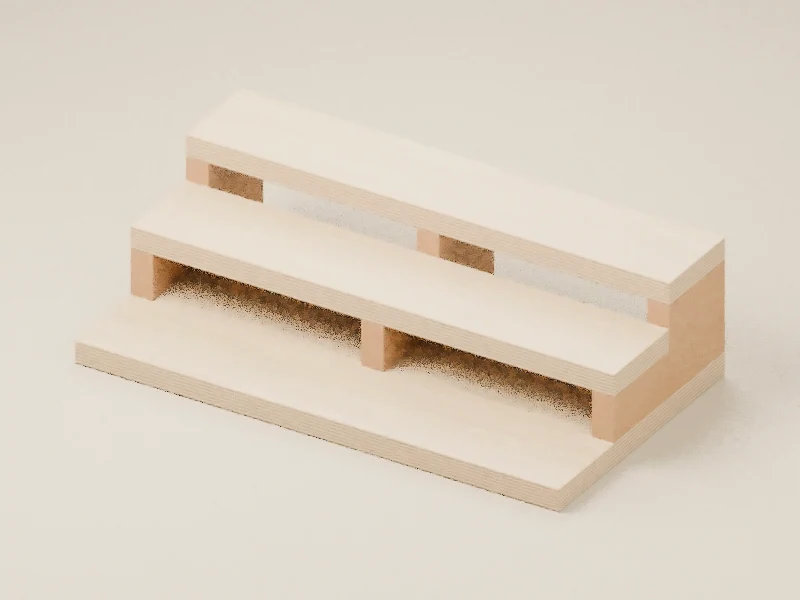
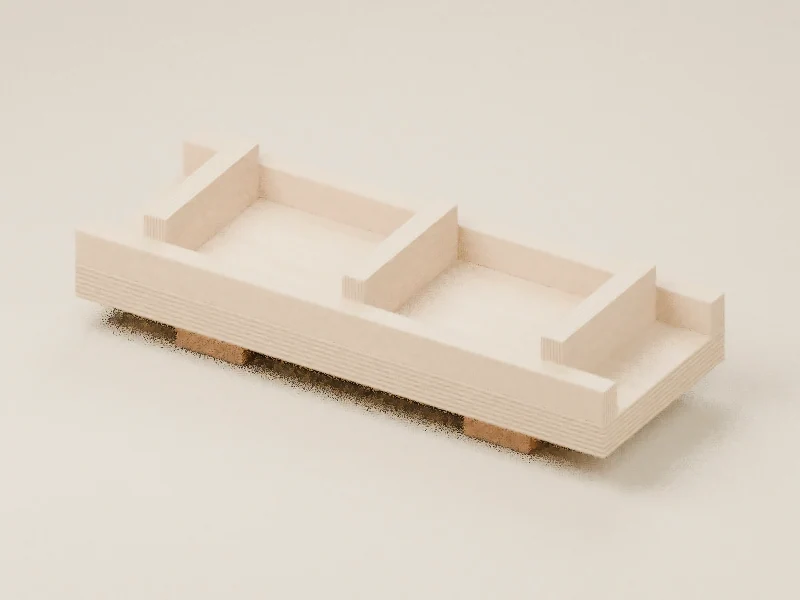
What to compare
Read the labels in your usual stance
Use tins or small boxes to raise the middle and back rows of a trial arrangement to the riser’s 3-inch and 4½-inch top levels. The front tread sits ¾ inch above the counter. Fill the front row with your tallest jars and see what remains visible. If most identifying information is close to the bottom of each label, shifting a tall jar can make a difference without changing a tread. Compare the reach to the back row from the spot where you prep.
Keep a separate record of the grinder dimensions
Roll a thin paper strip around each grinder at its widest point to find where neighboring bodies approach. Set each foot on measured paper for the footprint and check any outer skirt or cap that moves during grinding. The carrier has 4-inch-wide sample wells and a 3½-inch clear depth between long lips. A grinder may have the right diameter while parked and still need more glass-to-glass space to get a confident grip during pickup.
Follow the route between counter and table
Support a piece of scrap the width of the carrier from below and make the usual trip empty. Watch for the corner of a countertop or a place where you need your free hand. A fixed spice riser can span 16 × 9 inches because it stays on the counter with six supports under the elevated steps. The carrier’s 12 × 4½-inch base stands on two sleepers, leaving a grip clearance to evaluate before adding full mills.
Plan where stray grounds can go
Lift each jar or mill from standing storage and look at its underside. Grinder crumbs often collect around the foot, and the carrier’s wells make clean reachable corners valuable. Choose a cleanable setup compatible with the finish’s directions and the kitchen surfaces around it. For the riser, think about how often you will move the rear jars to wipe the full tread. Keeping the most-used seasonings split by reach can make both cleaning and cooking more direct.
Mark the footprint with the cooking tools still in place
An empty counter flatters a 16 × 9-inch riser. Put the chopping board, mixing bowl, and the tool that stays out most often in their usual spots, then tape out the riser. Stand where you prep and see whether the front tread makes you move the bowl just to get to a jar. A 12 × 4½-inch carrier can leave that space clear while it is at the table, but it needs a dedicated place to land when it comes back. Compare both footprints with the frequently used tools still on the counter. Make the choice based on the busiest part of the routine.