Fixes at the bench · 3 min read
Why a shoe brush catches when you pull its tab
Why does the brush fit the pocket but jam when I use its pull tab?
Offcut Journal editorialUpdated
Short answer
A brush often drops into a pocket flat but rises corner first when the tab is pulled. A wooden brush body can be slightly tapered, and the pocket can offer less space at the lip than at the bottom. Remove loose polish with a method appropriate to the brush and dry the station. Try one slow lift while watching the opposite end of the brush. Its movement reveals more than a single measurement with the brush at rest.
Find the cause
Lift the brush by both ends first
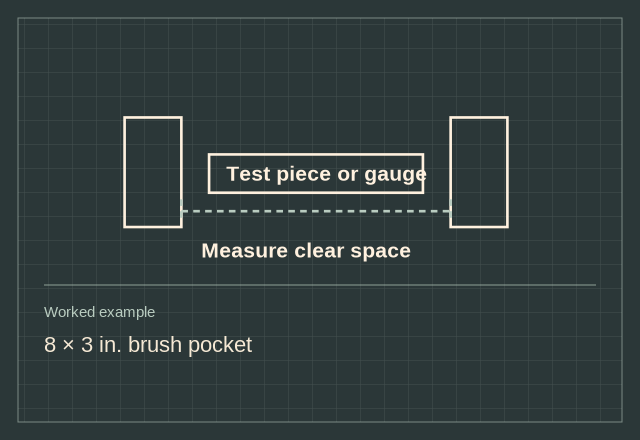
Lift it with equal pressure at the two ends while you can see the body. If it comes out easily, put it back and repeat using the tab. Watch for rotation of the opposite end into a corner. If it catches, mark where it touches with a small piece of tape outside the pocket. Test the empty pocket with your cardboard gauge at that point.
Look at the tab after it has rested
A tab can fold underneath the body or crease across one corner after storage. The brush then rests on a raised stack of material. Lay the tab outside the opening, lower the brush again and compare the height at both ends. Keep loose tab material out of the pocket corners as the brush returns to its seat.
Compare the pocket lip to the floor
Hold a square-ended scrap across the pocket near the floor and again against the inner faces near the top. Compare the readings near the ends and in the middle. One raised finish ridge or rounded interior corner can explain why the gauge catches only when held near the lip. Inspect the underside of the brush body for a corresponding scuff.
Place the grip where it changes the least
Try lifting at the center of the front access gap so the body stays closer to level. If a fixed tab pulls from an extreme corner, see whether a simple clear finger grip in the existing gap is easier. A compatible smaller brush may be more useful if the handle and bristles already crowd the pocket.
Check a handle grip that starts out tilted
The five-inch front gap gives you access over part of the brush. To see whether you use enough of that access, place two pencil marks on a matching cardboard gauge where your fingers actually land. Draw an end line on the same card and watch it as you lift through the gap. If the line pans sideways before the card rises, move your grip toward the middle of the brush and repeat. A handle wide enough to touch both the lip and the wall during this lift needs a different retrieval route or a roomier pocket. Keep the pocket wall intact while you test.
Practice on a plan
Finished dimensions in width × depth × height order.