Choosing a project · 3 min read
Boot Jack or Brush Dock? Build for the Part of Shoe Care That Gets Awkward
Do I need a boot jack or a removable shoe-brush station by my seat?
Offcut Journal editorialUpdated
Short answer
The boot jack supports seated removal of a boot with a compatible heel. The brush station gives a hand-held brush a removable home where you can reach it from the bench.
Compare the builds
These dimensions belong to the linked plans.
Finished dimensions in width × depth × height order.
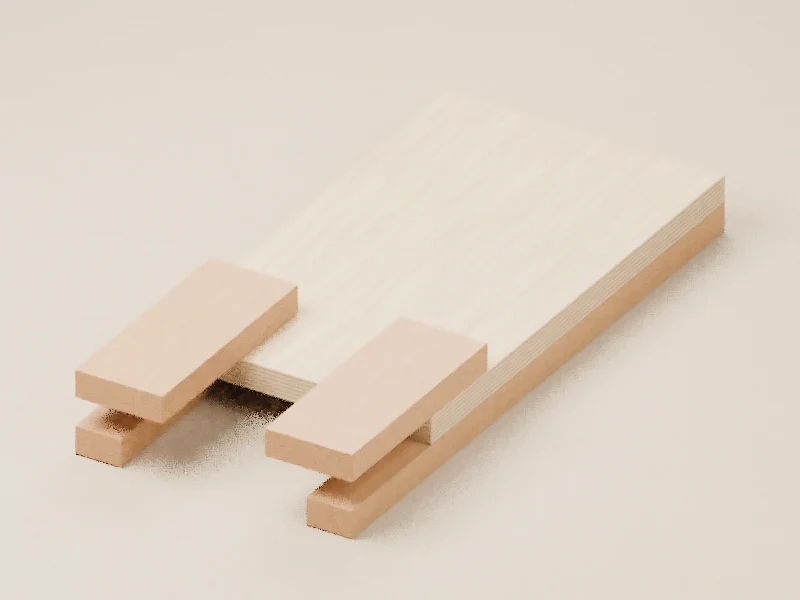
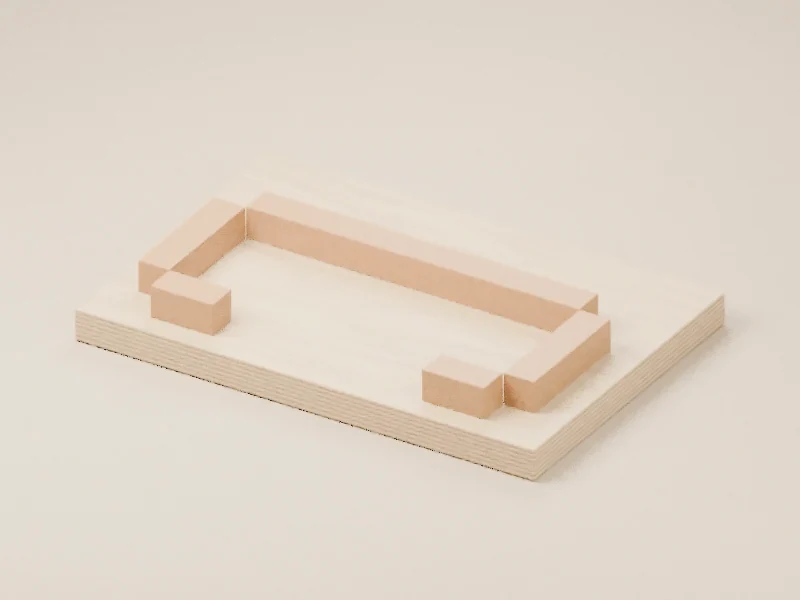
What to compare
Watch what happens when the heel changes angle
The boot jack has parallel jaws. A boot heel can be narrow near the sole and broader a little higher, so a single outside measurement may miss the point that catches. Mark the intended contact on a paper side silhouette before comparing it with the 6-inch-long jaw area. Use the mock-up only to observe shape and reach. A cardboard model cannot absorb the forces of removing a boot or prove that the finished jack holds safely.
Find the brush point your fingers want
The 11 × 7½-inch dock has a rear stop, two cheeks, and divided front stops. Together they form an 8-inch-wide pocket before any adjustment for your brush. Brush handles can taper, have a palm strap, or bulge in the middle. Place scrap stops beside the widest wood part of the brush and try picking it up by its natural grip. The open segment between front stops needs to stay reachable even when the brush is seated tightly.
Decide which surface gets the dirt
Choose the place where boots actually come off or where you hold them to remove dirt. The boot jack occupies 7½ × 16½ inches on the floor with runners aligned along the deck. The brush station can sit on a clear, stable ledge while the brush comes into your hand. Consider which part can be swept separately and whether rough grit will collect around the stop. Give loose grit somewhere away from the clean contact face before parking the brush.
Leave room to keep seated
Slide a sheet of cardboard representing the jack along the floor until it lies where you can reach it while seated, with both feet supported during setup. For the brush dock, mark an 11-inch band beside your seat and check that a seated hand can reach the brush without twisting or stretching around a side panel. The first useful change may be locating the station closer to where you already sit. Measure from that point before making any physical parts.
Check whether one fixture serves both pairs
Try both the work boot and the boot you wear around town. Put the two heels against the same 2¾-inch jaw template and look at the seam or projecting rubber tread that would meet the jaw first. A liner that protects one heel may make the other too wide. Leave a gap that suits the pair you actually remove at this seat, and take the other off by your ordinary seated method. On the brush side, compare the dirt brush and the finer finishing brush if you use both. An 8-inch pocket occupied by the first tool becomes unavailable the moment the clean brush needs a separate place.