Fixes at the bench · 3 min read
Why an umbrella drip cup catches on removal
Why does the drip cup fit when I set it in the umbrella stand but snag when I pull it out?
Offcut Journal editorialUpdated
Short answer
An empty cup lends itself to a little tilt when you set the rear edge down. Once used, you instinctively keep the rim level and try to lift the front edge with your fingers under it. That uses a different opening. Drain the cup and take the umbrellas out first. A clean, dry cup lets you see whether the trouble is the motion, a projecting rim or a change in the opening itself.
Find the cause
Find the obstruction with a dry cup
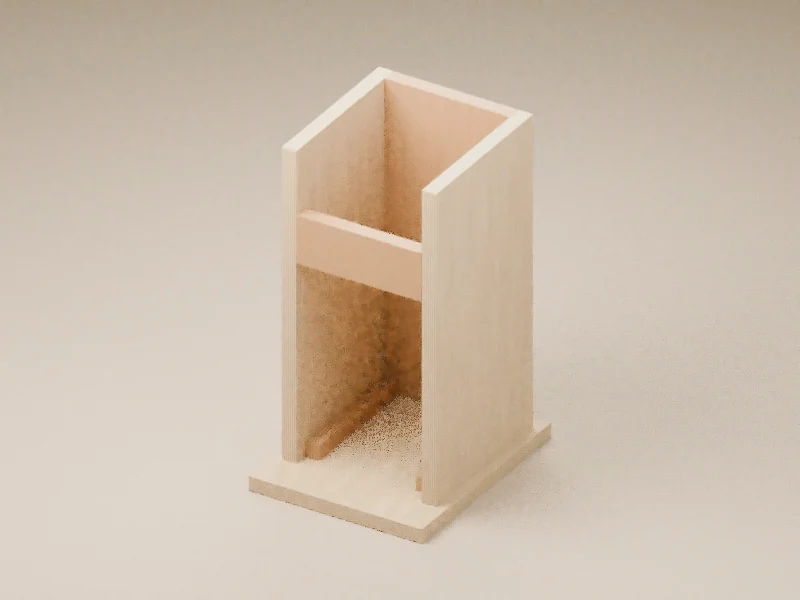
Draw the cup forward slowly at its usual level with both hands within easy reach. Mark the wood beside the first contact on removable tape. A shiny scuff on a plastic lip is another clue. Rotate the empty cup half a turn if its shape allows. If the scuff moves and the catch remains on the stand, inspect the floor stop or cleat for a narrower point.
Compare the outside width at three heights
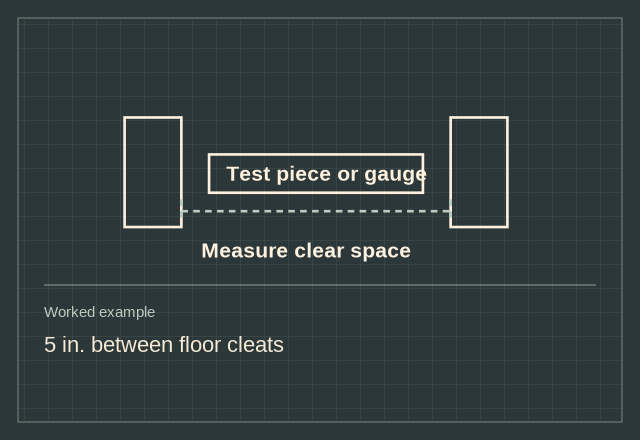
Measure the bottom, mid-wall and rim including handles or reinforcing tabs. Measure the clear wood opening at those same heights along the entire removal route. A five-inch gap near the floor can be more restrictive than a wider opening above. Pay special attention to any raised tab that crosses into a cleat only when the rim tilts downward.
Allow room for fingers to carry it
With the cup empty, make a second pass holding it as if it were wet and you needed to keep it upright. If fingers crowd the wood, test a different cup with a more accessible rim or give it a stable grip position. Avoid using a flimsy part of the handle as a lever against the stand.
Trace the path from where you use it
Put the empty stand at its intended location and see whether the nearby wall or furniture stops your hands before the cup is free. If you only have an angled approach, decide whether the whole stand can turn on the floor without narrowing foot traffic. Repeat with the cup empty after each change.
Leave enough room to put the cup back level
A cup can clear the cleats on its way out and wedge on the return if the rear drops as you let go. Use the dry cup and keep both hands on it while finding a clean reference for its orientation. Put a small removable arrow on the outside of a square or asymmetric cup and align it with a mark beside the front of the stand. Return the cup as you would after draining, then lift it clear and repeat from the usual standing position. If the alignment only works with your hand pushed into a pinch point, change cups or the approach before refilling the stand.
Practice on a plan
Finished dimensions in width × depth × height order.