Sanding and finish · 4 min read
How to Seal Plywood Edges on an Indoor Plant Stand
What should I use to finish exposed plywood edges on a small indoor plant platform?
Offcut Journal editorialUpdated
Short answer
Smooth the exposed plies, use a compatible interior coating according to its label, and inspect all four edges for missed spots. A separate watertight saucer keeps regular watering runoff off the platform.
At the bench
Start with clean exposed plies
Look down all four plywood edges and the underside corners before finishing. An edge with loose fibers needs a light pass with a sanding block. An open void or loose layer near a visible corner takes more judgment. Choose intact stock for the deck or follow the finish system’s allowance for a compatible filler on a small sound void. Test it on the same edge offcut first. Keep the top veneer away from aggressive edge sanding. The goal is to prepare a smooth existing edge without thinning the face.
Use the same finish system on the scrap
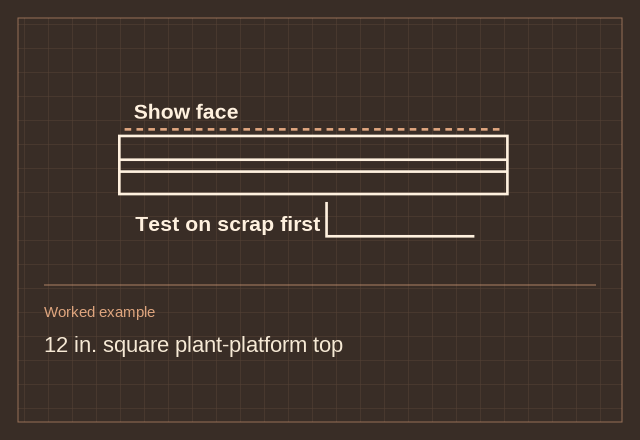
Pick a coating whose label describes the intended interior wood use and follow its directions for sanding, coating, ventilation, and cure. Test an edge plus both faces of a cut scrap. The cut edge may look duller at first because different layers take the first pass differently. Work to the specified film or coat schedule rather than pouring on a heavy coat where the sanding marks show. Check the lower edge where finish can gather into a bead and the underside near the runners for a dry stripe you missed.
Check every face the saucer can hide
Before adding the planter, inspect the deck in light from two directions while it is still clear. Turn it over after the finish maker allows handling and check around the runners. Any area of bare glue contact should have served its purpose by assembly. Coat the remaining accessible surfaces as your finish system allows. Keep the stand away from accidental water during cure. Adding the pot early makes it hard to see a drip, and the rim of a covered saucer can press on a finish before it is ready for normal use.
Make watering a separate operation
Use a saucer wide enough for the whole pot base and set it flat on the platform. Check the empty saucer for cracks or pinholes away from the wood, such as over a sink. Lift the pot to water elsewhere if the existing saucer fills easily. When you do water in place, check the area beneath the saucer and wipe up spilled water promptly. The Forest Products Laboratory treats liquid water exposure and drying conditions as core concerns for finish performance. Keeping the platform easy to inspect and dry matters more than adding a thicker coating.
Follow the route a spill can take
Set the empty pot and its saucer on a paper outline of the top. Imagine a small spill at the rim while you water and trace where liquid would travel along the surface. A rivulet can pass under a saucer flange and reach a cut plywood edge before you notice it. Check the clearance behind the pot too. If the platform sits too close to a wall to reach that edge with a cloth, move it or water elsewhere. Test the intended saucer by lifting it straight up with both hands on the empty mock-up. A smaller gap that is easy to inspect may work better than a wide rim you can hardly grasp.
Inspect after the stand returns to everyday use
After the specified cure and the first few uses, lift the saucer and check the deck and its edges in a raking light. A glossy trail or damp ring tells you where the runoff went. Give the stand a chance to dry after wiping it and look at the exposed plies again. If an edge stays swollen, develops a soft area, or shows a loose layer, take the stand out of use and assess the affected panel. Keep the pot supported elsewhere while you decide whether the panel should be replaced. When the stand returns to use, give it a sound deck and a watertight saucer that sits flat.
Inspect the tight corners beneath the platform
The twelve-inch platform top is easy to coat while open on the bench. The underside near its supports can be harder to see once the stand is built. During dry fit, use a spare sheet of paper to identify any edge you can reach only from below. Decide whether that edge should receive the approved finish before assembly, then keep any mating faces ready for the adhesive as directed. When the platform is ready for use, set the empty saucer in place and trace its lift path. If a finger has to push the saucer across the edge, move the saucer farther inward before the next watering.
Practice on a plan
Finished dimensions in width × depth × height order.
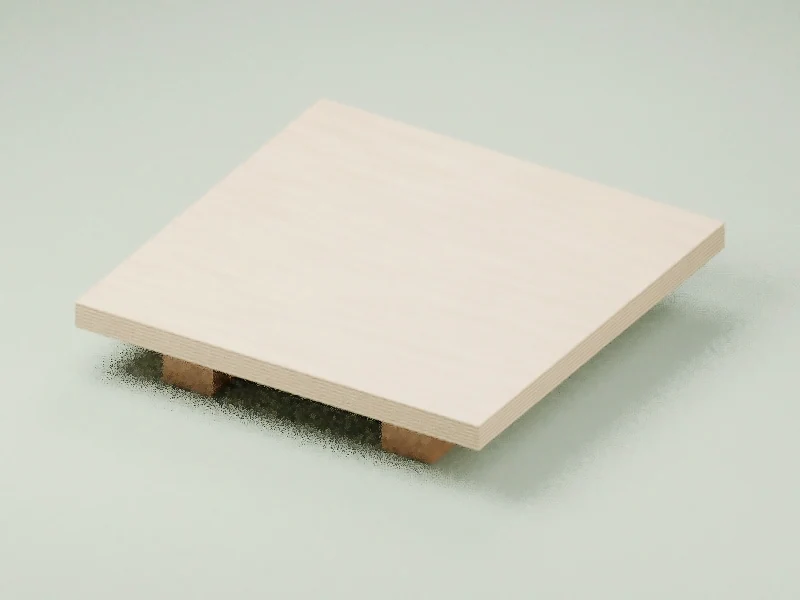 12-Inch Wooden Plant Platform with Recessed FeetFinished size · 12 × 12 × 2¼ in.
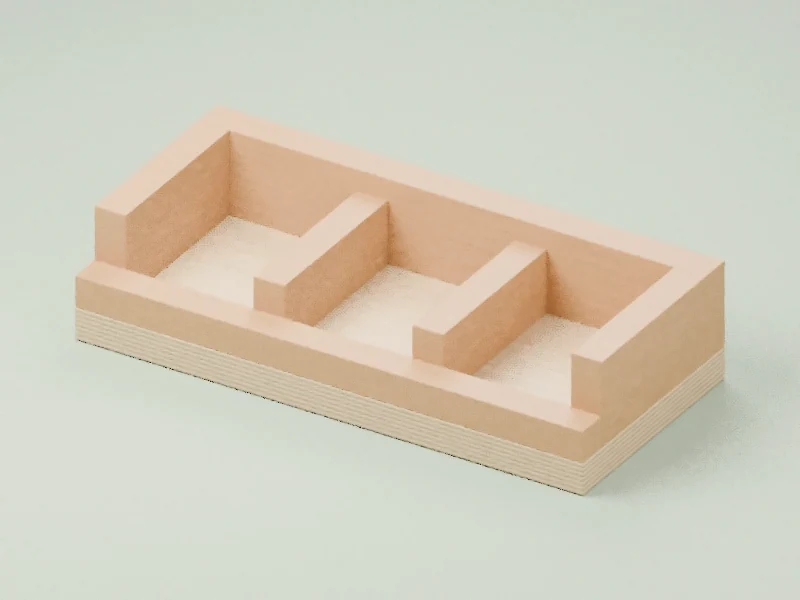 Wooden Propagation Bottle Stand with Three Drip LinersFinished size · 12 × 5½ × 2¾ in.