Choosing a project · 3 min read
Moss Pole Staging Stand or Tabletop Trellis for a Small Indoor Vine?
Should I build a wooden moss pole holder or a little trellis for my plant?
Offcut Journal editorialUpdated
Short answer
Use the pole stand during layout and assembly of a short pole. Use the trellis as a separate freestanding support for a small, light indoor vine.
Compare the builds
These dimensions belong to the linked plans.
Finished dimensions in width × depth × height order.
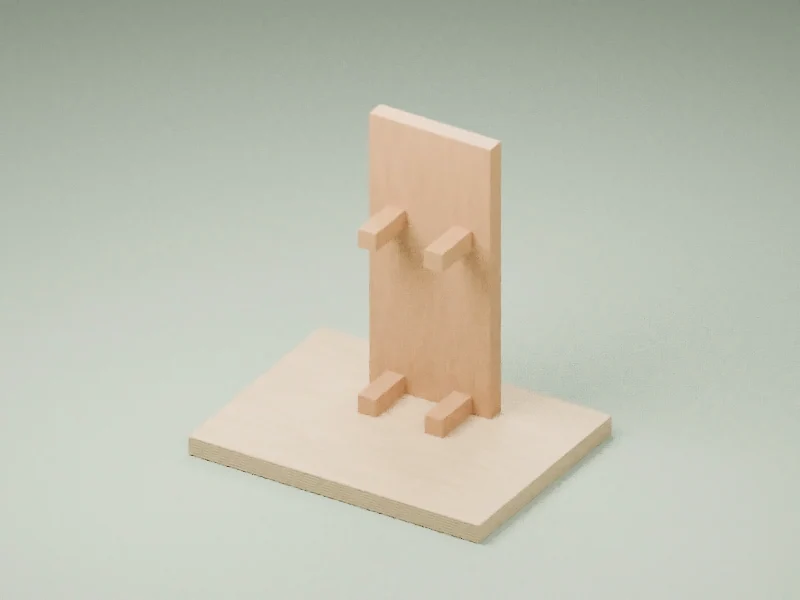
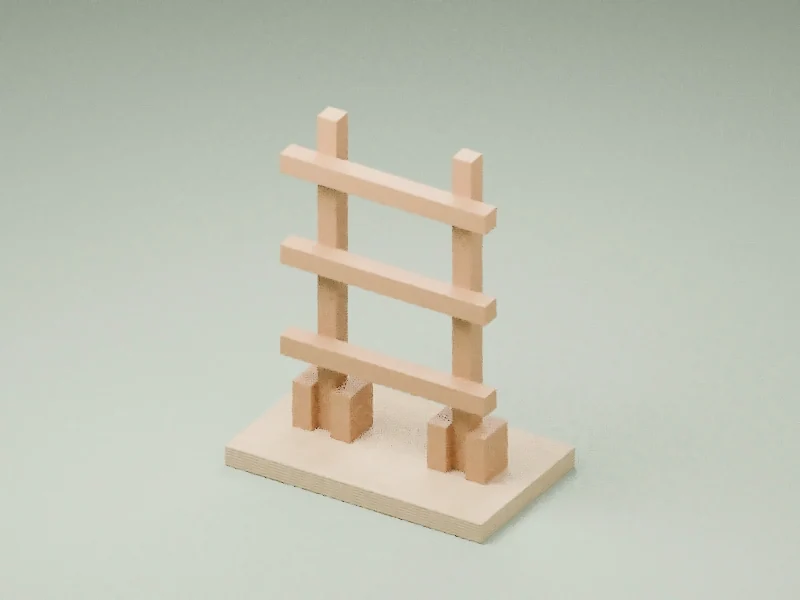
What to compare
Name the step the wood will help with
A moss pole can be awkward to hold while selecting a height reference or checking where a fastener lands. The staging stand supports a short pole at two points while you do temporary bench work. A trellis belongs beside the growing pot and gives light stems multiple crosspieces. Bring the empty vessel and dry pole to the intended spot. If the woodworking piece is needed only before that pole goes into the pot, the stand describes the job more closely.
Find a registration face on the pole
Trace the pole’s cross-section where it will touch each guide. The lower and upper pair of guides share a plan outline, but a mesh closure or band up high can exceed the fit at the base. Mark where an outer seam rests so you can orient the pole repeatedly in practice. Use a dry mock-up to check that the pole can go into position without dragging loose parts through a narrow corner. Keep any work that requires clamping independently secured.
Measure the gap between pot and trellis
Set the pot and saucer on the bench and tape the tabletop trellis’s 10 × 6-inch base beside them. The rungs are supported by braced posts, but their span may sit beyond the natural reach of a short vine. Draw the distance from emerging stem to the nearest rung without pulling the plant into position. Also outline the route for removing the saucer. The trellis should stay stable on a level surface while you tend a separate pot.
Plan what happens when the project is done
Clear a 12 × 9-inch area for the staging stand and enough room above it to remove a pole from between the guides. Expect to put that jig away when the pole goes to its final location. The trellis remains on the surface where the pot gets care, so height beside a curtain or shade has to account for the vine’s later arrangement. Start with a footprint and pole or stem contact you can demonstrate using the actual dry parts.
Leave a route for attaching and changing plant ties
Lay a spare tie alongside the stem and locate the rung you expect to use. Check whether both ends of the tie can come around that rung with the 10 × 6-inch trellis base in place. A support backed into a narrow gap may leave room for the stem and too little access for a knot or clip. On a dry staging stand, look instead for whether the pole's seam or fastener is hidden by one of the 2-inch guides. Turn the empty pole in the jig until you can reach the work without shifting the guide. This distinguishes an access problem you solve once on the bench from one you will revisit whenever the vine grows.