Fixes at the bench · 3 min read
Why a record jacket catches when you flip it
Why do my record jackets fit in the bin but catch at the divider when I flip through them?
Offcut Journal editorialUpdated
Short answer
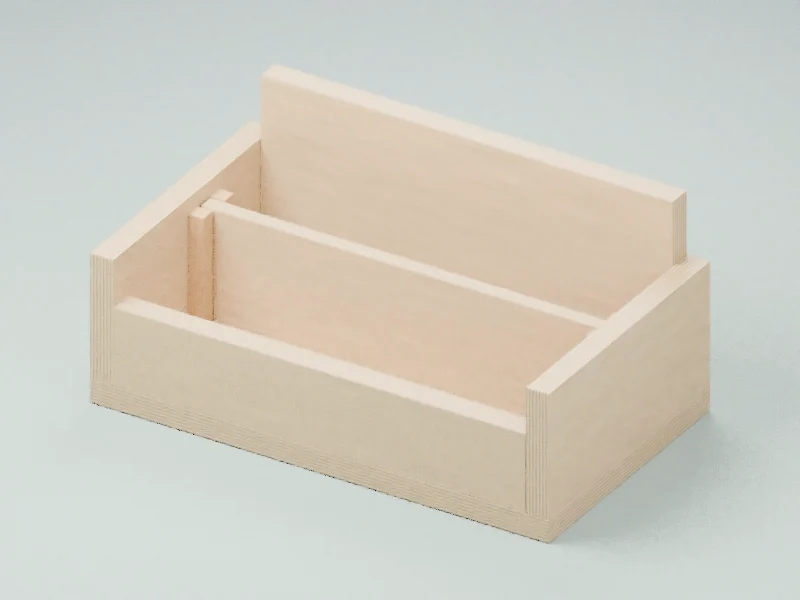
A loose outer sleeve can catch where a jacket without a sleeve passes cleanly. A jacket can also slide sideways as it tips, bringing one corner across the rough end of a divider. Take the valuable records out while you trace the contact on an empty spare jacket. Test it through the same motion you use when browsing. The diagnosis comes from catching it in the act instead of measuring only the clear width with all records upright.
Find the cause
Use the spare jacket in both directions
Flip the empty jacket alone, then put it in the same sleeve orientation as the one that catches. Notice whether contact travels with the seam or appears at one fixed point on the wood. Put a piece of removable tape on the outside of the bin at that position. Keep tape and loose adhesive away from the jacket and the inner bay.
Inspect the contact with the bin empty
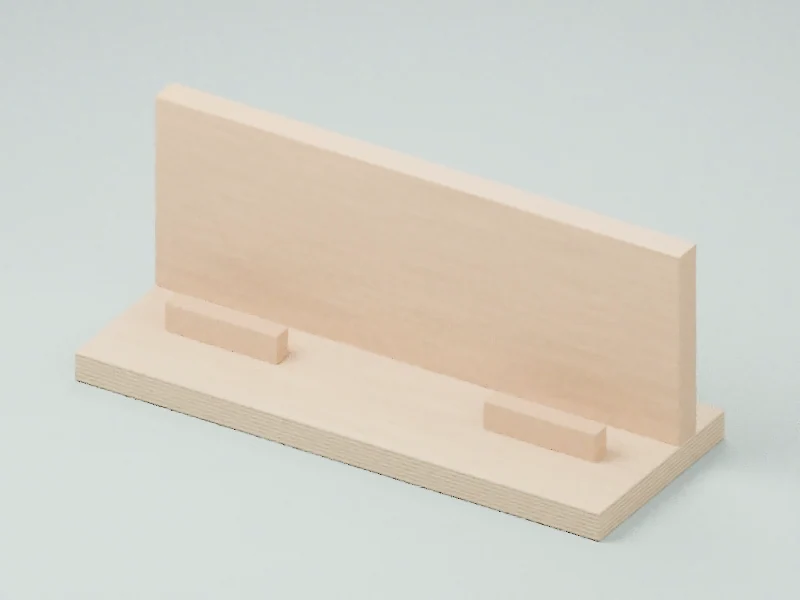
Run an unneeded scrap of smooth paper lightly over the marked area and feel whether the grain or divider end arrests it. Inspect eyes level with the wood and look for a lip, loose sliver, finish ridge or screw head. A part that stands proud on only one side may cut into the path at the point where the bottom of the jacket begins to tip.
Compare real depth with room to flip
Put a few empty test jackets or flat cardboard stand-ins behind the sample. Tilt the front one and see whether its lower edge has space to move while its neighbors remain supported. The bin’s rear bay is smaller. In either bay, crowding can push the jacket sideways as it pivots. Leave room for fingers to hold the jacket by its edges without pinching the next one.
Choose a gentler retrieval motion
If the sleeve clears when you draw the jacket directly up before tilting, use that lift for loose or oversized sleeves. A separate jacket stand is an option for wide gatefolds you reach for often. Keep a smooth clearance around the actual sleeve opening and follow standard record handling guidance when you return the collection.
Check an outer sleeve with an open edge facing the divider
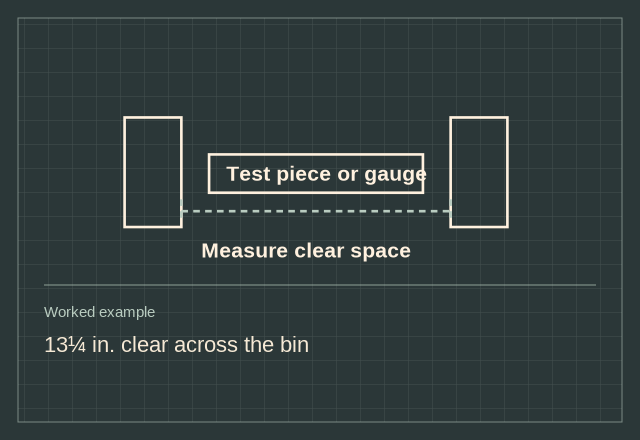
Two identical jackets can browse differently if their outer sleeves face opposite directions. Put an unused jacket in a spare sleeve of the same style, with the opening facing up first. Flip it through the path, then repeat with the sleeve opening facing sideways if that arrangement is appropriate for your sleeves. A loose edge can fold against the lift-out divider even when the 13¼-inch width easily clears the jacket. If the catch follows the sleeve opening, adjust sleeve handling or leave more browsing space. If both configurations snag in the same place, return to the wood and check the divider’s seating.
Practice on a plan
Finished dimensions in width × depth × height order.