Fixes at the bench · 3 min read
Why mitten fingertips stay damp on a drying rack
Why do the cuffs dry on my mitten rack while the fingertips stay damp?
Offcut Journal editorialUpdated
Short answer
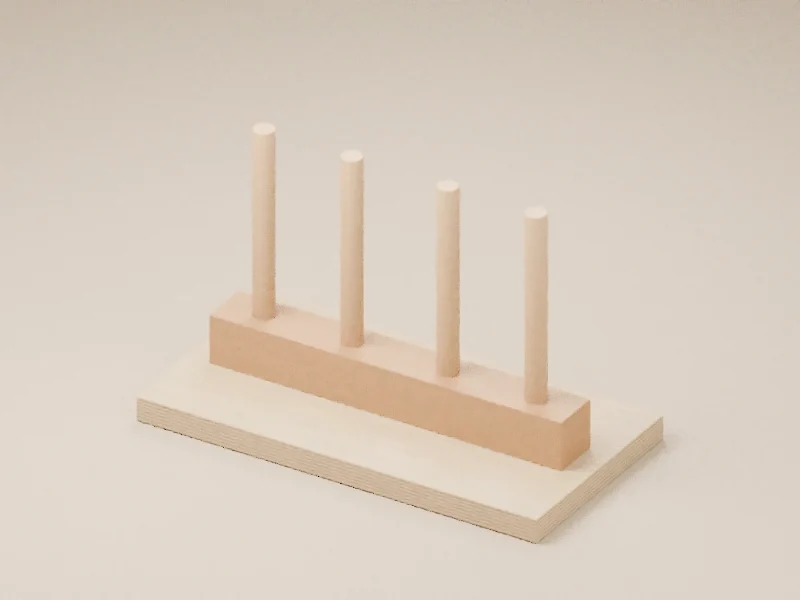
A wooden post can prop a mitten open at the cuff and still leave its finger lining folded over or pressed against a neighbor. Different fabrics and construction also dry at different rates. Check both mittens from one pair before changing the rack. The goal is a supported shape and a visible route for air around the opening. Follow the garment’s care label and keep the rack away from heaters, flames and other heat sources.
Find the cause
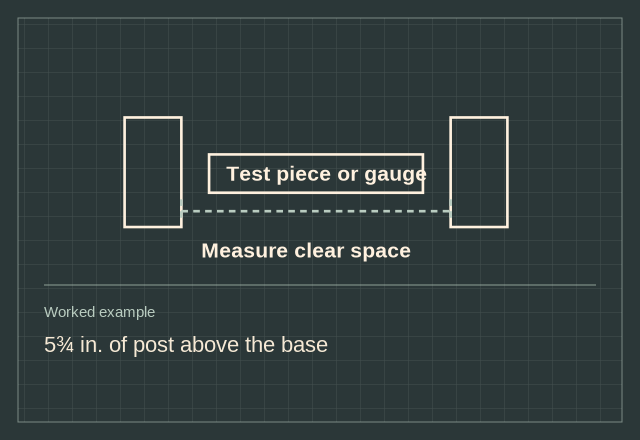
Check the post depth without forcing it
Try the clean, dry mitten on one post first. Stop as soon as the tip of the post presses against the lining. Lift it slightly if necessary and see whether the cuff will still stay open on the support. Look along the fabric from the side. A pointed tent near the fingers indicates that the post is shaping the pocket instead of simply holding it.
Look for fabric contact between stations
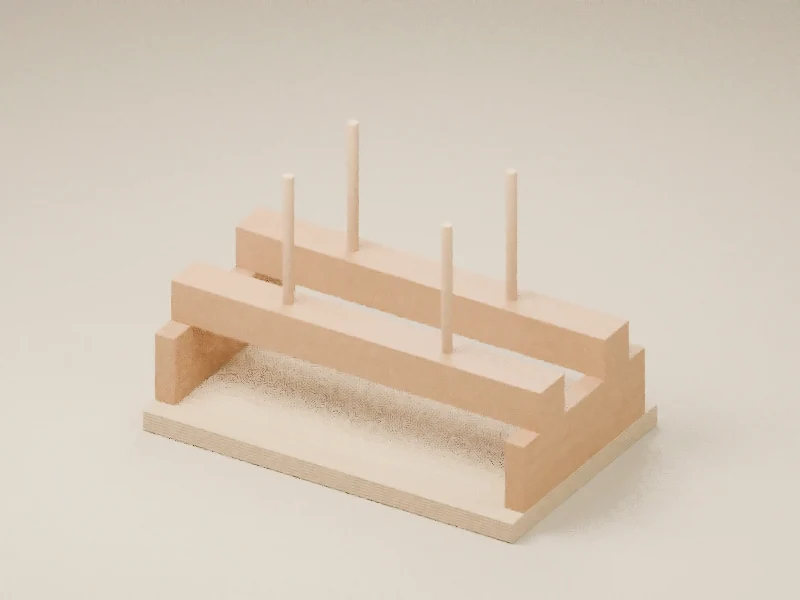
Place the other dry mitten on the closest second post and inspect between the thumbs. The outer fabric or trim can meet below the point you see from above. Use alternate posts for bulky mittens and compare. Put any drips into a separate suitable mat and check that a long cuff does not trail in collected water.
Change how the cuffs are supported
Try a position where each cuff is open and the lining hangs without a sharp fold. Removable liners should be handled as the care label allows. Two pieces dried apart may take up more rack space, and a fabric that should dry flat belongs on a suitable flat support. Avoid stretching the wrist opening to make a thick post fit.
Compare comparable points in the fabric
After resetting the rack, check both the cuffs and fingertips rather than judging by the outside alone. The inner seam and thumb pocket may retain moisture longest. Let the pair dry as directed before storing it. Dry the mat and wood too, since a damp station can hide the source of the next wet spot.
Check whether the pair can move air around a wall
With an empty rack where it will live, hold a dry mitten on the post closest to the wall and look at the thumb and cuff from the side. A bulky mitten can touch the wall while its cuff looks open from the room. Try moving the rack forward onto a fully supported surface so the fabric has an open side around it. If the cuff must turn around a post or the thumb still folds into a corner, move that pair to a separate suitable drying surface. Keep the fabric’s care instructions in mind when choosing a position, especially for shaped liners and pieces that should lie flat.
Practice on a plan
Finished dimensions in width × depth × height order.