Fixes at the bench · 3 min read
Why keys tangle on a tabletop key tree
Why do keys on neighboring pegs catch when I take a set off the key tree?
Offcut Journal editorialUpdated
Short answer
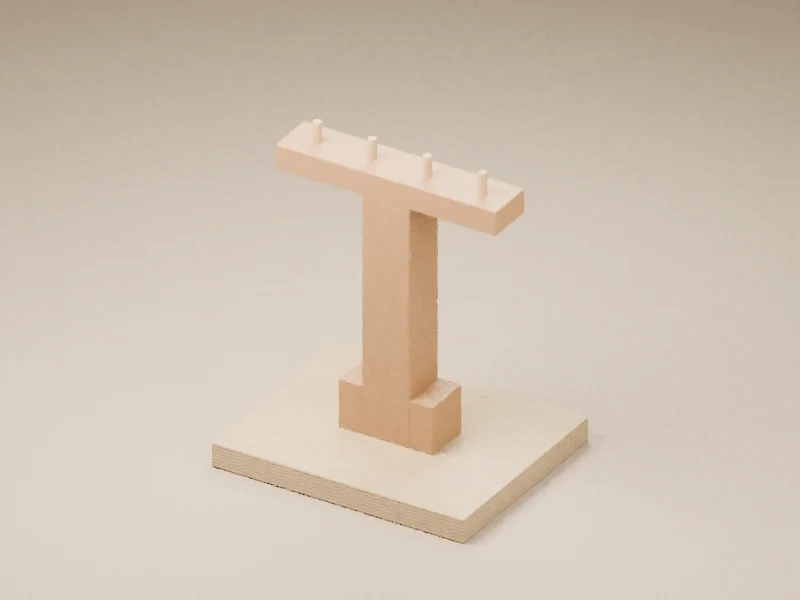
A peg row can hold several sets while still being too tight for a useful lift. The key ring needs room to travel up and then toward the end of the peg. A long key or flexible tag can swing through the next peg while the ring moves forward. A test with empty rings shows what the dowels themselves do. Add the keys and tags back only after you know where the first contact happens.
Find the cause
Try empty rings one at a time
Place one spare ring on the affected peg and lift it from beneath with your usual hand. See whether its split end catches on the tip or if it only drags when pitched forward. Try the same ring on another peg. If the drag stays with one peg, inspect the tip for a ridge or grain that lifts. If it follows the ring, compare it with a smooth empty ring of a similar size.
Add one neighboring set
Use a normal number of keys on the test set. Repeat first with the next peg empty and then with it occupied. Watch the lower ends of both key sets. A long tag can slide through a neighboring ring and pull the whole set toward you. Move that tag to an end peg where it can swing outward, or leave a gap for it.
Track your actual hand path
Put the tree where you normally put it and approach from the side you use every day. Watch for a wall or a bulky object that makes your wrist turn in toward the other pegs. Moving the tree slightly forward can let you lift a ring vertically before pulling out. Make sure the tree stays on the table surface throughout.
Keep the arrangement visible
If more than one person uses the tree, choose a gap or an end position that each can recognize. Put larger bundles near the ends and compare with using a hook station sized around wide loops. Clear access often matters more than adding another peg.
Check what passes between the pegs on the way back
Taking keys off is only half the motion. Slide one empty ring onto the peg with the hand you normally use and look at the angle needed to find the tip. Then put the bulky tag back on that ring and let it settle after a normal return. If the tag threads through a neighbor on the return and both sets lift on the next trip, changing how you take them off will leave the cause in place. Hang those two sets with an empty peg between them. Try several ordinary returns before giving the new spots permanent labels.
Practice on a plan
Finished dimensions in width × depth × height order.