Choosing a project · 3 min read
Key Tree or Leash Station for a Narrow Entry Console
Will a tabletop key rack hold my leash and harness too?
Offcut Journal editorialUpdated
Short answer
Four short keys or fobs suit the key tree. Compare the leash station when folded walking gear needs its own hook and a base deep enough to check with a loaded mock-up.
Compare the builds
These dimensions belong to the linked plans.
Finished dimensions in width × depth × height order.
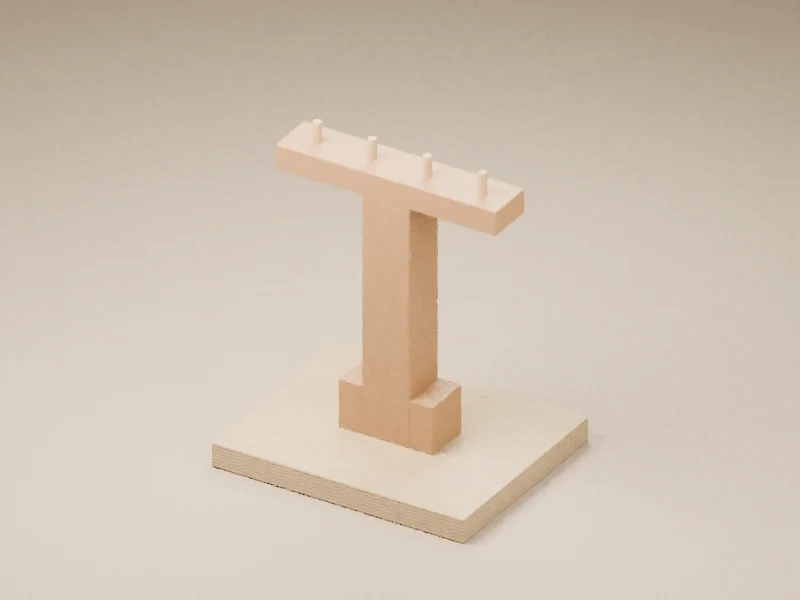
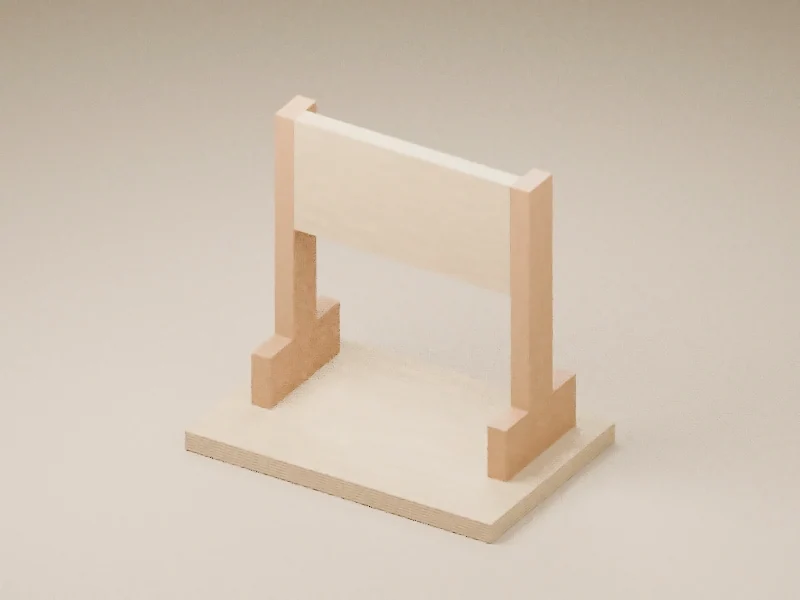
What to compare
Measure the hook path in motion
Set a cereal box where the stand will go and mark the expected peg height. Hold the ring the way you do when distracted or carrying a bag. A key tree uses upward pegs, so a rigid ring has to rise above the tip before it can move sideways. A leash generally comes off a front-facing hook by lifting and moving forward. Measure the narrowest opening along that motion, including your fingers, a shelf lip, and any lip on the furniture above.
Find the longest thing you actually hang
Measure from the point where a loop bears on its hook to the end of the object. Measure a folded lead twice, once in an orderly coil and once as you naturally fold it after a walk. The tabletop leash rail is high enough for some short bundles, while a full-length lead generally needs folding first. Walk the lead past the console's drawer front. Anything dangling into a drawer opening or walkway changes where the station can live.
Keep sets distinct at the grab point
Set the four key rings against a rule with their fobs spread naturally. The key-tree pegs sit 1¾ inches apart across the crossbar, and a pair of wide car fobs can meet even when their rings are small. On a leash station, separate the folded harness and the lead so their carabiners can be seen and reached. Check the hardware's inside opening against the hook you plan to buy before locating screw holes in the rail.
Account for what makes the stand move
Outline the 8 × 6½-inch and 12 × 8-inch bases on scrap paper. Draw the point below each hook, add whatever hanger or furniture trim affects the footprint, and move your hand through the pickup motion. With a finished stand, repeat the check using the actual gear on a stable surface. A sideways tug on a snagged strap is different from lifting free. Avoid spots where a departing coat, bag, or shoulder could catch the loops.
Make a handoff spot for the keys you share
If two people use the same key daily, reserve the nearest clear peg for it before counting four fobs as four usable spots. The 1¾-inch centers place a sideways fob close to its neighbor. Put the shared key on an end peg and orient the fob toward the outside, then see whether it still fits within the furniture outline. Do the same with the clip on a shared lead. Keep it exposed on the hook instead of threading the lead's end around a second loop. A station that always needs rearranging after one person leaves has fewer useful positions than its peg or hook count suggests.