Choosing a project · 3 min read
Wooden Bottle Rack vs. Can Organizer for Deep Shelves
Should the cylinders in my cabinet roll forward, or just park on their sides?
Offcut Journal editorialUpdated
Short answer
The bottle rack keeps empty reusable bottles in individual lanes with room for caps and handles. The can rack establishes a simple front-out, back-in order.
Compare the builds
These dimensions belong to the linked plans.
Finished dimensions in width × depth × height order.
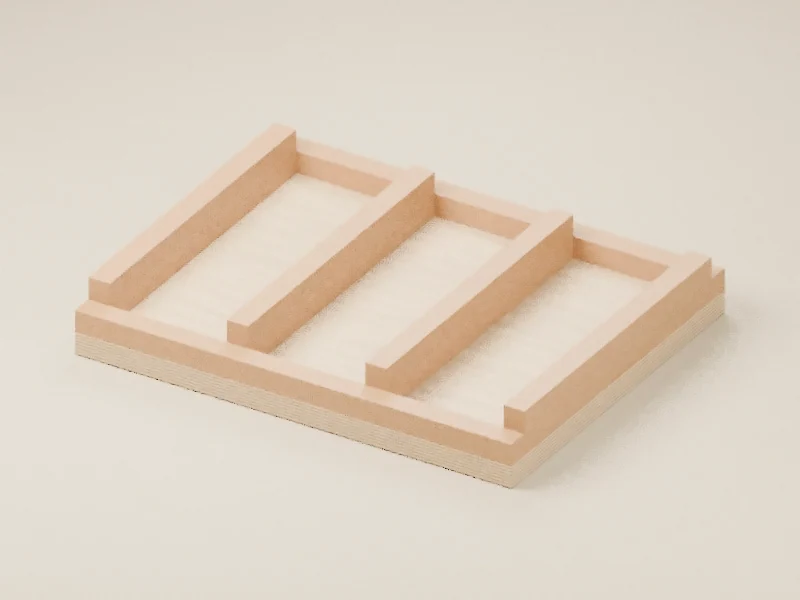
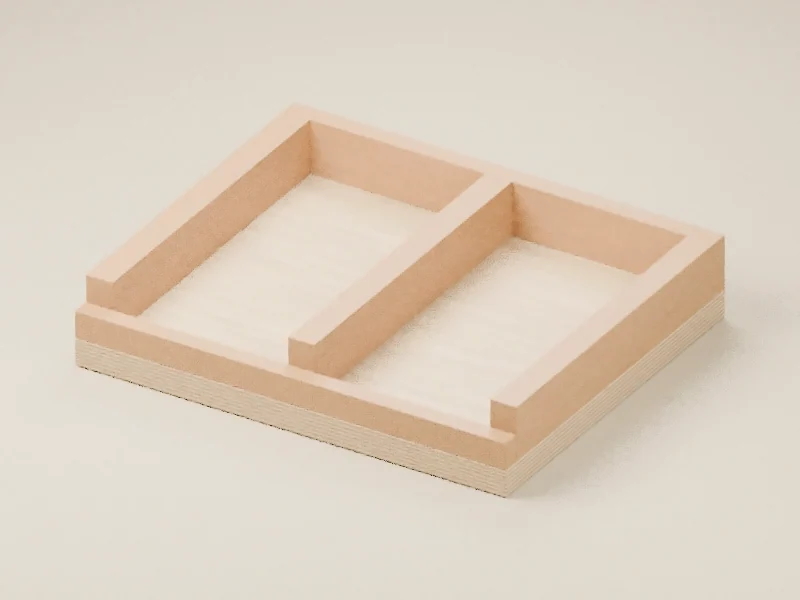
What to compare
Draw a bottle clearance at both ends
Measure the cylindrical body at its broadest point. Add any taper, attached ring, carry handle, or cap protrusion in the orientation the bottle naturally settles into the lane. Set the bottle between scrap guides and turn its cap to the position you intend. The low stops guard the end, so compare the approach angle with the lid and shelves above. A ring hanging below a bottle’s profile may occupy the same place as a stop that looks harmless in a top-view drawing.
Trace one can all the way from new to old
Set a row of the cans you typically buy in front of the footprint marker. Put the oldest can nearest the planned low front stop and follow the removal motion. Then put a new can behind the others as intended. The rack needs open space above or behind the aft end, depending on your approach. Check both tall and short cans with the upper shelf in place. Labels on the front rail only help if each new item has an easy way into its intended lane.
Mark what is allowed to move sideways
Each rack organizes cylinders on horizontal surfaces, but a tall can label and a broad water bottle handle ask for different clearance. In the bottle rack, a wide cap can approach the adjacent lane before both bodies touch. In the can organizer, a bunched group can shift toward the front after one is lifted. Put cardboard barriers at full height between sample objects and watch for contact during removal. Measure from actual stock thickness after choosing a target lane width.
Match cleaning to the storage job
Use the bottle rack for empty, dry vessels as called for by its plan. Keep caps and rings reachable, and leave a free area for wiping residue around the stops. The can rack is open above so you can check labels and look at the rear of each lane. Avoid loading either test arrangement on an unsupported or overhanging base. A paper outline proves the size while the finished plane and verified support determine how the entire piece sits.
Decide what to do with a package that changes the order
Try a taller can of a different size halfway down a lane and check whether it hides the label behind it or blocks a hand from adding the next can at the rear. In the 12 × 10-inch organizer, keep a lane for one type if different heights make it hard to see or retrieve the oldest of each. For the 15 × 12-inch bottle rack, put a removable label in front of a regular bottle and its matching loose cap if they tend to get separated. A handled bottle may need its own lane, while a cap out of place may only need a separate labeled spot. Give actual retrieval problems their own solution.