Fixes at the bench · 3 min read
Why a water bottle hooks the rack on the way out
Why does my water bottle fit in the rack but snag on the side as I take it out?
Offcut Journal editorialUpdated
Short answer
A bottle with a hinged carrying loop may stow with the loop flat and extend as you reach for its neck. A bottle can also turn enough during removal that a side protrusion meets a rail. Use the empty dry bottle first and take adjacent bottles out. Map where it is supported in the middle of the lane and what moves around its widest point once your hand is on it.
Find the cause
Find the snag with the rack off the shelf
Set the empty bottle down with the loop folded. Lift the neck partway and see whether the body rolls onto the loop as you tilt it. Mark the point of contact on removable tape near the rail. Try a lift supporting the bottle body directly. A clean lift in that position suggests that you can change the access path before altering the wood.
Watch how the cap and loop move
Hold the bottle in your hand and operate the loop as intended without forcing its hinge. Note whether the loop stays folded when you put light upward pressure on it as a grip. If it swings wide, orient the loop above the lane on return or leave that bottle in an end station with an open side. Confirm that you can still see and grasp it there.
Compare counter access with cabinet access
Measure the vertical space above the rack and examine the underside of the shelf lip. With the empty bottle inside, lift the near end just enough to clear the stop. If the cap reaches the shelf above before the body clears the stop, a wider lane will have little effect. A shallower shelf or moving the rack forward within the supported surface may give you the needed lift.
Verify the longest bottle in every usable lane
Different side walls and divider positions can change the effective hand space even when the nominal lanes match. Make sure the rack and bottles remain within the shelf. Let the bottle settle after each placement and keep its cap or valve accessible for the next person.
Test the full cap with the bottle turned to its return position
A cap may screw back on with its loop pointing a different way after cleaning or refilling. Fit the cap as the bottle maker directs, using an empty bottle, and see where the loop naturally settles when the body points forward. Walk the bottle back into its lane and check whether the loop crosses a rail before the body seats. A fixed turnout that only clears with the cap loose will be hard to repeat in daily use. Orient the whole bottle if it remains supported and is easy to grip. Give that cap an open position or another rack if the lane only clears one exact orientation.
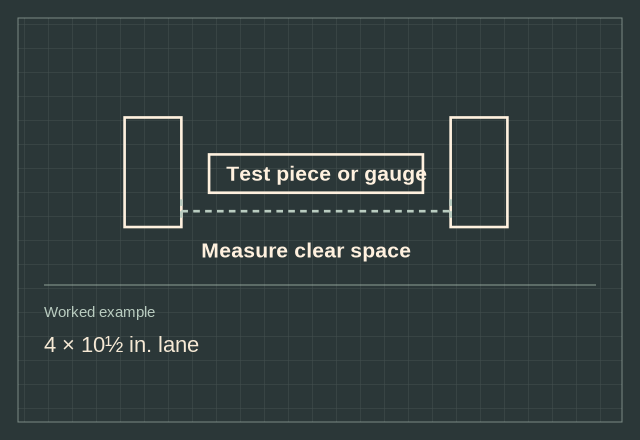
Practice on a plan
Finished dimensions in width × depth × height order.