Fixes at the bench · 3 min read
Why a hanging file folder jumps one rail
Why does a hanging file folder stay suspended but lift off one rail as I slide it forward?
Offcut Journal editorialUpdated
Short answer
First empty the folder so you can see both hooks. Angle matters when the hooks travel independently. One hook can twist around the edge of its rail if the opposite hook reaches a stop or the rails gradually draw closer. Diagnose whether the same hook, the same point on the stand, or a change in travel angle produces the jump. That will tell you whether to inspect the folder, the wood, or your clearance around the stand.
Find the cause
Move one empty folder from the middle
Guide the paper folder by the midpoint between its two hooks. Slide it slowly until a hook begins to lift. Use low-tack tape next to that location as a reference. Repeat from the other direction. If the lift happens at the same position in both directions, look at that spot on the rail for a local change in width, height or finish buildup.
Swap ends on the test folder
Reverse the empty folder and check the same stretch. If the lift now occurs on the opposite side, sight along the folder’s hanging bar and compare its two hooks. A visibly twisted hook can ride on a smaller part of the rail. A second intact folder helps confirm what belongs to the stand. Test with your actual folder format rather than trusting a package’s letter-size or A4 designation.
Compare inner faces and top heights
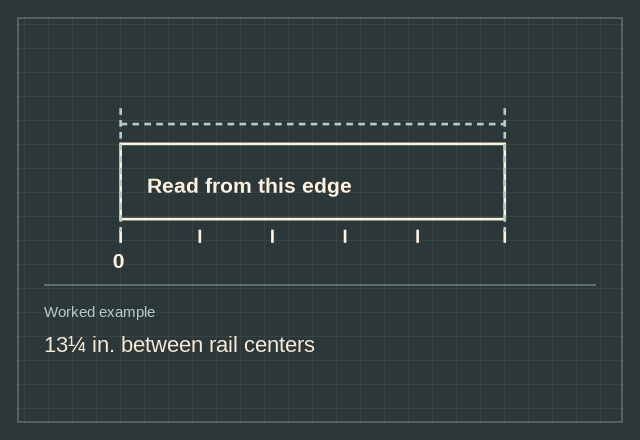
Use a square-ended scrap gauge to compare the space between inner faces at the front, middle and back. Then bridge the rail tops with a straight scrap. A corner that lifts the bridge at one end can make one hook carry more of the folder. Check for any projecting stop or hardware before deciding to adjust the rail itself.
Make room at the end of travel
A full group of folders can press the leading hook sideways even when one empty folder slides easily. Put a few lightly loaded folders in place and spread them across the run. Bring the suspect folder to the mark again without pulling it by one tab. This helps separate rail geometry from crowding in the portion where you normally browse.
Check whether the hooks are the only point of support
With an empty folder hanging normally, look beneath the file and mark the lowest point above the lower structure. A loaded folder can bow through a roomy rail opening and begin dragging at the bottom before either hook appears to bind. Add a few sheets from a representative file while it remains supported and ease the folder through the 4-inch run. If the bottom touches first, compare your folder depth with the available drop across the stand. Move bulky papers to a folder or stand that leaves room beneath them. A polished or widened rail cannot free a load that is resting on a lower part.
Practice on a plan
Finished dimensions in width × depth × height order.