Choosing a project · 3 min read
A Card Rail for Playing and a Rail for Looking
Can I use a postcard rail to hold a hand of sleeved game cards?
Offcut Journal editorialUpdated
Short answer
The postcard rail prioritizes a shallow display and two closely spaced rows. The game rail makes room for a moving hand of cards and larger sleeved thickness.
Compare the builds
These dimensions belong to the linked plans.
Finished dimensions in width × depth × height order.
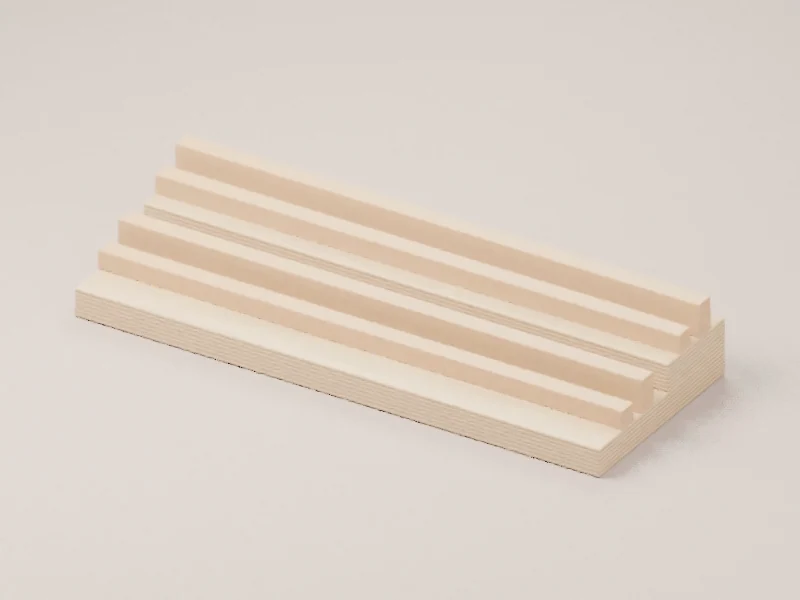
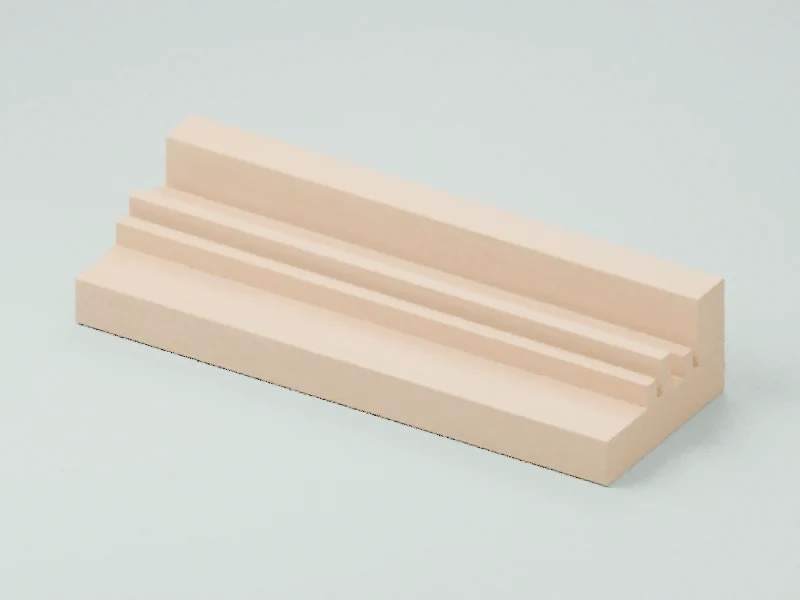
What to compare
Look at the information each object needs to show
A postcard may be chosen for the image at its center, though a small caption at the bottom can disappear behind the lip. A game card might need its top corner, a colored edge, or a full rules panel visible while the other cards remain in place. Put paper strips at the planned lip heights and view your chosen objects naturally. For the game rail, spread an actual hand as you would during a turn and see whether the difference in row height makes useful information legible.
Watch what happens when one item moves
Swap out a postcard while holding the card by its top corners. The 9 × 3¼-inch display has an exposed front edge for a fingertip and short reach to its rear row. Then try adding a card to the middle of a hand in a model of the 14 × 5½-inch game rail. Sleeves can slide against one another. A temporary slot made from scrap rails lets you tune the fit without relying only on the thickness of one sleeve held flat.
Make the table side count
The game rail raises its second deck by ¾ inch above the floor of the first slot. Angle your cardboard mock-up toward the player and check whether the loaded display affects the space where people move pieces or gather their paper score sheets. The postcard rail is 1⅞ inches tall at the tallest backstop, which suits a shallower shelf if the loaded cards still fit. View that shelf from a distance and note how far a hand needs to reach to change the back item.
Choose the surface before you finish the slot
Fine grit, a little finish buildup, or a place where an edge wasn't eased can affect coated and uncoated paper differently. Before gluing the rails, dry-fit a slot from the actual stock and try the most delicate card you will store. Bring the rulers and packing to the finished thickness you intend. If changing the opening, check both views again because changing a rail can also change where the card leans. Save the dimensions with the card or paper type that gave the useful fit.
Check the view from the other side of the table
Place a full hand in the 14 × 5½-inch game-rail outline and sit in the next player's usual chair. If your game keeps a hand private, hold the sample cards behind two temporary lips and check whether an opponent viewing diagonally can see a title or tell one card from another. Rotate the stand or choose a playing position with the faces sheltered without blocking your own view. A postcard display has a different goal. Check whether its 9 × 3¼-inch footprint can face the walkway at a slight angle while leaving the base fully supported. Use the same eye-level test to improve the visibility you want.