Choosing stock · 3 min read
How to Choose Lumber When a Board May Move After Milling
What should I check when I need several small strips that stay straight?
Offcut Journal editorialUpdated
Short answer
Look for straight, adequately dry stock and some thickness margin. A board may contain residual drying or growth stresses that are hard to judge by appearance alone. Buy a prepared straight blank when you need predictable results without capacity to correct a moved piece.
At the bench
Observe existing distortion without diagnosing its cause
Sight each long edge and face before selecting blanks. Set a known straightedge on the proposed contact area and rotate the board to inspect the opposite face. Warping can reflect moisture changes, growth characteristics, milling history, or kiln drying and storage. Appearance alone cannot identify all residual stresses. Gross cupping, twist, or a bend that already consumes the correction allowance is enough reason to allocate other lumber for a precision reference.
Screen material history along with moisture
Ask the supplier whether stock is kiln dried or air dried and how it has been stored since preparation. Check guidance for your moisture meter and take readings from more than one location where applicable. A single surface measurement can reflect a damp day or a warm shelf and gives limited information on internal moisture. Keep identified samples in the conditions in which the project will be built and used before deciding on final fit.
Keep your least replaceable pieces in mind
A short decorative divider may accept a piece that needs modest correction. A long straight datum stick loses usefulness with a bend that misplaces its marks. Flag the role and check the required dimensions when planning stock. Use stock with enough measured margin for the actual method you will use. Purchase pre-sized stock if you cannot prepare a shifted blank while retaining the planned width and thickness.
Recheck blank behavior in ordinary handling
Lay prepared pieces out on a genuinely flat surface without forcing them down. Check for rocking and edge curvature after the stock has been stored in appropriate indoor conditions and again before finishing a reference part. If pieces move and you can still make spec, remeasure the available thickness and width. Reserve the stable pieces for the closest fitting parts and move a bent piece out of the reference pile if correction would make it undersize.
Check what a small bend would cost on a completed stick
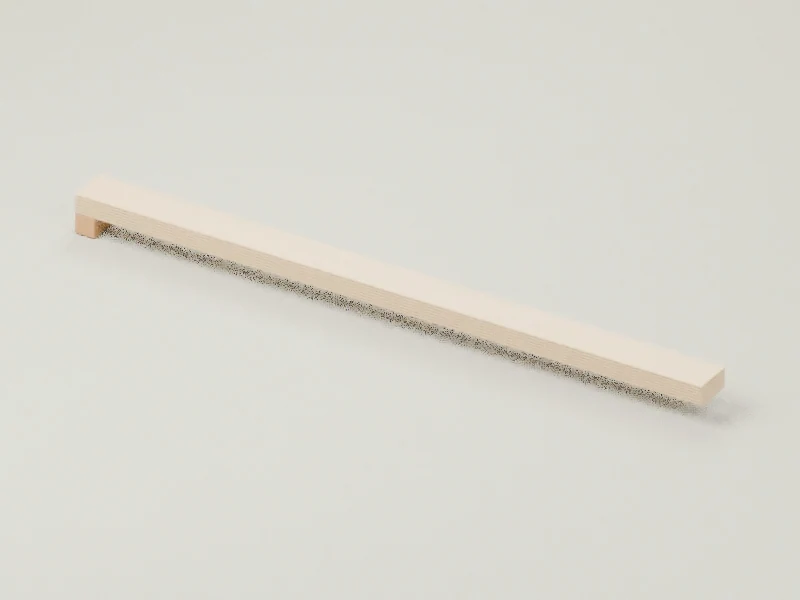
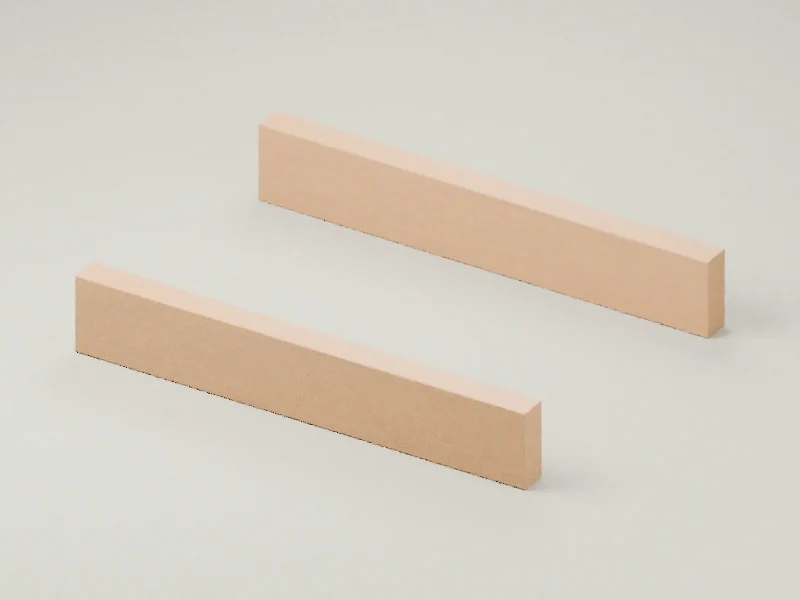
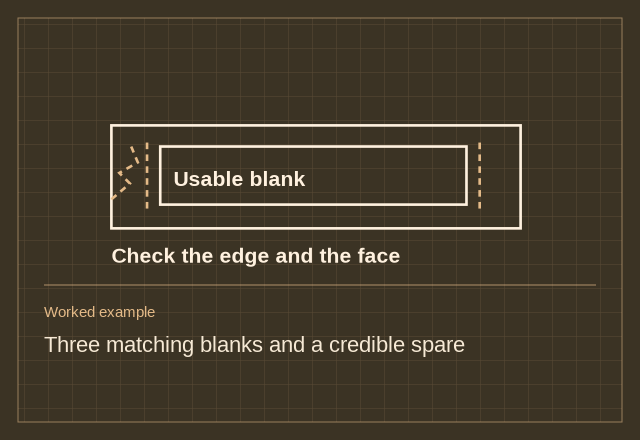
Label the four prepared 16-inch sticks in the example and check each against the same straightedge in the same orientation. Identify where any gap appears when the blank is resting freely. Compare the gap and the available stock with the reference surface the plan needs, then see whether a credible path to the finished ¾-inch thickness remains. A moved blank with no finishing margin may still furnish unrelated short parts once measured. Using the marked spare for the straight reference keeps the work moving without trying to infer which stresses caused the movement.
Practice on a plan
Finished dimensions in width × depth × height order.