Fasteners and glue · 2 min read
Washer Head or Flat Head for a Small Wood Joint?
Should I use a flat-head screw or a washer-head screw in wood?
Offcut Journal editorialUpdated
Short answer
Choose the screw head to match the surface around the hole. A flat head can sit in a compatible conical seat where the surface needs to be flush. A washer head bears against a flat face and projects above it unless the design includes a suitable recess. The head shape affects the surrounding wood as well as the working clearance.
At the bench
Identify the bearing surface
Look at the underside of the head. A flat head has a tapered face that meets a corresponding seat. Under a washer head, the bearing surface is flat. A tapered seat and a flat bearing face give different contact patterns. Compare the real head with the recess drawn in your plan.
Keep the driver in the picture
A wider head can cover more of the wood surrounding a hole and may change the room for the bit. Check access with the actual tool. A curved or proud head can also meet items you plan to lay across the part, even if you can tighten the fastener comfortably.
Use the specified length reference
A flat-head screw’s published length often includes its head. A screw with a projecting head is commonly measured from its bearing surface. Confirm the manufacturer’s convention before replacing one head style with the other. Sketch both heads level with their intended seats so you compare where the tips actually land.
Check the closest moving piece
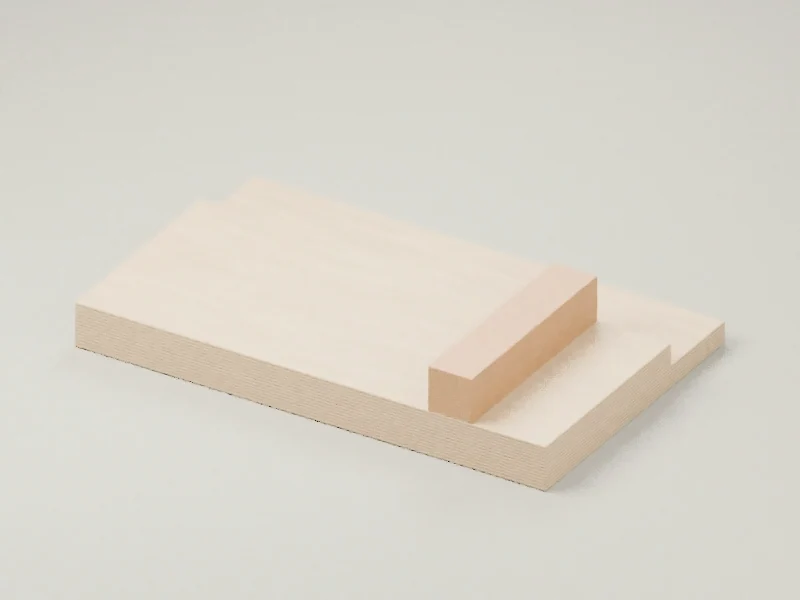
Use a straight piece of scrap to represent anything that passes over the hardware. On a vise liner, the nearby jaw and the workpiece matter. On a replaceable stop, the plane body and the stock may come near it. Rehearse the whole motion at rest before using the jig.
Draw the full circle around the head
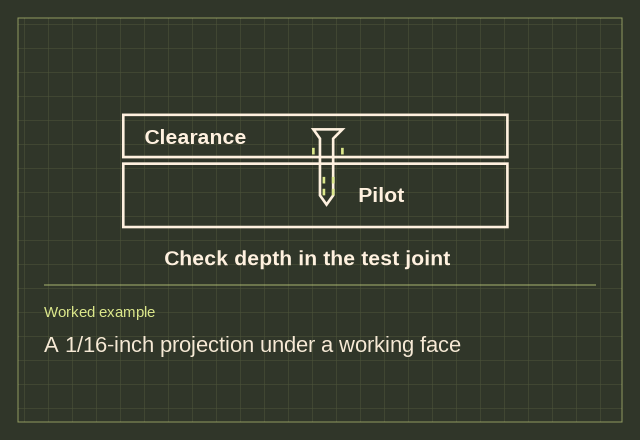
On a narrow stop, a washer head can fit under a passing part and still overhang the wood it should bear on. Set the actual head against a square of paper. Trace the outside circle, mark its center, and put that tracing on the screw mark. Look for a nearby relief, eased corner, or exposed edge inside the circle. Check the manufacturer’s bearing requirements and compare the plan’s hardware before changing the hole. The example’s 1⁄16-inch projection answers a question about height. This second check shows whether the wood under the wider head offers a flat, uninterrupted seat in the position you drew.
Practice on a plan
Finished dimensions in width × depth × height order.