Fixes at the bench · 3 min read
Why a thread spool pulls its pin out of the stand
Why does one spool take the dowel with it when I lift it?
Offcut Journal editorialUpdated
Short answer
A spool bore may have a narrow shoulder inside it, even if both ends seem large enough. A pin may rise with the spool if its seat is loose or the spool tilts and pinches it. Mark the pins with loose paper labels before swapping them. Use empty spools for the first trials so you can see the inside and distinguish a trapped end of thread from the wood.
Find the cause
Test one spare pin outside the stand
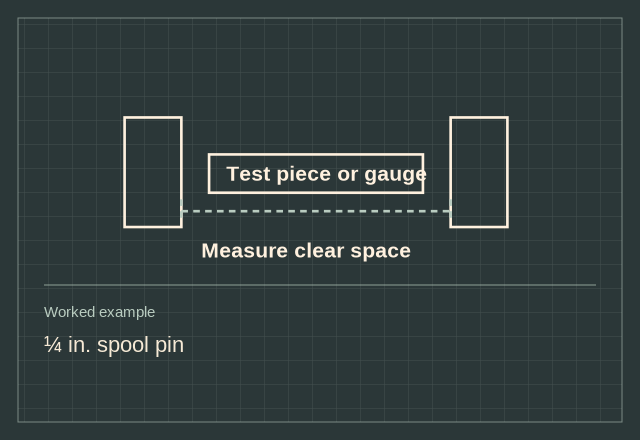
If the pin is intended to be removable, take it out and pass it through the suspect empty spool by hand. Hold it over a bench so it cannot fall far. See whether it binds at one height or along the entire bore. Turn the spool over and pass the same pin through from the other end without forcing it. Some internal shoulders only catch on the way up.
Watch the pin while lifting straight
Put the spool back on its station and lift by opposite sides of its flange. Then lift using your usual single-handed grip. If only the angled lift takes the pin, look for pinch at the top bore edge. Compare a narrower spool or clear the neighboring station so there is room to get a grip with your fingers on both sides.
Tell the seat problem from the pin problem
Swap the suspect pin with a same-size sound pin if both are meant to come out. A problem that stays with one hole calls for a seat inspection. A problem that follows the spool points to its bore, loose thread or grip angle. If the plan fixes your pins permanently and one has come loose, remove the spool and repair the joint before using the station.
Avoid changing every pin for a single spool
Save the spool that fits poorly for a dedicated station with a compatible pin diameter and seating method. Inspect pin tips periodically for raised fibers, hard finish drops or stuck labels. Keep the original diameter on stations used by known spools until you establish what needs to change.
Check whether the loose end winds around the base of the pin
Put the empty spool back after its dry fit checks and watch where a loose end of thread can fall in normal storage. A thread caught under the flange can loop around the pin without looking tight from above. Simulate that with an expendable length of thread, keeping it out of the bore and comparing a slow straight lift before and after it settles beneath the flange. Stop if it snags. If the pin rises only when the loop is present, remove the thread and use the spool’s own storage notch or another compatible way to retain the end. Recheck with an empty spool before changing the fit of the wood.
Practice on a plan
Finished dimensions in width × depth × height order.