Sanding and finish · 2 min read
Can You Put a New Coat Over an Unknown Wood Finish?
Can I add a wood finish over an older coating when I do not know what it is?
Offcut Journal editorialUpdated
Short answer
Start by finding the old product record if you can. An unknown coating needs a compatible preparation and trial before a new coat. A hidden test provides useful evidence about appearance and adhesion for that specific spot and process.
At the bench
Find the evidence you already have
Look for marked scraps, a dated can, or notes from the original project. Ask whether wax, furniture polish, or a separate cleaner has been used. Finish compatibility involves the actual surface today, including maintenance products. The old coat’s color and sheen offer clues about appearance but cannot reliably identify a product. Keep uncertain information written as uncertain.
Check what the new product accepts
Read the stated prep and allowable substrates for the exact finish. Look for whether it accepts an intact older coating, how it handles bare spots, and which contaminants it requires you to remove. Ask the maker if you cannot establish the coating type and accepted surface. The result is easier to interpret when you follow one coherent product system rather than improvising multiple layers.
Divide a hidden test into clear zones
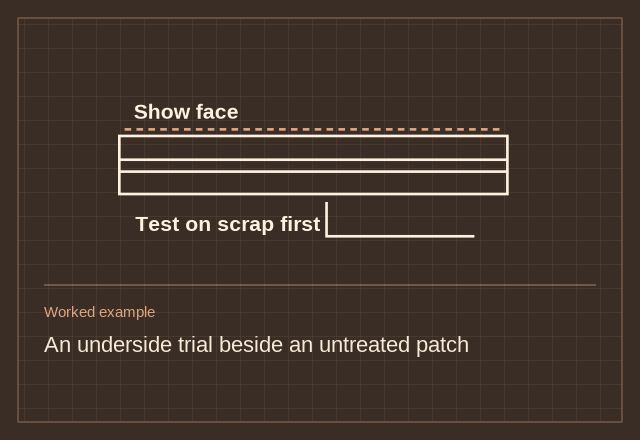
Pick a spot that uses the same old surface as the visible one, such as the underside of a shelf from the same finishing run. Keep a section untouched as a control. Prepare the other section as the new instructions say. Let its coating get through the required drying and cure stages before looking for poor wetting, lifting, or a visibly mismatched sheen.
Decide whether another coat earns its place
If the trial changes the appearance in a way you cannot match at a visible edge, clean the existing piece and keep its present coating where appropriate. Save any finish record you recover. For a small removable part, making a separate replacement can be more predictable than treating a coating with unknown history. Choose with the actual project and intended handling in mind.
Treat a worn shelf edge as its own condition
A hidden patch may carry more intact finish than a notebook shelf’s front lip. Compare those areas visually before relying on the patch result. Where the front shows exposed fibers, flaking, or a separate history of care, the hidden result describes only a sound area with that preparation. A small out-of-sight area with similar wear, if one exists, is a more useful trial. Keep unknown old coatings out of aggressive stripping or sanding until the material, appropriate precautions, and new system’s requirements are known. When different spots need different preparation, identify the boundary before starting anywhere a reader will see from across the room.
Practice on a plan
Finished dimensions in width × depth × height order.
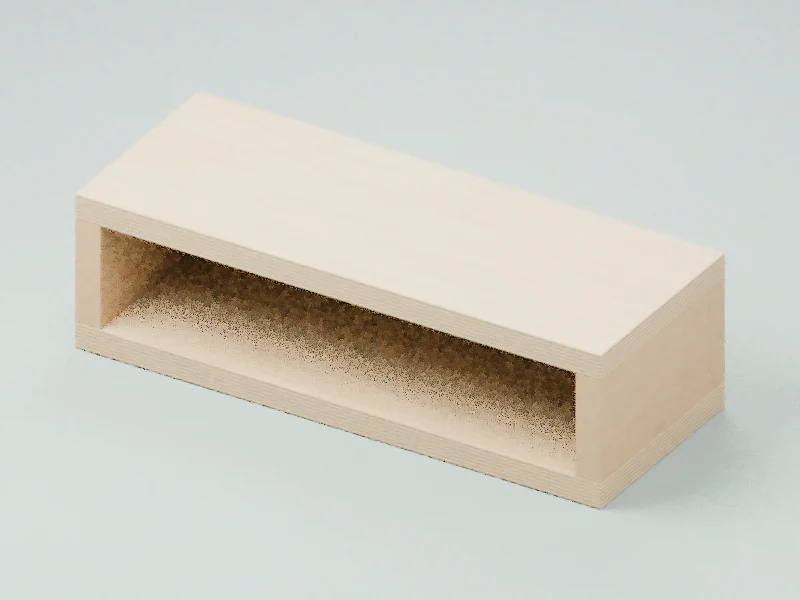 Low Desktop Shelf for Pocket NotebooksFinished size · 15½ × 6 × 4½ in.
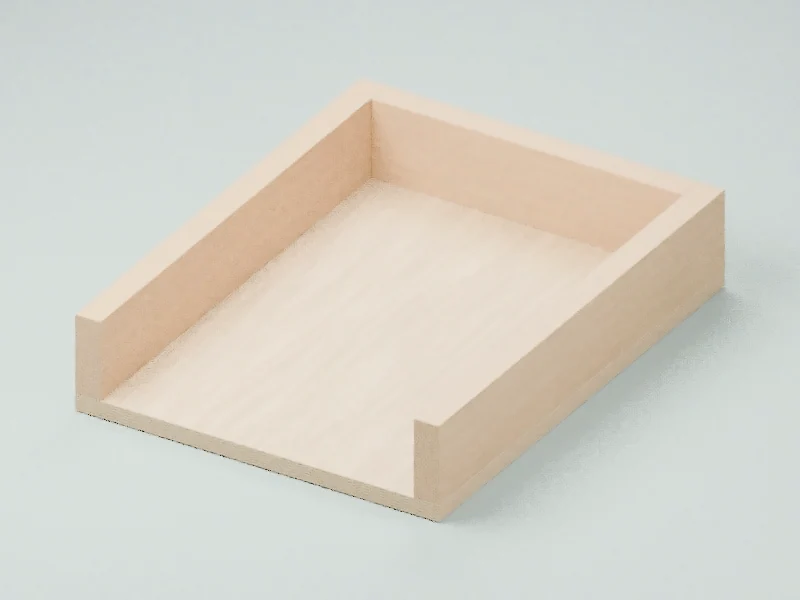 Open-Front Wooden Paper Tray for US LetterFinished size · 10½ × 13½ × 2¾ in.