Choosing stock · 3 min read
Smooth or Fluted Dowel Stock for Small Wood Projects?
Can I use a fluted dowel pin in place of a smooth wooden rod?
Offcut Journal editorialUpdated
Short answer
Treat smooth cylindrical stock and fluted furniture pins as different products. Choose clean smooth stock where something must turn, slide or rest against a continuous surface. Where a plan specifies a bonded connector, use the connector profile the plan calls for and follow its fit and adhesive instructions.
At the bench
Start with the intended contact area
A rod may sit in a small opening, pass through a spool or support material at its outside diameter. The area of continuous contact can be more relevant than the largest size printed on the package. Grooves often make room for glue and air in a bonded assembly. A plain rod offers a smooth profile along its seat, depending on the wood and how uniformly it was made. Check the actual pack rather than relying on product photos.
Consider the full-diameter usable length
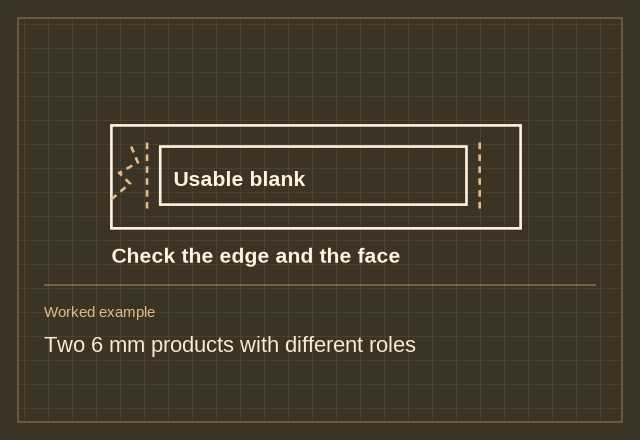
Take note of chamfered tips and compressed ends. For a piece that must seat over a specific depth, compare the original blank with the finished part drawing. Two products marketed with the same length can have different amounts of uniform bearing surface. On a removable pin, set the intended grip length aside before considering the in-hole portion. On two compatible pins, check that the small usable lengths are comparable.
Evaluate the surface against the handled object
Put a representative object near a clean sample and inspect the spot where it will touch. A visible groove or ridge may leave marks in soft material and collect dust. A spool that has enough space to rotate on a clean rod might catch on a rough end. If the plan expects a specific panel or solid-wood contact, retain that construction while choosing the rod. The proper material needs to hold the specified dimensions under normal use.
Mark storage for a future replacement
Separate smooth rod lengths from short fluted furniture packs in the stock bin. Keep original package labels or write out actual measurements and intended use. Store matched pairs together if they work in corresponding positions. For changes to rod diameter, length or holding method, revisit the upstream fit and pin constraints. A replacement can look similar at a glance and still put a groove or chamfer in the wrong place.
Check where a removable pin stops in its seat
Mark the amount of a removable 6 mm peg that the plan leaves outside for your fingers, then mark the intended seating depth on a clean sample. Put the sample in a practice opening in the intended material and check whether it stops because the grip mark reaches the face or because the bottom happens to touch. This shows where the usable length actually goes. A short fluted pin with deep chamfers may leave little continuous material for grip and bearing after it seats. Keep the pin specified for a glued connection, where the required fit and adhesive instructions govern the choice.
Practice on a plan
Finished dimensions in width × depth × height order.