Measuring and layout · 2 min read
How to Measure a Water Bottle That Overhangs Its Wooden Rack
What part of a water bottle controls the width and length of a horizontal rack bay?
Offcut Journal editorialUpdated
Short answer
Measure the body at its widest point and model where each shoulder, lid, and handle lands after the bottle comes to rest. A larger cap may work over an open end if it does not need to pass between guides, while a bulky handle can still invade the next parking space.
At the bench
Find the width at each guide
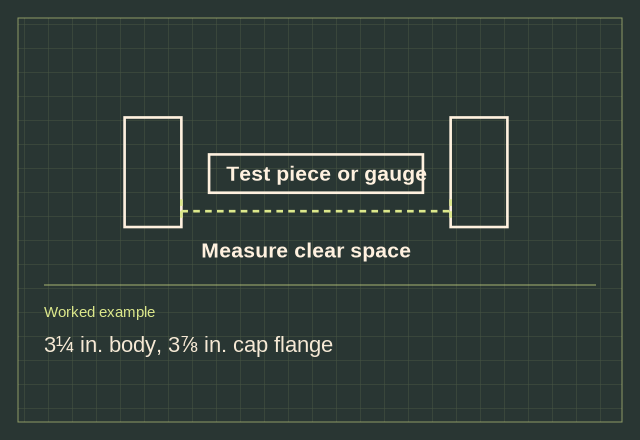
Place the empty bottle in its intended orientation on paper. Sketch the outside outline from the side and make a tick where each kit rail will cross it. A flared cap can be wider than the body, and rubber loops may bulge sideways when turned. Record diameters at the actual guide positions. Measure the widest fixed part separately from the handle’s sweep.
Model when a wide feature needs to pass
Place two strips where the guides will sit. Rehearse dropping the bottle in from above and sliding it in from the end. Only one motion might work depending on whether the cap has to pass between closed strips. If you must insert it from above, verify body and lid clearance under any shelf or cabinet obstruction before deciding an end can stay closed.
Check the resting support first
Move the model rails until the bottle rests in the positions the plan intends. Keep shorter bottles from slipping into a gap intended for a longer cylindrical body. Try a sample of each size that will share the rack and mark where the supports actually touch them. Simple accessible stops can preserve contact at the right places.
Leave room to fetch one bottle
Place empty bottles in both adjacent positions. Pull one out carefully using your normal grip and follow the handle or lid during the motion. If you have to tilt the bottle far out into the next lane, increase spacing or move the stop. Record the front projection as well as the effective body width. Then verify the chosen arrangement on the actual shelf.
Try trading cap directions in neighboring lanes
In the 3½-inch trial lane, the 3⅞-inch lid flange needs to project past the guide because it cannot fit between the two rails. If two flanges touch where the rails stop, try parking one empty bottle with its cap at the opposite accessible end. Repeat the move you use to remove each one and check whether either end then projects against a wall. A tall bottle may still need a separate stop at its body. Keep that support under the bottle where you expected it to rest before deciding that the reversed arrangement solves the interference. Record the required approach space at both ends of the trial.
Practice on a plan
Finished dimensions in width × depth × height order.