Measuring and layout · 3 min read
How to Sight Winding Sticks Without Chasing Parallax
Why do winding sticks appear to disagree when you move your head?
Offcut Journal editorialUpdated
Short answer
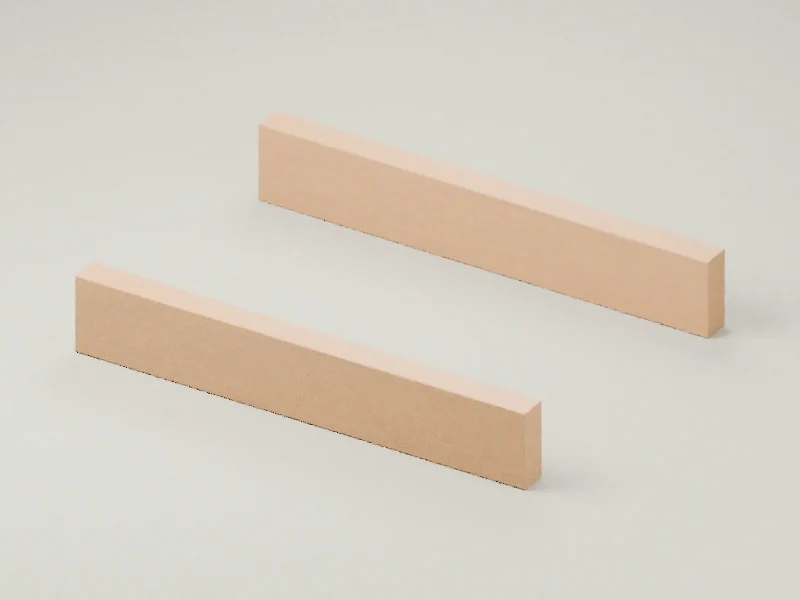
Use winding sticks where your eye can see both outer tips of the near and far stick from the same position. A crooked bench setup, a chip under a stick or a view too far off to one side can make the gap look different. Note what you see and repeat the observation with the sticks swapped before you mark the board.
At the bench
Place the sticks over solid contact
Rest the board on a stable surface without clamping twist into it. Press each end gently to check whether the board rocks. Sweep loose dust or shavings off the two crosswise lines where the sticks will sit, and place the sticks near the ends with consistent overhang left and right. A stick across a bowed bit of bark or a scalloped corner may give a different reading when it moves one finger-width.
Find the height that reveals both edges
View from the center of the board, just above the near stick. Lower your head slowly until the far stick's edge appears just behind the near one, then lift enough to compare both ends. Use the contrast between the far edge and the near edge. Shift a work light if the dark tips disappear into the far wall. Keep your head roughly at the same place while you glance from left to right.
Check the reading with a swap
Pick up both sticks and switch their front and rear positions, maintaining the same left-to-right orientation and matching the pencil seating lines. Sight again. A difference that changes sides after the switch deserves an inspection of the sticks or their contact points. A difference that repeats on the same side deserves another check on the board. Mark where a stick was sitting so that your next reading compares the same sections.
Separate twist from other shapes
Move one stick toward the middle while the other remains at its line and record where the mismatch gets more obvious. Readings across several positions can show whether one short section deserves attention. Use a straightedge along the board and across its width to check bow and cup separately. If the board sits down differently whenever it moves, resolve its support before comparing smaller changes or marking a high corner.
Keep glare out of the sightline
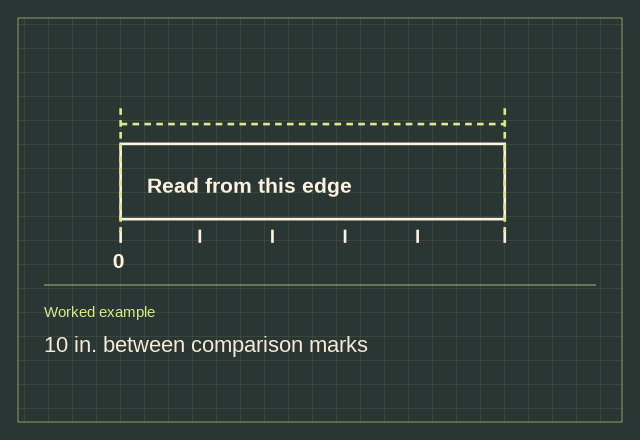
Suppose the far right tip appears roughly 1/16 in. high across the 10-inch comparison marks. Shift a portable light to the opposite side of the bench without moving either stick. A bright line on the upper edge can make one tip look thicker than the other if the light strikes it directly. Sight again from the same place with both edges in comparable light. A plain sheet held behind the far stick can give the top edges a more legible outline than a busy wall. If the difference changes with the lighting, resolve what edge you have been sighting and repeat before deciding where to mark the board.
Practice on a plan
Finished dimensions in width × depth × height order.