Sanding and finish · 2 min read
Finishing a Wood Project With a Removable Liner
How should I finish a wooden project that uses a removable tray, cup, or liner?
Offcut Journal editorialUpdated
Short answer
Treat the fixed wood and the removable liner as separate parts with different jobs. Keep the liner easy to grip and take out. Let your finish sample establish how the whole pull path behaves once the coating has reached its stated condition for use.
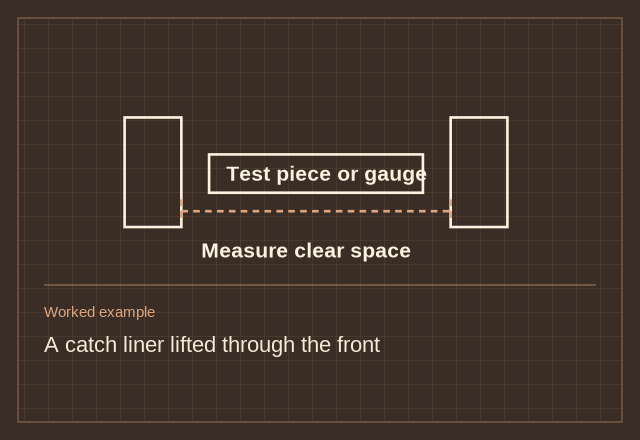
At the bench
Map the contacts with an empty liner
Use the liner's real front edge, sides and handhold for the test. Set the finished piece where the tray will live and draw the liner out without moving the whole stand. Note the few locations that touch during the pull. A thick film is most consequential there, while the broad surfaces may mostly need an easy-to-maintain appearance.
Try the whole stack on scrap
Prepare a scrap strip with the finish you plan to use, in the same orientation. Let it become ready for the kind of contact the product permits. Put a compatible liner scrap or the actual spare against it and repeat the short path several times. Feel for changes at the edge and note visible rubbing or transfer. Those observations guide where to rethink clearance or handling.
Give wet cleanup its own removable part
Use the plans and the intended liner's instructions for any liquid handling. A wood finish and a replaceable liner can have different care limits. Set the wood up so a damp liner can be removed, dried and returned as its material permits. Keep the standing water or residue out of the fixed joint and check the contact edges during normal cleaning.
Record what the next replacement needs
Write down the liner’s actual outer size, grip shape, and any bends or lips that matter. Many substitute containers share a nominal size but have different rims. If the replacement process is easy to repeat, the wood piece can stay useful through changes in the liner. Save an offcut of the finished rail for checking any later change.
Check the path while the liner twists slightly
A rectangular catch liner sometimes lifts with one corner leading, even when it pulls straight in the drawing. With an empty liner and the stand on a level bench, try taking it out from the side you use when the stand sits near the wall. Watch the corner that rotates toward the rail. If it bears on the wood during this ordinary motion, review where the coating belongs and check the liner maker’s fitting guidance. On a stand that uses a replacement barrier, trace that installed outline while you can still reach every edge. A replacement should follow the same safe lift path.
Practice on a plan
Finished dimensions in width × depth × height order.
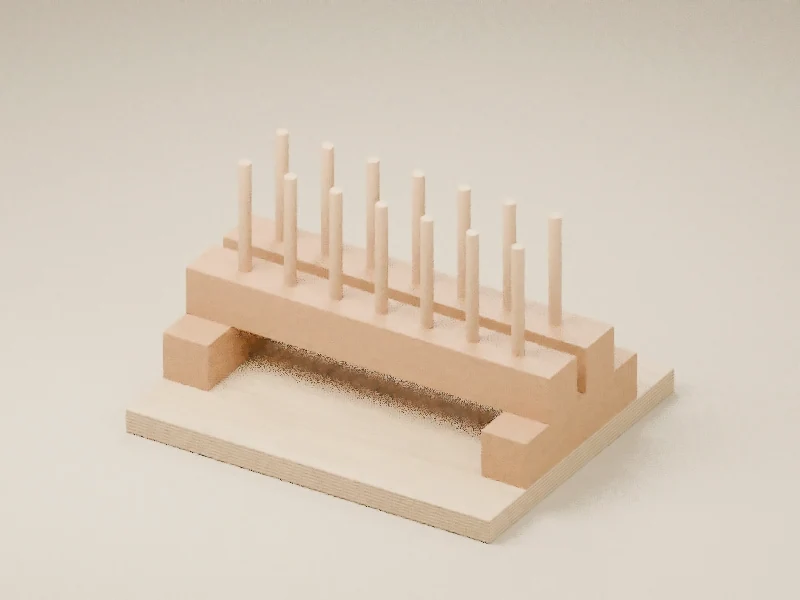 Wooden Plate Rack with a Removable Catch TrayFinished size · 12 × 10 × 7¼ in.
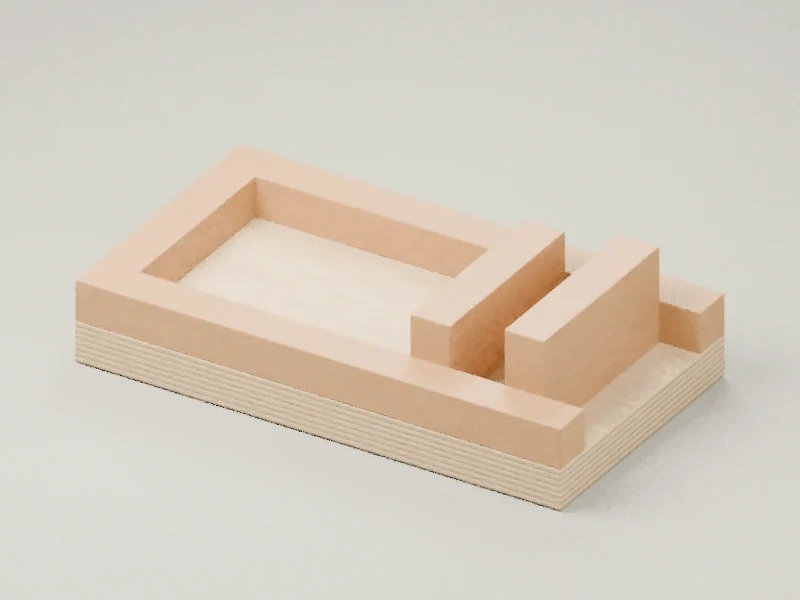 Glue Brush Rest with a Removable Drip LinerFinished size · 9 × 5 × 2½ in.