Fixes at the bench · 3 min read
Why a glass cloche rocks on its wooden base
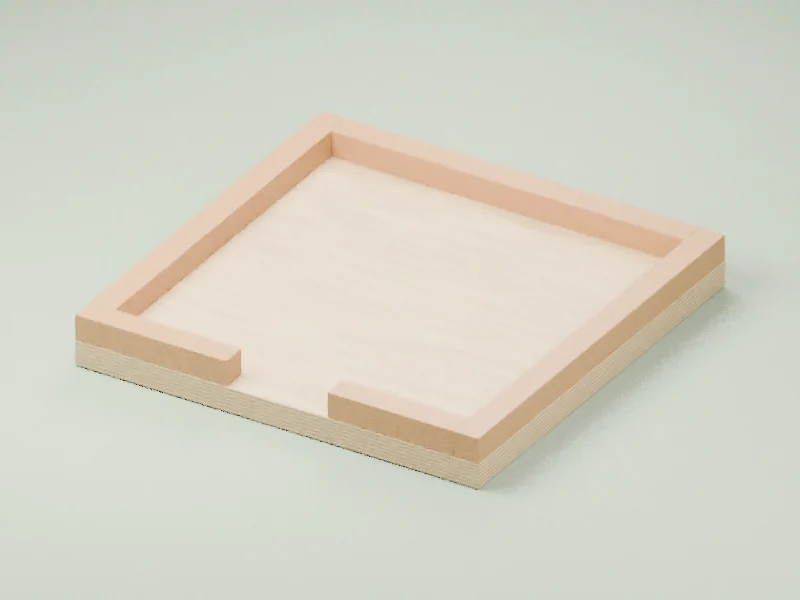
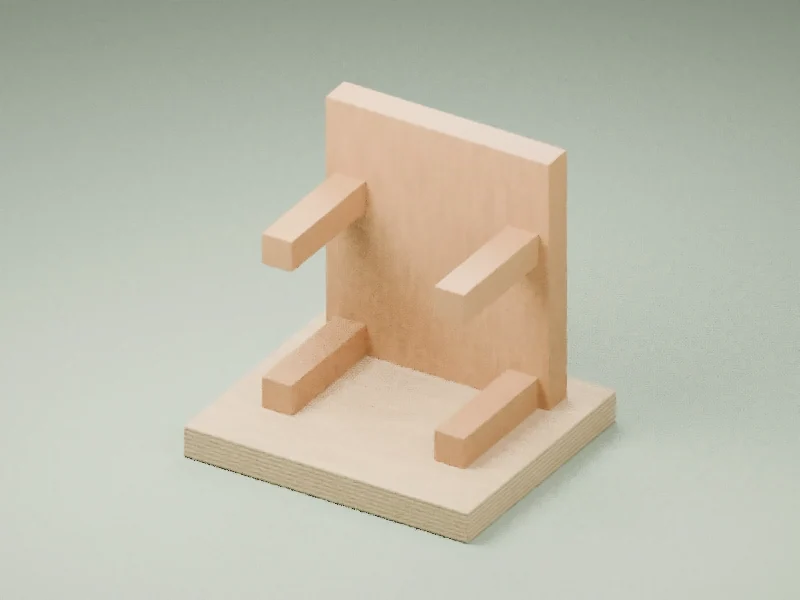
Why does the cloche rock on its pan even though both pieces fit in the wooden frame?
Offcut Journal editorialUpdated
Short answer
In the Offcut base the dome’s rim belongs on the flat inside of the removable pan. A rolled lip or the curve where the floor meets the sides can prop up a short arc of the glass. An uneven pan can give the same symptom if one of its feet catches on the frame. Take the plant and any loose contents out before you test. If there is a chip, crack or loose glass, stop using the dome and follow the maker’s guidance.
Find the cause
Check the dome off the pan
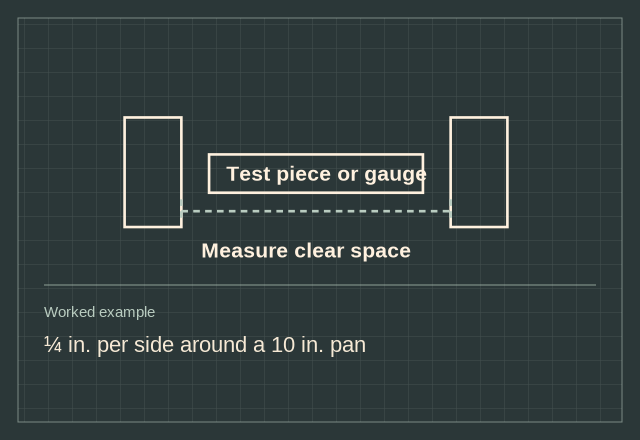
Set the dry dome gently on a clean surface suitable for the glass and look around its full bottom rim without pressing. If the rim rocks there, inspect it in side light and have it checked before using a shim to disguise the movement. Measure the outside diameter of the bearing rim at two angles. Make a round paper gauge to the larger of those diameters for the pan checks.
Find the flat part of the dry pan
With the glass elsewhere, put the cutout in the liner and watch its edge at the corners, near any rolled lip and at stamped ribs or ridges. A straight scrap laid across the floor can help locate where it first changes height. Try the cutout at the planned center and look for any place it curls upward to follow the pan.
Test the pan on its own in the frame
Set the empty pan in the wood and check whether every foot settles just as it did on the tabletop. Use a paper strip at one corner at a time to see where the pan bears. If the pan rises when slid off center, move it back and see whether the space around its widest point allows it to return by the same path.
Keep the pan and dome sizes compatible
A different pan with a broader flat landing can fit the frame and support the original dome. Check both dimensions before buying. Never sand or grind the glass rim to match a pan. Confirm that you can lift out the compatible pan by its notch without bumping the wood.
Check if the dome only perches after dressing the display
Make the first comparisons with the empty pan and dome as described above. If both sit steadily and the display rocks after adding the plant, take the glass off and look for a stem, folded label, or piece of dressing that crosses the circle where the rim bears. Put the paper gauge back over the empty landing to mark the whole footprint. Everything inside that circle needs to clear the dome’s path as it lowers. Everything on the rim line changes its support. Keep the display clear of that bearing area and confirm that the dome settles freely by its own weight. Stop if the glass shows damage.
Practice on a plan
Finished dimensions in width × depth × height order.