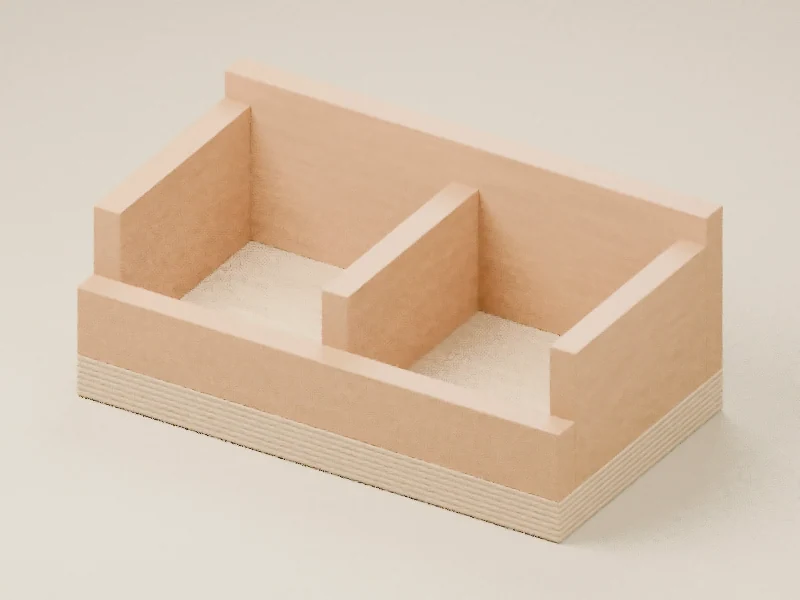
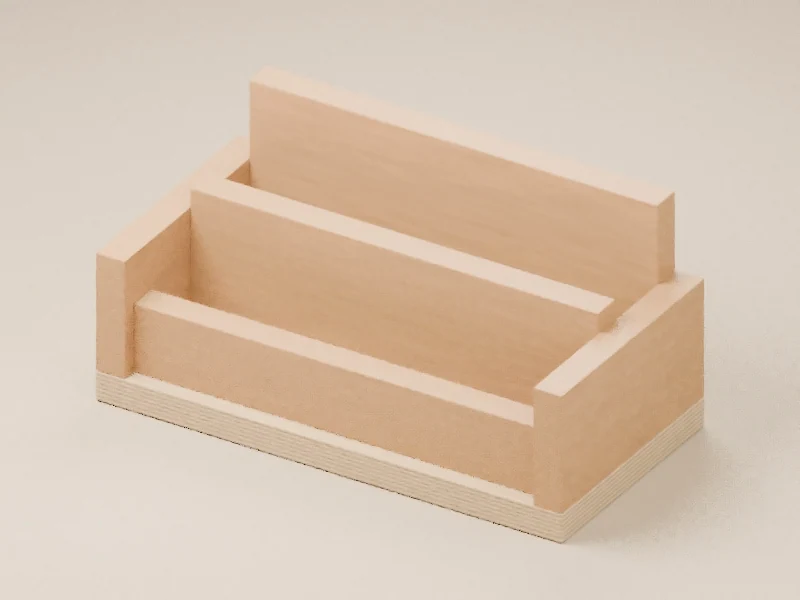
Choosing stock · 2 min read
Pine or Poplar for a Small Wooden Organizer?
Which is a sensible choice for the exposed rails of an organizer, pine or poplar?
Offcut Journal editorialUpdated
Short answer
Choose the specific board that gives you sound, straight pieces at the intended size. Poplar often has fairly even grain and can suit painted indoor organizers. Pine can be a practical choice when its figure fits the build and knots or softer contact areas stay out of the spots that matter.
At the bench
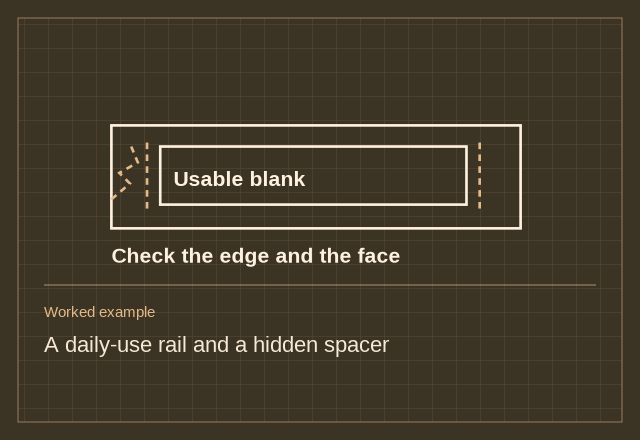
Inspect a blank at its finished width
A knot near the center of a wide board can land at the edge of a narrow rail. Put a paper strip the width of the rail over each likely location. Check both faces and look out for a weak-looking or loose area. Use a clear stretch where the part will be slender or receive frequent contact.
Compare appearance without assuming uniform color
Poplar can show greenish or darker streaks. Pine may have alternating light and dark bands and stronger visible figure. Decide whether you want those patterns under the lighting in the actual room. If parts will sit side by side, compare color in the arrangement they will have when assembled and label the best faces.
Consider dents where objects land
Set the normal contents beside the sample blanks. See where keys, a hard container, or a loaded stack could meet the edge. Compare old marks on the candidates and decide how much everyday wear suits the project. Choose a clearer, sounder blank for the exposed edge if you expect frequent handling.
Protect the dimensions when switching
Keep the required width and thickness on the cut list even if the board species changes. Check the real piece at more than one point and see that enough usable length remains. If a substitution changes how a narrow rail fits or how the joint bears, choose the specified stock or work through the altered fit before cutting the batch.
Choose the touch rail after a small finish trial
Paint can make two boards look like a match under room light while an exposed edge still feels different where mail slides past it. Bring a cutoff from each candidate up to the planned surface and apply the same compatible finish system according to its instructions. Compare both at the edge profile you'll use, including the part that meets the side. For a clear finish, put the samples side by side with the greenish or dark strip fully visible before choosing the assignment. Make the choice from both the contact surface and the finished look. A sound hidden spacer can come from the other board if its measured dimensions and joint still suit the plan.
Practice on a plan
Finished dimensions in width × depth × height order.