Measuring and layout · 2 min read
How to Measure for a Right-Angle Plug in a Phone Stand
How much room does a phone stand need for a right-angle charging cable?
Offcut Journal editorialUpdated
Short answer
Measure the plug with the case on and the cable seated. Compare the bottom of the plug, the side where the cable exits, and the movement needed to remove it. These are three different constraints, especially when the stand has a thick front lip.
At the bench
Start with the assembled phone
Put on the thickest case you normally use. Seat the plug fully and trace the bottom edge of the phone on card. Draw a second line around the sturdy part of the plug and strain relief. Note where the cable begins to bend naturally. This outline records what has to pass the wood. The metal plug tip alone is too narrow a reference.
Draw the opening asymmetrically
Square up from a clear edge of your card and mark the cord exit side. The connector may be centered while its elbow points left or right. On a stand with a center gap, put the outline over the proposed slot. Check that opening it toward the cable still leaves enough wood under both edges of the phone.
Mock up the lip and the backrest
Set scraps at the proposed front lip and backrest positions, using the same thickness you plan to build. Stand the phone in that sample pocket and connect the cord. Try routing it toward the power source. A plug that looks clear from the front can still run into the nearer side of the gap behind the stand.
Choose how the phone will come out
Try the motion you will use every day: disconnect it in place, lift the phone and cable together, or remove the cable from a groove first. Mark where your thumb needs to go. A connected phone that can lift straight up may need a different opening from one that is unplugged inside the holder. Check both movements before cutting the good board.
Plot a second cable exit before widening the slot
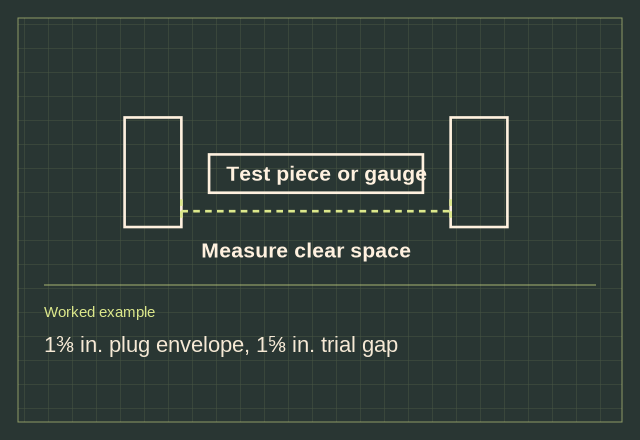
The first plug needs 1⅝ in. of trial space toward one side. If you sometimes connect another cable with an elbow facing the other way, draw its outline on a separate card without turning the phone. Set the two cards over the same bottom-edge trace and mark where each one still leaves a continuous bearing ledge. A shared opening that takes away one of the phone’s resting points can make the case teeter even if both plugs fit. Try shifting the complete phone pocket on the base, routing a cable through a back opening, or keeping the more useful cord at the stand. Test the selected arrangement before removing more wood.
Practice on a plan
Finished dimensions in width × depth × height order.