Choosing stock · 2 min read
How to Allocate Plywood and Solid Wood in One Cut List
How do I plan a project that mixes a small plywood panel with solid-wood parts?
Offcut Journal editorialUpdated
Short answer
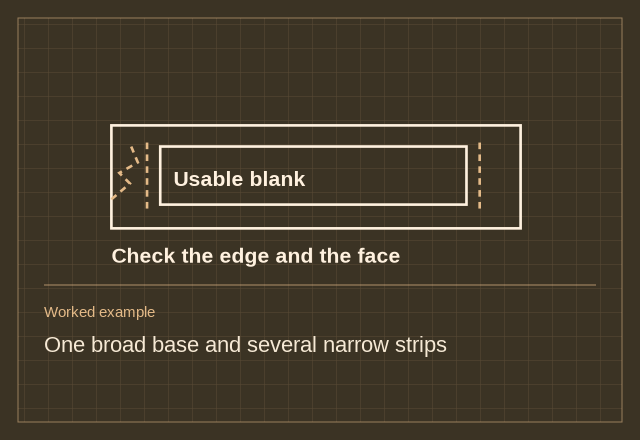
Separate the stock list by job. A broad panel and a slender edge or rail need different checks even when they start with the same stated thickness. Follow the parts specification, then look for sound panel regions and solid blanks that actually fit those distinct roles.
At the bench
Mark structural roles on the plan
Circle the panel that carries other pieces, the faces seen every day and the rails where contents slide or bear. Those notes explain why the material list may include more than one kind of wood. Before substituting, check the intended fit and construction. An otherwise sound scrap can be a poor match for a narrow feature or the key reference face.
Store leftovers with their roles written down
A broad flat sheet remnant remains useful even if it is awkward to store. A narrower solid strip may be much more valuable where its thickness is hard to match. Write down its usable dimensions and the kind of part it can become. Keep scraps of similar actual thickness together if you plan to make matching pieces.
Check how physical thicknesses meet
Lay the candidate panel and rail on a flat surface and see which faces align. Measure both actual thicknesses. If a plan calls for flush faces and your two scraps differ, check whether a change would move an inside opening or reference surface. A small mismatch at one edge can matter where several parts need to be cut alike.
Leave substitutions visible on the cut list
Mark the old material and proposed choice side by side before you cut. Add a note describing any effect on the dimensions or how the piece is supported. Keep parts made from different stock in separate stacks until labeled. That makes visual changes possible without losing track of what the model assumes about the assembled shape.
Check whether the rail follows the panel or sets its width
On a mixed-stock build, two boards stamped the same size can create a ledge where a solid rail meets a plywood panel. Establish which one is the working reference before deciding what to adjust. Set the real item that must travel over the joint on a two-piece mockup, such as a plain sheet of paper sliding down a guide. Measure the opening and inspect the accessible face at the same time. A small proud edge on the unseen back may leave the fit intact while the corresponding ledge on the front catches paper. Hold both pieces against their intended datum and keep any change written next to the affected dimensions.
Practice on a plan
Finished dimensions in width × depth × height order.