Choosing stock · 2 min read
MDF or Plywood for a Bench Reference Panel?
Should a removable bench reference panel be made of MDF or plywood?
Offcut Journal editorialUpdated
Short answer
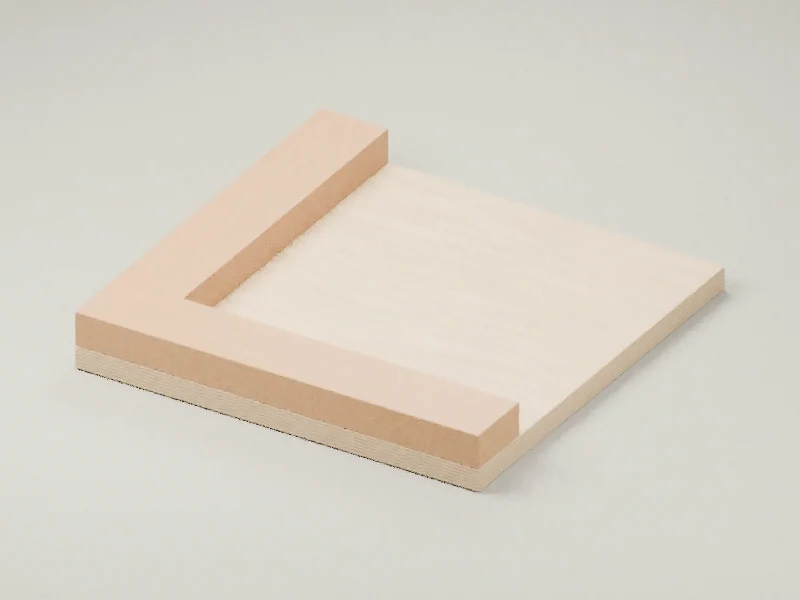
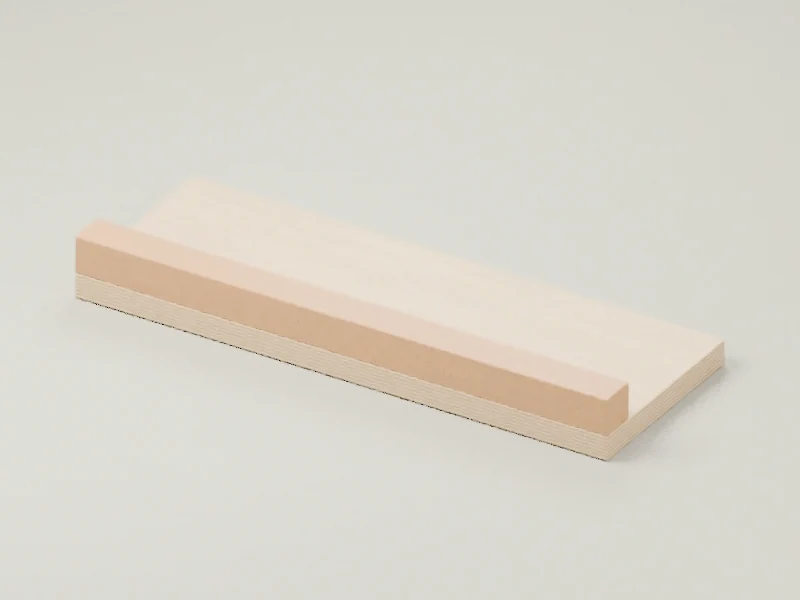
MDF makes a useful smooth reference surface when it stays dry and well supported. A plywood blank suits a panel carried around often or used where the edge must hold up to repeated contact. Inspect the pieces you have and compare how the reference edge will meet the real work.
At the bench
Decide what acts as the reference
A flat face can carry a line or become a consistent work surface. A straight edge can guide a pencil or meet another board. Check the feature you will use most often. A board with a smooth face and one bruised corner can still work after a fresh sound edge is established, provided the part still makes its intended size.
Consider how it is stored
A panel resting on a flat shelf with its edges protected sees different wear than one leaned in a busy corner. Check the route from the storage space to the bench and note the part that strikes the shelf first. Choose stock you can replace easily if the reference will be handled by several people or used repeatedly for rough work.
Keep dry work dry
A water mark or swollen fuzzy edge on a scrap means you should compare shape before it becomes a reference. Reserve known sound material for an important working edge. If the job brings repeated moisture or spills, choose a project material appropriate to that environment and keep the dry reference panel separate from it.
Buy for the decision that matters
If this is a single disposable setup, use a sound piece you already have and keep the best plywood for the finished job. If the panel needs to stay accurately edged across a series of projects, compare a sound candidate for the repeated use and mark the edge to protect. Test it against a known straightedge again after storage.
Set a check edge on the board before putting it away
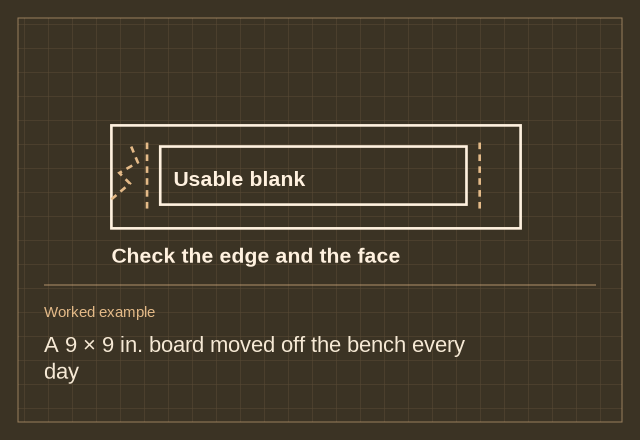
A bench reference is easier to trust when you keep a record of its good surface. Set the 9 × 9 in. candidate on its actual support, lay a known straightedge down the working edge, and note where any light shows. Mark the accepted edge and date on the back. When the panel returns from storage, set it in the same position and compare the same edge. A new gap near a corner tells you where to inspect for a swollen or crushed spot. A straight edge that works on an empty panel can still bend out of position if the setup leaves it suspended, so repeat the check with the support in use.
Practice on a plan
Finished dimensions in width × depth × height order.