Measuring and layout · 2 min read
How to Measure Keyboard Height With the Feet Folded or Open
How tall should a shelf opening be for a keyboard with folding feet?
Offcut Journal editorialUpdated
Short answer
Measure over the tallest feature in each orientation you will actually store. Put the keyboard on a flat surface, include the tallest key if it extends above the case, and trace how the feet move into position. Use a mock-up to check that you can remove the keyboard without snagging.
At the bench
Measure with the feet and plugs in place
Put the keyboard on the same face you plan to store it on. Lay a straight strip lightly over the highest projection and measure from the bench to its underside. Use the body shell, caps, feet, and any plug that will remain connected as part of the same outline. Repeat with feet open if the storage routine is likely to leave them that way.
Mark where rubber feet land
Set a strip of paper underneath and trace the foot locations in plan view. An upper shelf may be deep enough for the visible shell while failing to support a rear foot. In a rack with separated rails, use the paper to see whether the foot lands on a support or over a gap, then move the stop or support as needed.
Try the angle you use at the desk
Set two flat boards or scraps at the planned vertical gap. With the rack model at its intended height, slide the keyboard in and lift it back out. Tall keys near the rear can drive into the board above during a slanted entry. If you reach from above, check clearance with the same wrist angle before widening the gap on paper.
Leave room to use the second shelf
Put a board or object where the other keyboard will rest. The shelf above may interfere with your grip even when the keys clear. Try a stop that leaves the front edge of the keyboard exposed. Mark the longest and highest positions you actually used, and build to those marks. Read the clearance again after the shelves and stops are dry-fitted.
Check the slot with a hard depth limit
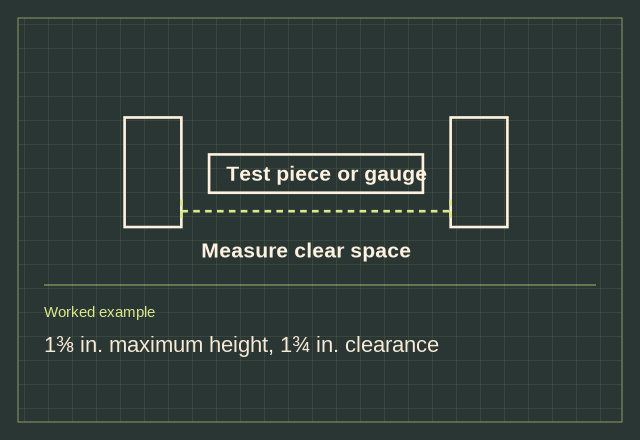
The 1¾-inch trial opening gives the taller 1⅜-inch keyboard ⅜ in. overhead. Put a temporary rear stop in the mock-up and slide the keyboard in until it reaches its normal parking position. Check whether the back of either foot lands against that stop before the front edge reaches its mark. On a desk where the stop is an actual wall, consider leaving the keyboard farther forward or reserving the upper slot for a shallower board. Check if its front rubber feet still land entirely on the support in the new location. The two measurements describe how much slot height and useful shelf depth this keyboard needs together.
Practice on a plan
Finished dimensions in width × depth × height order.