Choosing stock · 2 min read
Heartwood and Sapwood in a Small Woodworking Project
Should I keep the pale sapwood on an indoor project?
Offcut Journal editorialUpdated
Short answer
Light sapwood can work as part of an intentional color pattern in a sound indoor piece. Start by deciding where the contrast will appear and whether paired pieces can make it look deliberate. For damp use, consult the species guidance and choose materials for the real exposure, including the sections of wood actually present.
At the bench
Compare boards under the same light
A preview under bright store lighting may read differently from the same board near a desk lamp. Group the candidates on one surface so shadows fall the same way. Look across the broad faces, then check the end grain at the intended viewing angles. A narrow pale stripe can become the most prominent mark once the broad board is reduced to a small rail.
Follow the color through the board
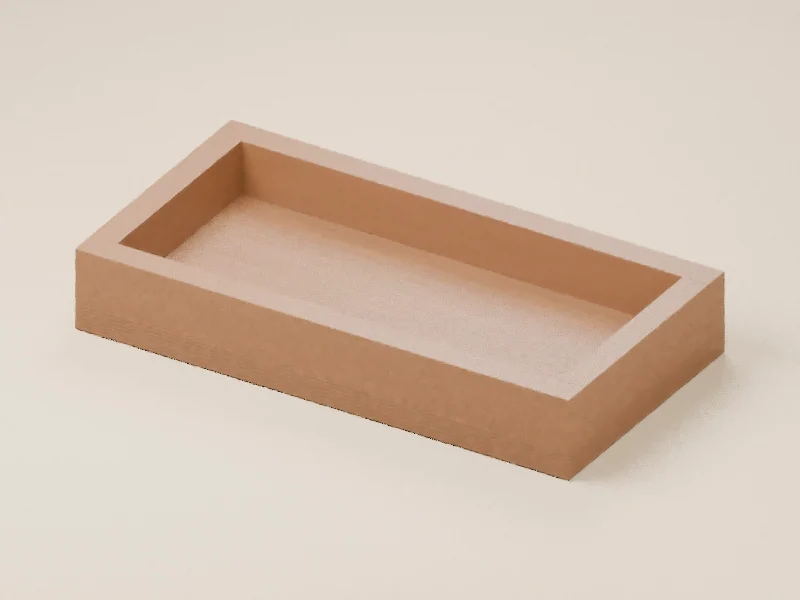
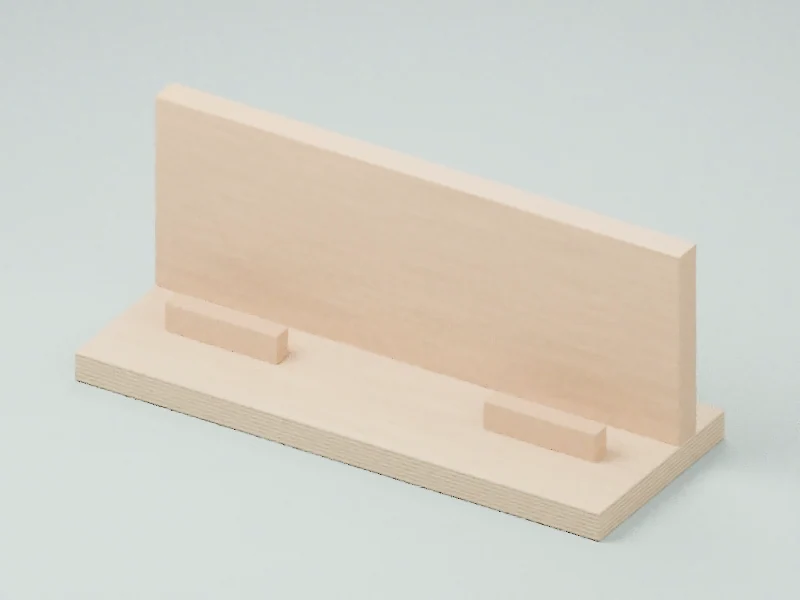
A transition can take a different line on the opposite face. Mark both sides before deciding whether the pale strip will wrap continuously around a corner. This matters on parts turned in use, such as a portable organizer or tray. For a fixed back panel, the side that faces the wall may matter much less than the narrow exposed edge.
Apply decay guidance to the right material
Natural decay resistance varies among species and between heartwood and sapwood. A dark color alone gives you little basis for assuming longer service in damp conditions. If the piece lives near a wet tray, choose known stock and plan to keep water from sitting against it. Inspect that location in the finished layout.
Use a paper border to judge the composition
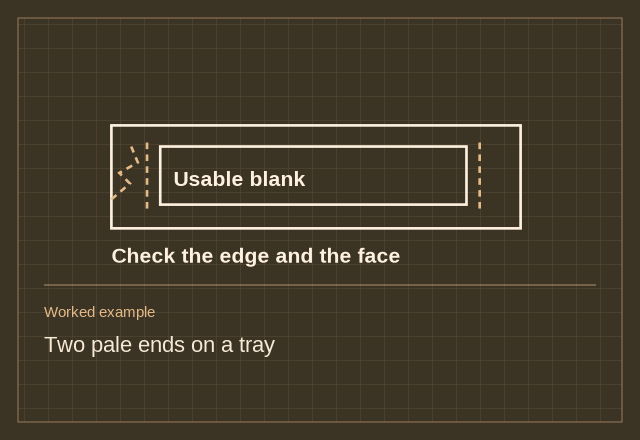
Tape or hold two narrow pieces of paper around the intended show face, leaving only its finished outline visible. Small shapes change how much contrast you see. Slide the outline across the transition and compare at least two options. Reserve a nearby sound piece for any part that might have to match the first later.
Compare the contrast on finished sample scraps
Color on a dry offcut is a starting point for a design decision. Set aside two sound pieces from the actual stock, including the light band and adjacent dark wood you want in the tray. Prepare them as you will prepare the show faces and use the chosen finish according to its instructions. Let the samples reach the product's stated evaluation stage. Look at the seam from the normal front and side views under the room's lighting. You can then choose whether the lighter wood belongs at both front ends or would read better as a small hidden return. Keep those samples beside the labeled layout so you can refer to the same contrast later.
Practice on a plan
Finished dimensions in width × depth × height order.