Choosing stock · 2 min read
When an OSB Offcut Makes Sense for a Shop Project
Can I substitute OSB for plywood in a small shop project?
Offcut Journal editorialUpdated
Short answer
An OSB offcut can serve a dry, flat trial layout or bench backing where its strand texture does not interfere. Look at the contact surfaces and the intended use before replacing plywood in a finished project. A panel with protruding strands or worn edges can be awkward for thin dividers, paper and sliding applications.
At the bench
Know where the rough face helps or hurts
A broad rough scrap is easy to mark with an outline and useful where paper laid on top only needs temporary support. The same texture can be distracting on a tray that gets wiped down or on a rack that guides soft material. Set the actual contents on the scrap and check the contact points before treating it as a replacement panel.
Keep the edges in mind
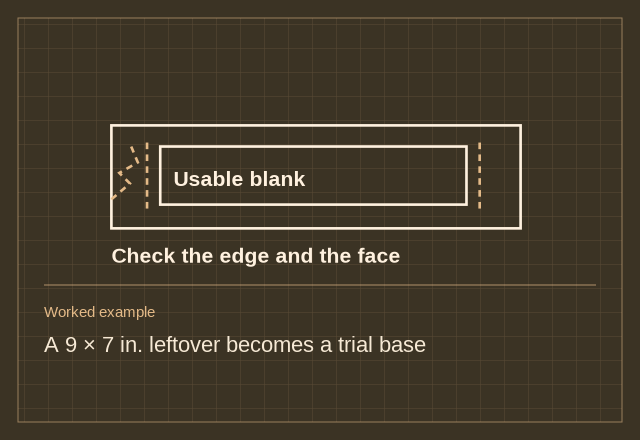
A piece stored in the garage may have bruised corners, raised strands or a swollen edge. Lay the panel on a sound flat surface and see if the usable area rocks. Adjust the test outline to keep damaged edges in the waste. If the actual plan requires a crisp flat edge to carry another part, choose the best available sound stock for that edge.
Read the stamp before drawing conclusions
An OSB panel may carry a grade or intended-use stamp. The markings can help you identify a known product, but the appearance of a scrap alone tells you little about its service history. Treat unknown or deteriorated stock as an uncertain option. Use a known material if the design depends on stiffness, moisture performance or secure joints.
Separate temporary and finished parts
Make the trial piece easy to recognize with a date or a large pencil X on the back. Keep it alongside the rest of your setup tools and mark the actual finished part on the cut list separately. That division lets you take advantage of the offcut for layout without silently changing the stock in a measured drawing.
Use a repeatable reference under a rough-face mockup
A rough panel is handy for marking where objects sit but the outline can move if it is transferred from an irregular edge. Give an expendable 8 × 5 in. dock mockup a straight line on a paper template and mark where that line meets the front. Place the paper on the broad OSB face, set the empty bottles within their outlines, and test finger room. Transfer the marks from the paper reference to the final stock. Use the mockup to answer questions about placement and handling. The finished materials and measurements still come from the plan, and a raised strand in the rough scrap cannot dictate the outline.
Practice on a plan
Finished dimensions in width × depth × height order.