Choosing stock · 2 min read
Hard Maple or Ash for a Wooden Tool Rest?
When does hard maple or ash suit a bench tool rest better?
Offcut Journal editorialUpdated
Short answer
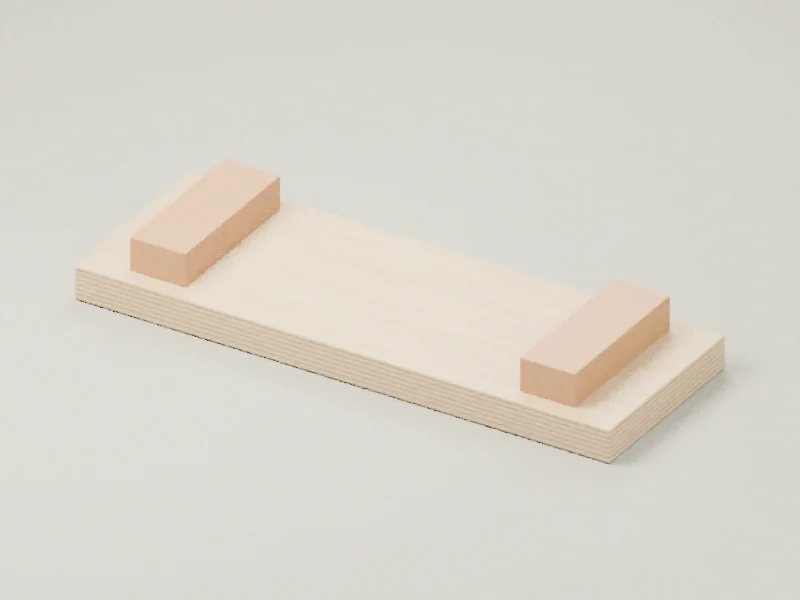
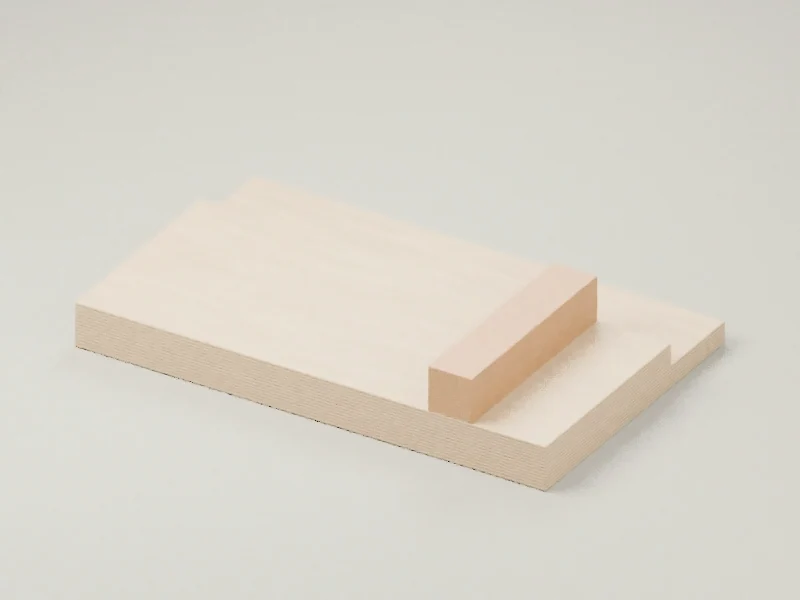
Both can supply sound hardwood stock. Choose for the contact you need. A clear hard maple blank can offer a visually even touch surface. A sound piece of ash may show coarser, more pronounced grain. The actual edge and degree of support matter more than choosing by species name alone.
At the bench
Check the candidate face under raking light
Move the blank under a lamp and look for depressions, deep pores or damaged patches where the tool must sit. The tool and the part should meet over the intended support area. A bright face that looks even from one angle can still tip a flat object if there is a raised area. Compare the actual contact patches.
Give narrow replaceable parts clear grain
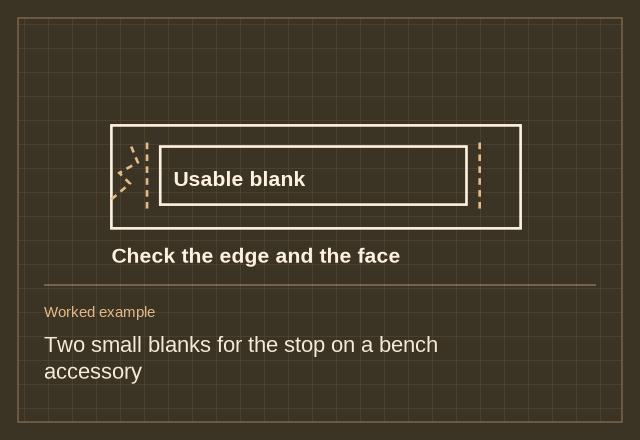
A slim stop or small support should come out of a sound stretch without a knot crossing its outline. Follow the grain toward both ends and check both faces. Save broad, decorative scrap for parts where a dramatic grain pattern is more useful than a straight narrow strip.
Plan for a matching replacement
A replaceable support is easiest to renew if the same thickness and a similar sound surface can be found again. Save one clearly labeled blank from the same board when practical. Keep it with the tool's drawing or useful setup notes and mark its clean face. That saves picking through a different pile while the bench is occupied.
Keep species comparisons at the scale of one shop
Species data describe general properties with variation between boards. Make your decision using the actual stock, its condition, and the area your design needs. If a part is expected to resist a meaningful load or impact, use a design and stock specified for that job. A tactile trial does not establish structural performance.
Check whether the tool lands on the same part of both blanks
Outline the location of the hand plane on paper with its blade safely retracted or otherwise protected per its instructions. Set each candidate stop at the same location. Move the plane gently into position and look for first contact between its sole or casting and the stop. If one blank tips or lets the plane bump a corner, compare the part against the original measured rest. A supposed species difference may turn out to be a corner profile, a void at the contact edge, or an uneven underlying support. Save the location of the sound contact on the drawing, so a piece replaced later can be checked the same way.
Practice on a plan
Finished dimensions in width × depth × height order.