Choosing a project · 3 min read
Frame Loom or Blocking Board? Two Different Ways to Hold Yarn Work
Can I use a peg blocking board in place of a small weaving loom?
Offcut Journal editorialUpdated
Short answer
The tabletop loom supports warp and gives yarn room to pass through. The blocking board pins already-made crochet around the shape you want it to keep.
Compare the builds
These dimensions belong to the linked plans.
Finished dimensions in width × depth × height order.
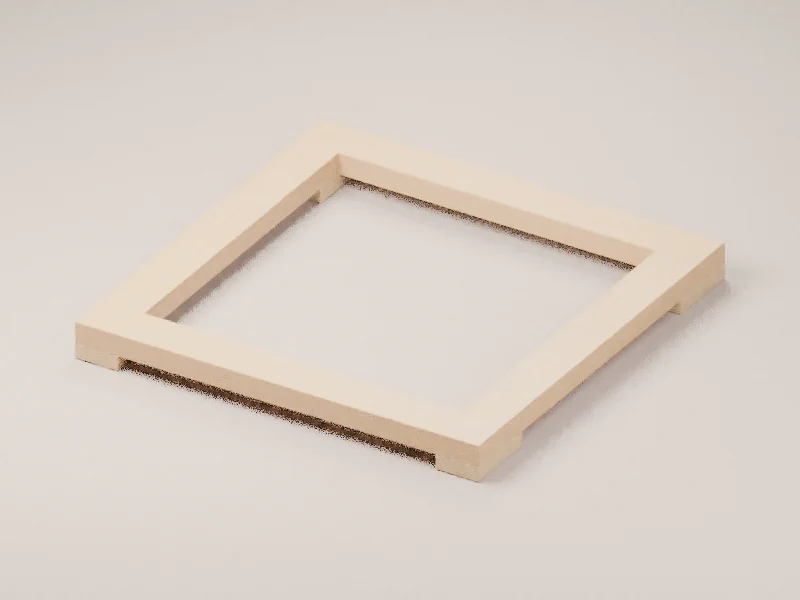
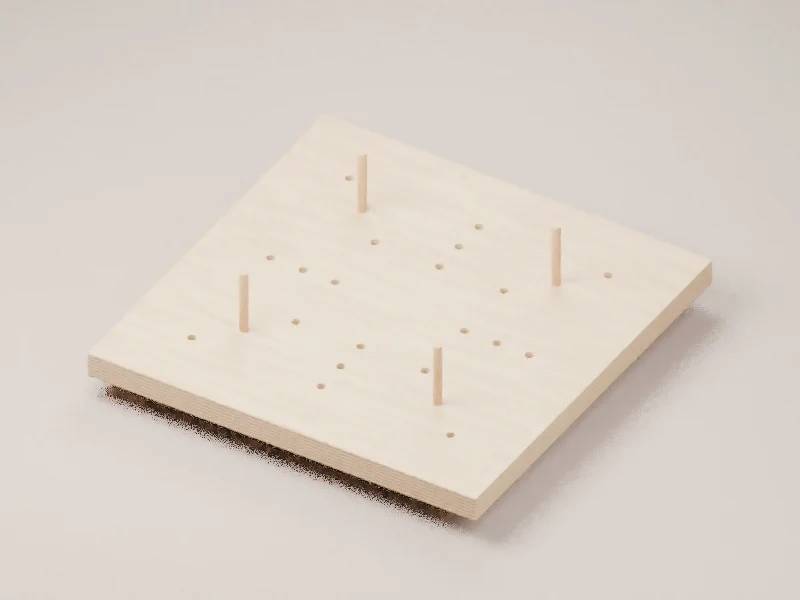
What to compare
Find where the cloth exists in the workflow
Look at the piece you want on the tabletop. Loose yarn on the frame needs a warp that spans the opening before there is cloth to place anywhere. A crochet square already has edges and corners. The blocking board registers those against pegs at measured positions. Sketch which way the yarn will be under tension and where a hand needs access. A tool that supports independent warp strands serves a different step from one that fixes the dimensions of an assembled motif.
Draw tool access on both sides of the frame
The 11-inch square opening is bounded by 1½-inch-wide rails. Draw the desired piece in the middle and include the space needed for the yarn tool you plan to pass through the warp. Sample the removable marking layout on a scrap board with the actual yarn. If a bulky yarn places adjacent marks practically on top of each other, choose a spacing compatible with the material and the pattern. Keep corner plates in mind when deciding how the loom will rest and where hands travel below it.
Read peg centers against the surfaces they touch
The blocking board has quarter-inch removable pegs. A six-inch spacing between centers leaves 5¾ inches between the near faces across one gap and 6¼ inches across the far faces. A stitch may sit on a different point of that circular surface depending on tension. Work from the actual motif and compare the measurement you care about after placing it loosely. The marked peg coordinates can locate a pattern precisely while an overly tight setup still distorts the yarn.
Plan for moisture and eventual release
Test where you can set a prepared frame or blocking board safely while work remains on it. Follow the yarn label’s handling advice and use the plan’s surface instructions around damp pieces. Take a small trial off the pegs or bars in the order you expect to use. If your fingers must squeeze between the rails and cloth, revise your approach before making a larger item. The right tool leaves an obvious removal route once its part of the job is done.
Use the first sample to determine the second setup
Before marking a whole loom frame, weave a small trial with the yarn and spacing you intend to use. Measure the sample after releasing it, following the yarn's care directions, and record its width before planning the remaining 11-inch frame opening. For a crochet motif, trace its relaxed size separately before choosing the 6-inch peg-center example or another supported pattern. Write down both the size you set at the tool and the size you get after removal. A large difference gives you a reason to change the sample setup rather than multiplying the same mismatch across a set of pieces. Keep separate records for weaving and blocking.