Sanding and finish · 2 min read
Where to Draw the Line Between Paint and Clear Wood
How do I decide where to separate painted and clear-finished wood on a small project?
Offcut Journal editorialUpdated
Short answer
Put the transition where a real part edge already explains it. Rehearse the finish sequence on a small seam before starting the whole piece. The appearance, adhesive areas and order of handling all matter when the two surfaces meet.
At the bench
Draw the boundary from the assembled view
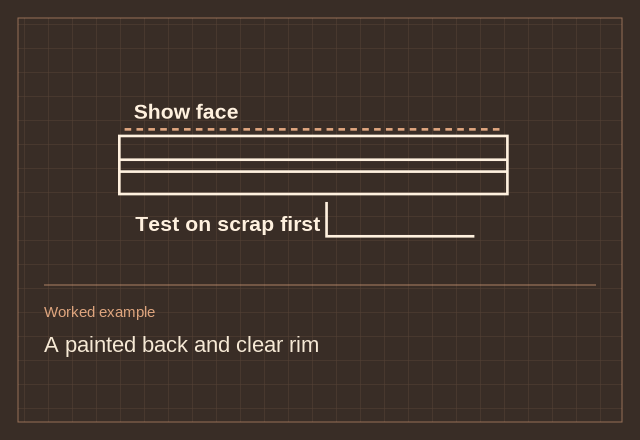
Dry-fit the show parts and mark which areas are actually visible. A rail may cover the part of a panel you planned to treat. A slot can reveal a thin edge from the side even though the front looks clean. Turn the planned piece around at the height it will be used. Identify the thin areas where the two finishes could meet unexpectedly.
Choose a real edge for the strongest line
An edge, recess, or separate board gives a finish change a natural stopping point. Mark through-parts that need extra attention, because a rail may show both its broad face and the end. If you want a line out in the middle of one face, validate the masking and exact overlap on a matching scrap before touching the actual panel.
Plan the compatible sequence
Compare the label instructions for both finishes and any adhesive at the seam. Prefinish separately where it makes the boundary easier to manage, keeping bonding surfaces prepared as required by the adhesive. Test any masking or contact on the sample during the appropriate stage. A surface that looks ready can still be vulnerable to marks during the next operation.
Judge the boundary with the contents in place
Stand a few cards, pencils or headphones on the dry mock-up and see where the strongest contrast falls. The object you store is often the focus of the display. Switch to a quieter finish relationship if the boundary pulls attention away. Record the winning arrangement with a note that names the faces, the part edges and the sequence.
View the dividing line from below and from the side
Set the display mock-up at the height of its eventual shelf and look at the paint-to-wood transition from both approaches to the room. A seam hidden behind the clear rail at eye level can show as a narrow untidy strip to someone sitting nearby. Use a loose dry piece of paper in the proposed paint color to move the line temporarily. Check whether stopping at the rear face of the part keeps the edge more consistent from both viewpoints. Copy the better line onto the assembly sketch, including where the paint turns around a corner and where the joint preparation stays clear.
Practice on a plan
Finished dimensions in width × depth × height order.
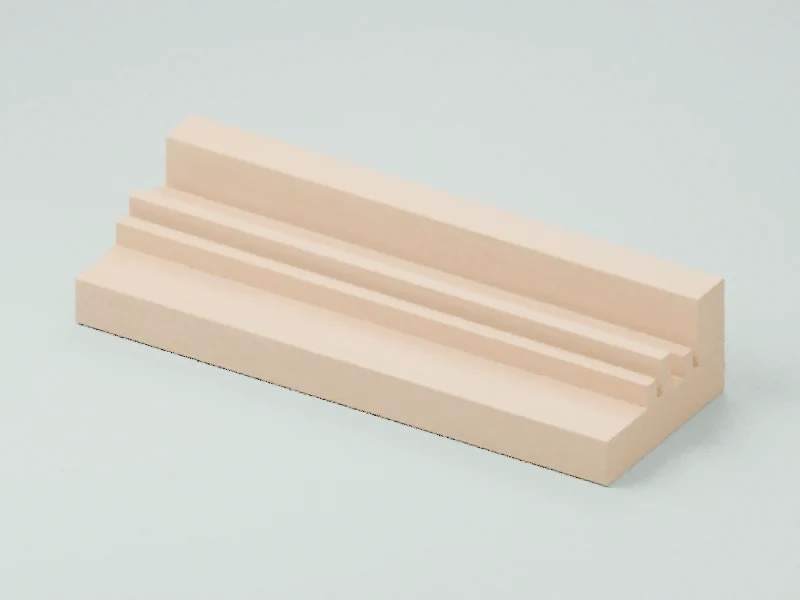 Two-Row Wooden Display Stand for 4 × 6 PostcardsFinished size · 9 × 3¼ × 1⅞ in.
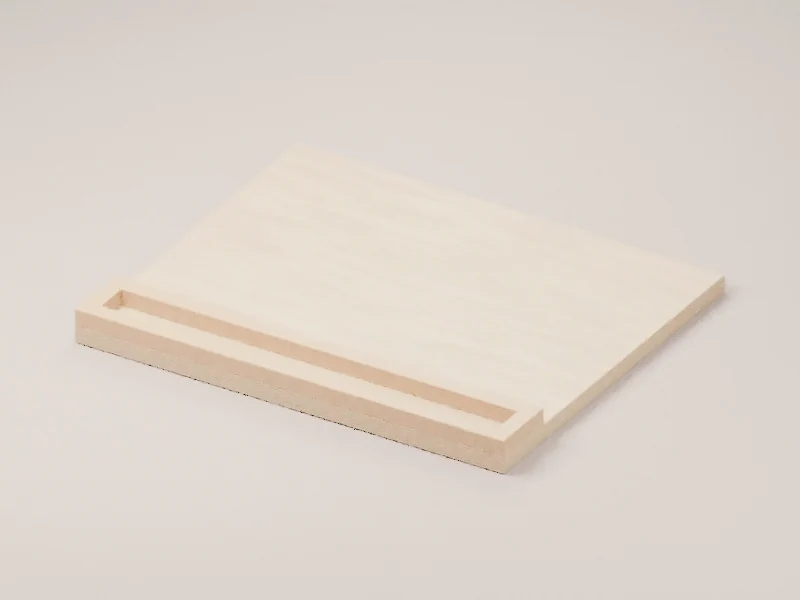 Letter and A4 Sketchboard with a Wooden Pencil TrayFinished size · 13 × 11 × 1 in.