Choosing a project · 3 min read
Why a Drill Bit Block and Router Bit Tray Need Different Hole Layouts
Can I use the same drilled wooden block for both drill bits and router bits?
Offcut Journal editorialUpdated
Short answer
The compact drill block organizes narrow shanks in rows. The router tray leaves broader space around each cutter profile and uses separate ¼- and ½-inch shank seats.
Compare the builds
These dimensions belong to the linked plans.
Finished dimensions in width × depth × height order.
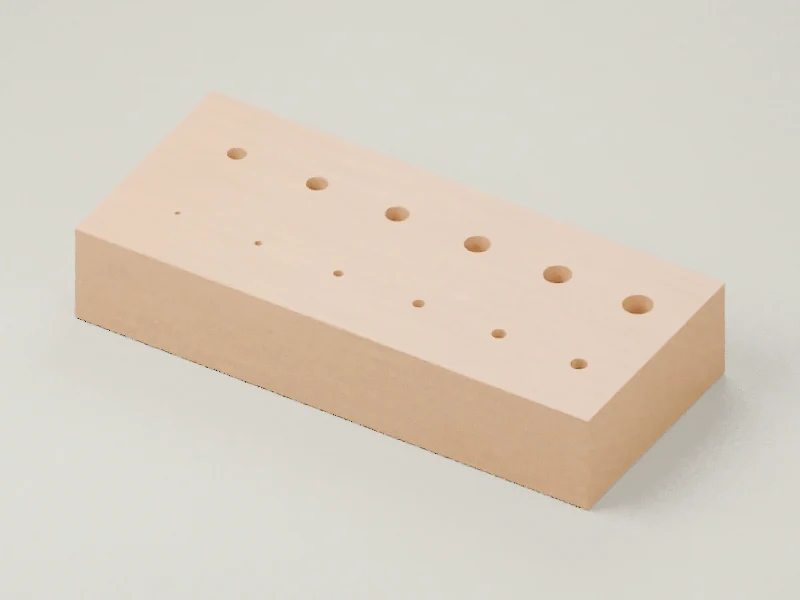
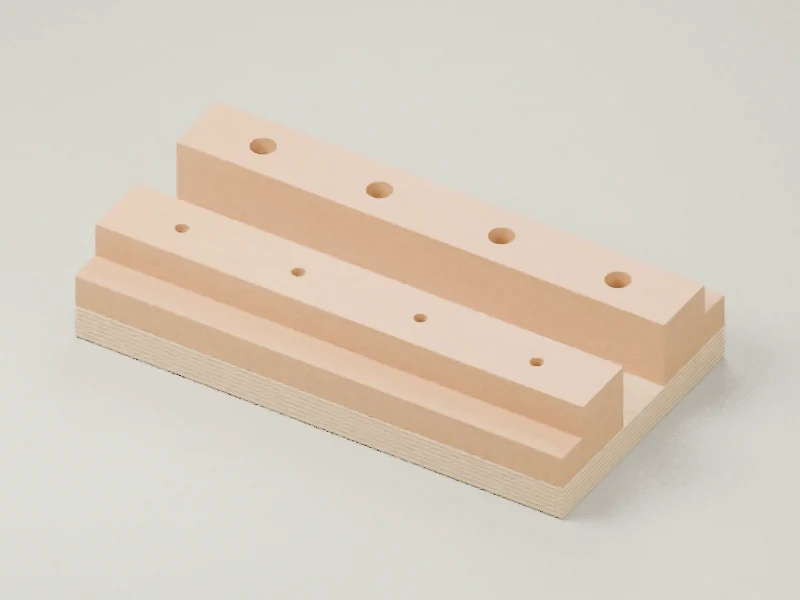
What to compare
Measure the part touched by wood
For a drill bit, the useful diameter is the smooth shank or part that goes into its matching chuck. Some shanks are reduced or have flats and can measure differently at multiple points. For a router bit, examine the shank diameter and length up to the cutter body or shoulder. Give each group known-diameter seats and check the actual bits in test stock. Choose a fit you can lift smoothly without the wood gripping the part under ordinary dry indoor conditions.
Outline the cutters before locating holes
Draw a circle at the widest working diameter of each router bit over its proposed bore center. Arrange large cutters at the outside of a row or give them an unfilled space beside them if they need the extra clearance. A shallow router cutter can hide behind a raised neighbor, so check hand approach from the front. Use a safe handling method appropriate for the tool and keep your fingers clear of cutting edges. Set designs aside that require gripping a sharp end.
Consider the lowest-shank bit in each row
The drill block uses different depth rows. Short bits can stand low even when the hole diameter is correct. Set your shortest drill in a test seat and mark the amount of accessible shank. A bit you can reach in a single scrap may be hidden after its taller neighbors go in. On the router tray, a bore needs to hold the shank without letting the cutter blades touch wood or neighboring edges when you withdraw the bit.
Plan a readable home for every size
Use a removable paper label and confirm you can read each size while standing where the rack will live. Decide whether the location needs a cover or a separate storage surface away from uncontrolled bench grit. When making the storage holes, support and clamp the drilling stock and follow the relevant tool guidance. Finish the layout by checking it with your actual inventory. A marked empty seat should indicate which bit is in use without forcing a different size into that space.
Label the cutting diameter separately from the shank
Sort a mixed drill inventory by the size you look up when you need a hole, then measure the smooth shank separately for storage. A reduced-shank drill can share a parking-hole diameter with another drill that cuts a different size. Label the actual cutting size beside each of the twelve seats, and distinguish inch and metric marks if both sets use the 8 × 3½-inch block. On the router tray, mark the bit profile where you can see it and keep the ¼-inch and ½-inch shank groups separate. Shank diameter tells you where the tool parks. A separate size or profile label tells you which one to choose.