Choosing stock · 2 min read
How to Choose Plywood Face and Back Grades for a Small Build
Do both faces of my plywood need to look good?
Offcut Journal editorialUpdated
Short answer
A part needs two presentable faces when both are exposed in normal use or when one face guides something that slides. Inspect both faces in person and decide which side will point where. A grade mark helps you shop for a type of panel. Check how that panel actually looks and feels in the places your cut map will use.
At the bench
Keep an honest show-face list
Draw the assembled object from the position you first notice it. Garage storage seen from an open doorway has different show faces than something picked up and turned over. Put a dot for the top, the front, and any surface visible through an opening. That short sketch helps you avoid assigning the good veneer to the underside out of habit.
Look at how the back will be used
A plugged or less attractive back may be fine for a face held against a wall. A rough back on a panel that holds paper or provides a sliding surface can matter even when no one sees it. Run a small piece of card across the candidate contact area and pay attention to raised patches that catch it.
Match appearances across adjoining parts
When two parts stand side by side, compare their visible portions under the same light. A panel can be acceptable on its own and still look mismatched beside a paler scrap from another sheet. Mark adjacent faces before cutting and keep them together while you work. Reserve the most distracting repair for a part where it stays concealed.
Read the description and check the board
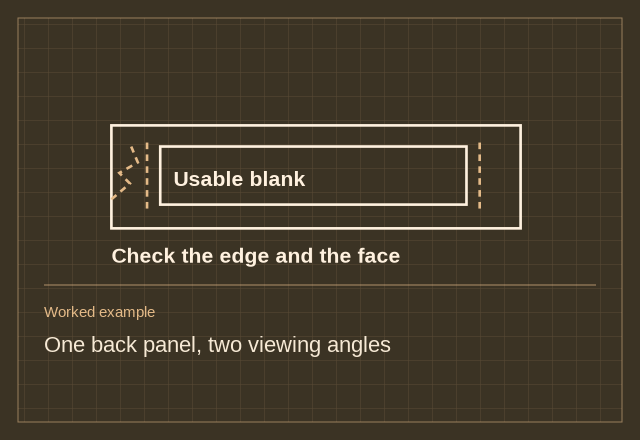
Some grade designations communicate the face and back veneer grades. Others communicate a structural or intended-use classification. Ask which is present on the actual sheet in front of you. If the panel was bought for appearance, check visible patches, roughness, and thickness in the sections that will become parts, then compare them to the cut list.
Inspect the surface visible between the objects
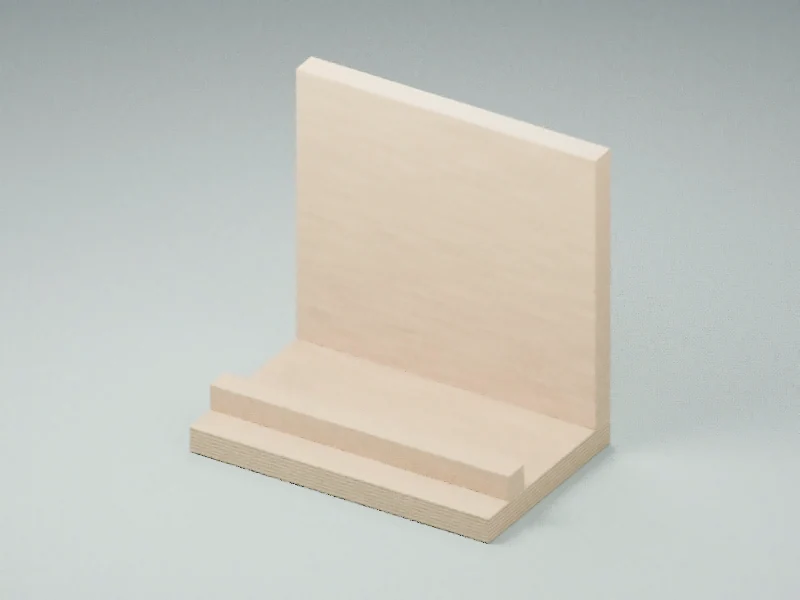
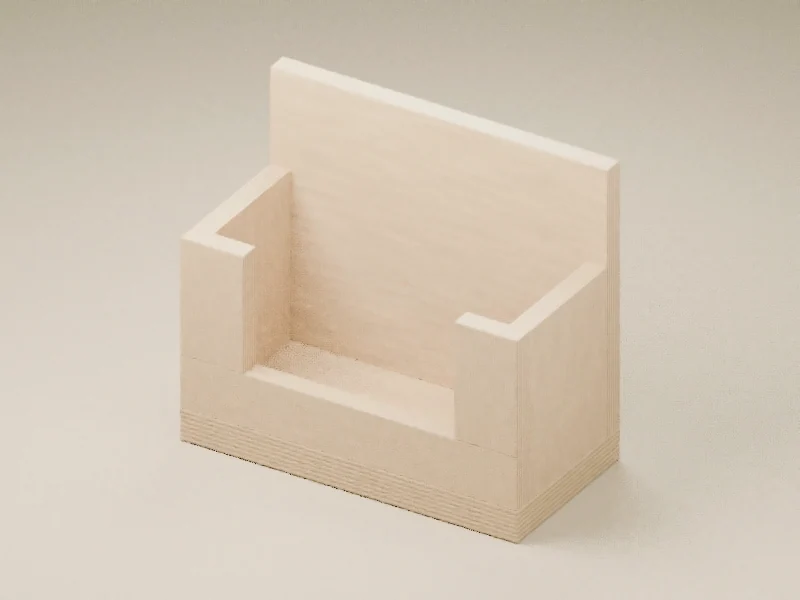
A recipe display or book rest can have one broad board whose middle is usually covered. You may still see an inch or two of face beside the book, and every repair in that narrow strip has a chance to catch the eye. Draw around your usual book or card stack on paper, lay the outline over the planned panel, and inspect just the exposed area. Then remove the paper and check whether the back face needs to show in the room. If your principal blank fits one side of the sheet cleanly, save that position before allocating the quiet regions to narrow hidden parts.
Practice on a plan
Finished dimensions in width × depth × height order.